

 59 minutes ago
5
59 minutes ago
5
ARTICLE AD BOX
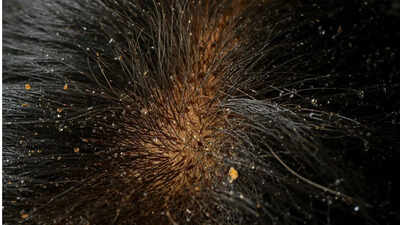
You might have taken a shower and washed your hair. You may have even used some of the magic mantra on the bottle that's ‘anti-dandruff', and in no time later, the flakes are back again.
The one thing nobody tells you about dandruff: It doesn’t have anything to do with just cleanliness. It's not about your hair but about your scalp.Dandruff is a scalp issue, and not a hair problem, and they are associated with a naturally occurring fungus that co-presents on every human scalp. The irritating part is that it does not wash out even after applying the normal shampoo several times. Most cosmetic shampoos thoroughly clean the skin on the hair shaft, but the scalp level won't be addressed.
There’s the gap. Until the difference in ingredients is narrowed down through the correct ingredients, dandruff returns.This article is for those who wish to finally quit guessing and understand. We will discuss the true causes of dandruff, what the science has to say about treating it, and look at the factors you need to consider when choosing a shampoo that is beneficial to your hair and scalp.
The real cause of dandruff: It starts on your scalp
The circle of dandruff starts with a yeast-like microorganism that is known as Malassezia globosa.
An unknown fungus on your head is always present on your scalp, but in a healthy amount and in ordinary conditions, it’s harmless. But the problem starts from where it overgrows because it receives an environment where it can multiply. Malassezia takes advantage of the naturally occurring sebum, the natural scalp oil, breaks it down, and releases Oleic Acid, which can irritate the scalp surface.
If someone has an increased sensitivity or maybe because of a genetic issue, their skin reacts with inflammation.
Now that inflammation speeds up the cell replacement, which can reduce the skin cell shedding cycle due to inflammation, and skin cells start to be replaced more frequently. And this is where you start to see the flake. This is a sign that tells you it is not normal. Most of the time, people also blame heat, humidity, sweat, stress, pollution and hair-oiling habits for causing dandruff. It can be one of the problems, but they are just catalysts of dandruff; the actual driver is your biology, your genetics and, to some extent, cleanliness also.
But washing it daily can only reduce the oil buildup, but it doesn't lower the Malassezia fungi themselves. Only a hair treatment with targeted anti-fungal ingredients can do that.Note:-Remember, flaking is not the first sign of dandruff. It is the itch. When the fungi begin to overgrow, the scalp reacts to the inflammation by scratching it. Many people scratch this off as dryness; however, it is the scalp sending you an alert.
If you notice your scalp itching regularly, even without visible flakes, the barrier disruption has already begun.
Common beliefs vs. what the science actually shows
Dandruff is surrounded by misconceptions that lead people to either ignore it or treat it incorrectly. Here is where the most common beliefs fall apart:
| What people believe | What the science says |
| Dandruff means your hair isn't clean enough | Dandruff is caused by Malassezia overgrowth and scalp sensitivity. Washing frequently may reduce oil, but it cannot eliminate the fungal infection. |
| It is just dry skin. A moisturising shampoo will sort it | Dry skin and dandruff are different conditions. Dandruff involves fungal activity and accelerated cell turnover for which no moisturising shampoo can help. |
| Once the flakes are gone, the problem is fixed | Dandruff is a recurring scalp condition. Malassezia is always present on the scalp. Stopping treatment when symptoms clear allows it to come back. |
| Dandruff is contagious; you can catch it from shared towels or combs | Dandruff is not communicable. It is driven by a person's unique scalp, oil production levels, and individual sensitivity to Malassezia's byproducts. |
Did you know? Four things worth knowing about dandruff
- Itch is the first signal of scalp barrier disruption
Itching is like a body's reflex and a way of releasing histamine in response to scalp irritation. It tells you that your scalp is in distress. And you start to scratch it, which eventually damages the hair even before it emerges from the scalp.
Itch is like a pre-distress signal, where the scalp sends a molecular message to warn you that flakes are forming.There are many shampoos and antifungal treatments that send molecular messages back to your scalp by reducing histamine and free radicals, turning that distressed scalp into a thriving one and thus tackling both dandruff and pre-dandruff itch at the source.
- If flakes are falling, your hair will too
Flakes are skin cell shedding or microcracks forming in your scalp barrier.
If this problem is left untreated or unbothered, those cracks start to spread more. This will result in weakening the scalp’s grip on the roots of the hair, and thus causing hair fall. When you look at the market, you will probably only see a few trusted brands which have a clinically proven shampoo line that helps microcracks close, relieves dandruff, and makes the scalp and the roots stronger.
- There are multiple types of flakes, and you need a specific solution that addresses them all
Dandruff makes itself of two kinds: Follicular pore flakes that show up deep in the hair follicles and then surface flakes that form on the outside layer of skin. Most normal shampoos only deal with what you can see up top. But without a formula that gets to both places, the problem at its roots is just never really handled, not fully
- Dandruff is more than a scalp problem
Most people assume dandruff is basically living on the surface of the scalp.
Yet actually it starts deeper inside the follicle, with scalp build-up that stacks up where hair growth begins. If a treatment is only just on the surface, it never reaches that deeper layer. And that's exactly why the symptoms return, even after washing. That is why it is important to opt for solutions that go past the surface and go deep into the follicle, working on the root of the scalp build-up so the symptoms are kept under control from where they really begin, helping support healthier hair from the inside out.
Piroctone Olamine is one of the best ingredients to fight dandruff
Now that we have understood all the causes and the types and the core problem of dangerousness, at the end, the ultimate question remains the same: what is the one true solution for this problem? For severe conditions of Malassezia, or even if you have just started to feel dry dandruff, it is very important to look for anti-dandruff shampoos that exfoliate the surface and even treat the problem from the core. One clinically proven ingredient that changes a lot in the solution for dandruff is Piroctone Olamine.
It is an antifungal ingredient that works by interrupting the metabolic ways that Malassezia depends on, inhibiting its overgrowth without stripping the broader scalp microbiome of its beneficial organisms.PO also has anti-Inflammatory properties that independently calm down the histamine response, calming itch and redness even beyond its antifungal activity. It’s made for regular use, and it does not lose efficacy as time goes on.
This is important because dandruff is kind of chronic, so you have to be consistent with the solution.
A shampoo that works for your scalp and your hair
To fight this problem from the core, it is very important to choose an anti-dandruff shampoo that is entirely built on proven science, with Piroctone Olamine as the core ingredient across its entire range, which penetrates 5 layers deep into the scalp. This means it should not only tackle the surface issue, but also fight the problem from the follicles, which is the source of flakes. Choose formulas that have antioxidants and are made to soak into the scalp and hair roots, so that they can deliver three things the scalp needs to recover and stay healthy over time:
- Restores balance within the scalp’s microbiome, tackling the environment that causes Malassezia
- Boosts barrier hydration, working on those micro-crack, which forms flakes
- Root nourishment helps support stronger, more resilient hair growth from the follicle upwards
Disclaimer: The views and opinions expressed in the story are independent professional judgements of the doctors/experts, and TIL does not take any responsibility for the accuracy of their views. This should not be considered a substitute for medical advice. Please consult your treating expert for more details. This article has been produced on behalf of Head & Shoulders by Times Internet’s Spotlight team.








 English (US) ·