

 13 hours ago
7
13 hours ago
7
ARTICLE AD BOX
Last Updated:June 15, 2026, 07:57 IST
The draft US-Iran peace pact includes sanctions relief, release of frozen assets, Hormuz reopening and a 60-day path to nuclear talks.


People walk near a mural depicting the late leader of the Islamic Revolution, Ayatollah Ruhollah Khomeini (Photo: AFP)
The United States and Iran have reached a preliminary peace agreement aimed at ending more than three months of war, reopening the Strait of Hormuz and launching a new round of negotiations over Tehran’s nuclear programme.
The framework agreement, announced through mediator Pakistan and later confirmed by officials in Washington and Tehran, is scheduled to be formally signed in Switzerland on June 19.
While the full text of the memorandum of understanding (MoU) has not been officially released, Iran’s Mehr News Agency, citing a source close to Iran’s negotiating team, has reported what it says are details of a 14-point draft agreement that formed the basis of the breakthrough.
The reported provisions outline a broad roadmap covering a ceasefire, sanctions relief, release of frozen Iranian assets, reopening of vital shipping routes and a process for negotiating a final settlement on Iran’s nuclear programme.
Iranian authorities have stressed that the draft still requires review and approval by the country’s relevant institutions.
CEASEFIRE AND END OF HOSTILITIES AT THE CENTRE OF DEAL
According to the report, the first provision calls for a “permanent and immediate" end to the war on all fronts, including Lebanon. The agreement also includes a US commitment to respect Iran’s sovereignty and refrain from interference in its internal affairs.
The draft further envisages the lifting of the naval blockade within 30 days and a US commitment to withdraw forces deployed around Iran. Another major provision calls for the reopening of the Strait of Hormuz within 30 days under arrangements overseen by Iran.
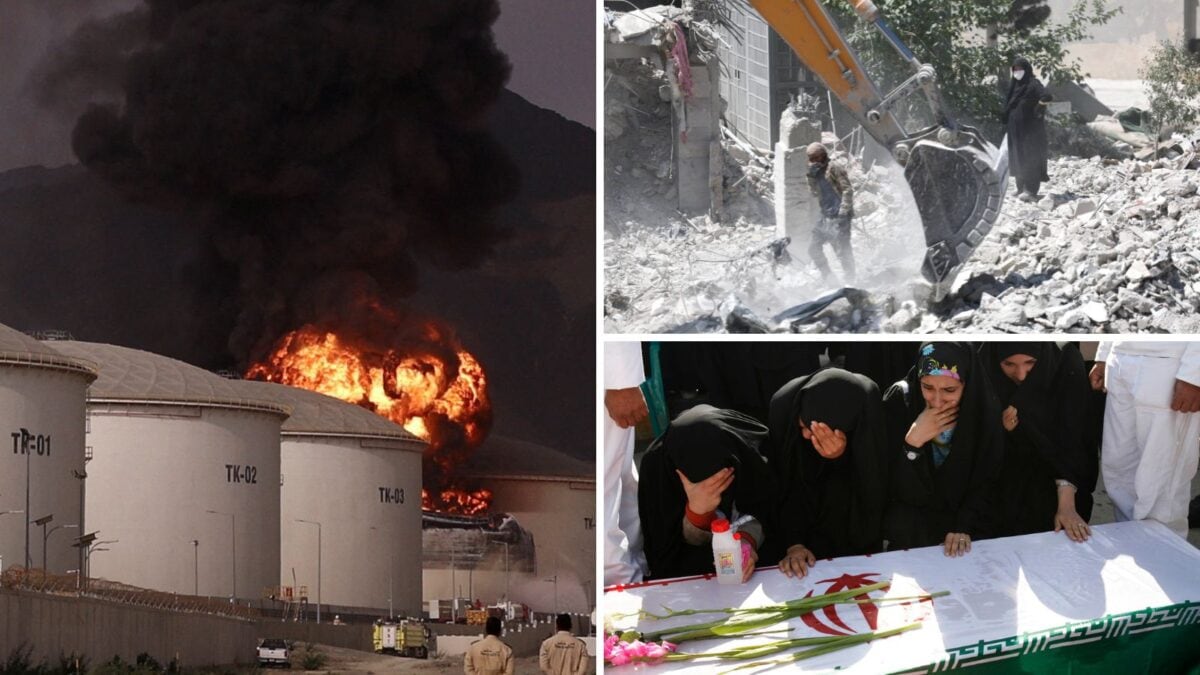
The framework follows a conflict that has killed thousands of people, mostly in Iran and Lebanon. The war saw Iran effectively block the Strait of Hormuz. At the same time, US forces responded by blocking Iranian ports, contributing to a major energy crisis and sharp increases in global fuel prices.
THE 14 POINTS OF THE US-IRAN PEACE DEAL
According to Mehr News Agency, the draft memorandum contains the following provisions:
1. Permanent and immediate end to war on all fronts, including Lebanon.
2. US commitment to non-interference in Iran’s internal affairs and respect for Iranian sovereignty.
3. Complete lifting of the naval blockade within 30 days.
4. US commitment to withdraw forces from around Iran.
5. Reopening of the Strait of Hormuz within 30 days under Iranian arrangements.
6. Suspension of sanctions on Iranian oil and petrochemical sales and restoration of access to financial resources.
7. Reconstruction plans worth at least $300 billion to be presented by the US and its allies.
8. A 60-day negotiation period aimed at reaching a final agreement on the nuclear issue and removal of sanctions and related international restrictions.
9. Reaffirmation by Iran of its commitment under the Nuclear Non-Proliferation Treaty not to produce nuclear weapons.
10. US commitment not to deploy additional forces to the region or impose new sanctions during the negotiation period.
11. Release of $24 billion in blocked Iranian funds during the 60-day talks, with half made available before negotiations begin.
12. Establishment of a monitoring mechanism to oversee the implementation of the agreement.
13. Ratification of the final agreement through a United Nations Security Council resolution.
14. Final negotiations to begin only after the release of half of Iran’s blocked funds, suspension of oil sanctions and lifting of the naval blockade. The final talks would focus only on enrichment, enriched material, sanctions relief and economic reconstruction, while Iran’s missile programme and support for resistance groups would be excluded from the agenda.
NUCLEAR TALKS AND SANCTIONS RELIEF REMAIN KEY ISSUES
The reported draft places significant emphasis on economic relief.
Mehr separately reported that the United States would release $12 billion in frozen Iranian assets before formal negotiations commence, while the remaining funds would be released during the 60-day negotiation process.
The agreement also leaves the most contentious nuclear issues for future talks.
US and Iranian officials have acknowledged that the framework is only a preliminary arrangement, with negotiations still required to determine the future of Iran’s enriched uranium stockpile and broader nuclear programme.
CHALLENGES REMAIN BEFORE FORMAL SIGNING
Despite the breakthrough, significant obstacles remain.
Reuters reported that continued fighting between Israel and the Iran-backed Hezbollah movement in Lebanon nearly complicated the negotiations.
Israel has said it was not a party to the US-Iran talks and has not immediately commented on the framework agreement.
Handpicked stories, in your inbox
A newsletter with the best of our journalism
About the Author

Vani Mehrotra is the Deputy News Editor at News18.com. She has more than 10 years of experience in national and international news and has previously worked on multiple desks.
News world Hormuz Reopening, Frozen Funds, Nuclear Talks: What’s Inside The 14-Point US-Iran Peace Deal
Disclaimer: Comments reflect users’ views, not News18’s. Please keep discussions respectful and constructive. Abusive, defamatory, or illegal comments will be removed. News18 may disable any comment at its discretion. By posting, you agree to our Terms of Use and Privacy Policy.
Read More




 English (US) ·