

 1 hour ago
5
1 hour ago
5
ARTICLE AD BOX
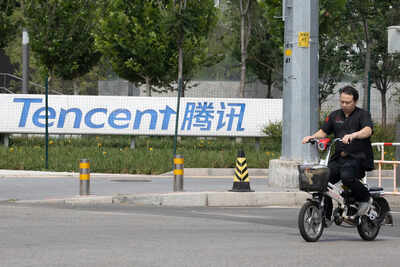
FILE - A man rides past the Tencent headquarters in Beijing, China on Aug. 7, 2020. (AP Photo/Ng Han Guan, File)
Tencent, the Chinese tech giant has now found a way to legally access Nvidia’s most advanced semiconductors despite export restrictions imposed by the US. As reported by Financial Times, Tencent is using a partnership with Datasection, a Japanese company which has pivoted from marketing solutions to AI data centers in order to secure computing power from thousands of Nvidia’s most-advanced Blackwell processors.
At its datacenter facility outside Osaka, Datasection owns around 15,000 Nvidia’s Blackwell B200 processors and a significant portion of these chipsets are being contracted to Tencent via third-party relationship. The $12 billion deal between Datasection and Tencent, enable the Chinese company to legally use the computing power which was banned by the US from direct export to China, highlighting the loophole in the US policy.
Datasection’s growth and expansion good news for Tencent
For those unaware, Datasection has rapidly grown into one of Asia’s largest “neoclouds,” joining peers like CoreWeave (U.S.) and Nebius (Europe) in renting GPU capacity to global tech firms. The company is also building a Sydney AI data center which is equipped with Nvidia’s latest B300 chips which can outperform the hardware permitted for sale in China. The first 10,000 B300s cost $521 million. This facility of the company is also said to majorly serve Tencent, creating what Datasection CEO Norihiko Ishihara calls “the world’s first hyperscale AI cluster using B300 chips.
”
Loophole in US export policy
The strategy adopted by Datasection and Tencent mainly exploit the legal gap in US export controls. Biden-era rules designed to close the loophole were scrapped by President Donald Trump in May, enabling Datasection to move quickly on its Osaka deal. Earlier this month, the U.S. approved sales of lower-performance chips to China, but Tencent and peers like Alibaba and ByteDance continue to rely on overseas computing workarounds.
Analysts believe that renting GPU capacity abroad may be “the more attractive choice” for Chinese tech groups compared to buying downgraded chips.
Datasection benefiting from the US policy loophole
The US export policy loophole and the ban on chips to the Chinese gave an immense growth opportunity to Datasection. The stock on the company witnessed 18% surge this year, though it has halved since a ¥4,000 peak amid concerns of over-investment and a short-seller attack.
The company has also raised ¥50 billion via equity warrants to Singapore-based First Plus Financial Holdings, owned by a Chinese national.Despite scrutiny, Datasection is pressing ahead with plans to expand into Europe, hiring high-profile figures such as Spanish politician Pablo Casado Blanco and John Ellis Bush Jr., a member of the U.S. Bush political family, to its board. Ishihara remains confident that demand for GPU capacity is so strong that even if U.S. export rules shift again, new customers would be easy to find. For Tencent, the Japanese deal underscores how China’s biggest tech companies are navigating restrictions by outsourcing AI training to overseas data centres, raising fresh questions about the effectiveness of Washington’s export controls and the growing role of “neocloud” providers in the global AI race.









 English (US) ·