

 1 hour ago
5
1 hour ago
5
ARTICLE AD BOX
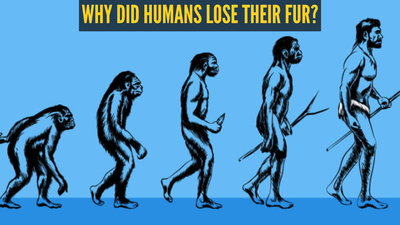
For most animals, losing fur would be a death sentence. Hair isn’t cosmetic in the wild, it’s survival gear. It protects against cold, blocks ultraviolet radiation, limits water loss, and even helps keep parasites at bay.
Strip it away, and most mammals wouldn’t last long.And yet humans did exactly that. We ditched fur almost entirely, became one of the sweatiest species on Earth, and somehow made it work. According to evolutionary biologists, this wasn’t a mistake or a fluke. It was one of the boldest tradeoffs our species ever made, and it reshaped everything that came after.
Why humans started out hairy like everyone else
Fur is the default setting for mammals. It traps a layer of air close to the skin, creating insulation that stabilises body temperature.
Most mammals depend on this system and cool themselves mainly through panting, shade-seeking, or small patches of sweat glands.Our closest relatives follow this pattern too. Chimpanzees, gorillas and macaques all have dense body hair and relatively few eccrine sweat glands, the kind that produce watery sweat. Their cooling strategies are behavioural: resting during peak heat, staying in shade, and limiting movement when temperatures climb.
But humans are the exception. Research published in the Journal of Human Evolution shows that compared to other primates, humans have dramatically less visible body hair and between two and four million eccrine sweat glands spread across the body. Instead of trapping heat, we dump it, efficiently, through evaporation.This shift didn’t happen overnight. Fossil and genetic evidence suggests it unfolded gradually as early members of the genus Homo began moving out of forested environments and into hotter, more open landscapes.
Why fur became a problem instead of protection
The strongest explanation for why humans lost their fur comes down to heat stress. According to research published in Comprehensive Physiology (2015), early humans around two million years ago started spending more time in open savannas, where shade was scarce and solar radiation was intense.At the same time, archaeological and anatomical evidence suggests something else was happening: humans were moving more. Long-distance walking and running became central to survival, whether for foraging, migration, or hunting.Movement generates heat, a lot of it. And while fur is excellent insulation, it’s terrible when your body needs to lose heat quickly. By trapping air near the skin, fur limits evaporation and slows cooling. In a hot, open environment, that can push body temperature into dangerous territory.Reducing body hair solved part of the problem. Expanding sweating solved the rest. Evaporative cooling is incredibly effective: every gram of sweat that evaporates pulls a significant amount of heat away from the body.
Over time, humans evolved a system that prioritised heat loss over heat retention, a risky move, but a powerful one.
Why sweating changed everything
As explained in the International Journal of Biometeorology, humans are unusually good at sweating. Our eccrine glands are dense, widely distributed, and capable of producing large volumes of dilute sweat. Unlike panting, sweating doesn’t interfere with breathing or feeding, making it ideal for sustained activity.This gave humans a unique edge. Compared to most mammals, we can maintain moderate-intensity movement in hot conditions for far longer without overheating.
Many researchers believe this was critical for persistence hunting, tracking prey over long distances until the animal overheated and collapsed.But if losing fur was so useful, why didn’t we lose all of it? Scalp hair appears to be the exception for a reason. Studies suggest dense, especially tightly curled, hair reduces heat gain from direct sunlight while still allowing sweat to evaporate. In equatorial environments, that balance helped protect the brain from overheating while the rest of the body cooled efficiently.Of course, hairlessness came with serious downsides. Without fur, humans became far more vulnerable to cold stress, ultraviolet radiation and skin injury. Those risks likely pushed the evolution of clothing, shelter, fire and social cooperation.In other words, once we lost our fur, biology alone wasn’t enough anymore. Survival increasingly depended on tools, culture and collective problem-solving, a feedback loop that still defines us today.









 English (US) ·