

 1 hour ago
3
1 hour ago
3
ARTICLE AD BOX
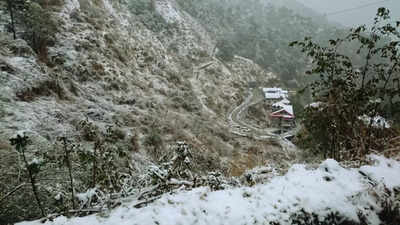
A sharp winter spell is unfolding across large parts of India as the India Meteorological Department’s (IMD) latest All India Weather Summary and Forecast Bulletin, issued on December 22, 2025, points to falling temperatures, persistent fog, cold day conditions and fresh snowfall in the higher reaches over the next seven days.
The bulletin, valid from December 22 to December 28, highlights the combined impact of western disturbances, jet stream activity and local atmospheric circulations, setting the stage for challenging weather conditions across northern, eastern and parts of central India, while southern coastal and island regions prepare for thunderstorms and strong winds.Snowfall and rain likely over western HimalayasThe Western Himalayan Region is expected to remain under active weather influence through the week.
Scattered to fairly widespread light to moderate rainfall and snowfall is very likely over the region on December 23, 27 and 28. Himachal Pradesh and Uttarakhand are also likely to experience isolated to scattered rainfall or snowfall again on December 28. This system is expected to weaken briefly before another feeble western disturbance affects the western Himalayan region from December 27, renewing snowfall activity towards the end of the forecast period.
These conditions are likely to maintain snow cover in higher altitudes, disrupt road connectivity in vulnerable mountain passes and lower visibility in valleys, particularly during early morning and late evening hours.Minimum temperatures set to drop across several regionsA noticeable fall in minimum temperatures is expected across several parts of the country, especially in the northern and western regions.
Northwest India is likely to witness a gradual drop of 3 to 5 degrees Celsius over the next three days, from December 22 to 24. Thereafter, minimum temperatures are expected to stabilise with no significant change until December 28.East India is forecast to see no major temperature variation during December 22 and 23, followed by a gradual fall of 2 to 3 degrees Celsius from December 24 onwards. Central India is expected to remain largely unchanged for the next 24 hours, after which minimum temperatures may drop by around 2 degrees Celsius during December 23 and 24 before settling again.Maharashtra is likely to experience a gradual fall of 2 to 3 degrees Celsius over December 22 and 23, with stable conditions thereafter. Gujarat is forecast to see no significant change during the next 24 hours, followed by a temperature dip of 2 to 3 degrees Celsius between December 23 and 25. For the rest of the country, no major change in minimum temperatures is anticipated during the forecast period.Dense fog to disrupt daily life in northern and eastern statesFog remains a major concern, particularly over the northern plains and parts of eastern India.
Dense to very dense fog during night and morning hours is expected to persist over Punjab until December 27. Uttar Pradesh is likely to experience dense to very dense fog until December 23 and again from December 25 to 28. Haryana, Chandigarh and Delhi are forecast to see dense to very dense fog between December 24 and 27.Dense fog conditions in isolated pockets are also likely over a wide area, including the Western Himalayan Region, Bihar, Odisha, Rajasthan, Jharkhand, north Madhya Pradesh and northeast India during different phases of the week.
Such conditions are expected to severely impact road, rail and air traffic, particularly during early morning hours, increasing the risk of delays and accidents.Cold day and severe cold day conditions continueCold day conditions are expected to persist in parts of north and east India, with East Uttar Pradesh likely to witness cold day to severe cold day conditions at isolated places on December 22. West Uttar Pradesh, Madhya Pradesh and Jharkhand are also expected to experience cold day conditions on the same day.Bihar remains one of the most affected states, with cold day conditions expected to prevail at isolated places from December 22 through December 26. These conditions are characterised by daytime temperatures remaining significantly below normal, often due to persistent fog, cloud cover and cold northerly winds.Day-by-day weather highlightsDecember 23 will see cold day conditions continuing in Bihar, with dense fog persisting over northern and northeastern states.
Punjab may again experience very dense fog, while squally winds continue over southern sea areas.By December 24, cold day conditions remain over Bihar, and dense to very dense fog is expected to intensify over Haryana, Chandigarh, Delhi and Punjab. Fog will continue to affect hill states and northeastern regions.On December 25 and 26, Bihar is likely to remain under cold day conditions, while dense to very dense fog dominates much of north India, including Uttar Pradesh, Punjab and the national capital region.
Hill states continue to face dense fog, affecting visibility.Weather conditions shift slightly on December 27 and 28 as thunderstorm activity accompanied by lightning becomes likely at isolated places over the Andaman and Nicobar Islands. Dense fog remains a concern over the northern plains, especially in Uttar Pradesh, Punjab, Haryana and Delhi.Southern seas and island regions on alertWhile northern India battles cold and fog, southern maritime regions face strong winds and unstable weather. A cyclonic circulation persisting over the Comorin area and neighbourhood at about 0.9 km above mean sea level is driving squally wind conditions over adjoining sea areas and parts of the Gulf of Mannar. These conditions pose risks to small fishing vessels and maritime operations.Additionally, isolated thunderstorms accompanied by lightning are expected over the Andaman and Nicobar Islands on December 27 and 28, signalling unsettled weather towards the end of the forecast period.







 English (US) ·