

 4 days ago
14
4 days ago
14
ARTICLE AD BOX
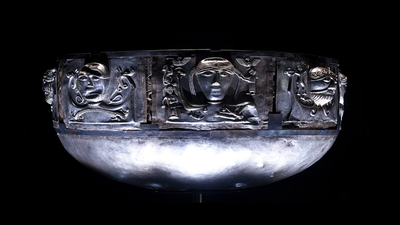
The Gundestrup cauldron is a richly-decorated silver vessel. Image Credit: Wikimedia Commons
Ever since the Gundestrup Cauldron was found in a Danish bog in 1891 it has been one of the archaeological world’s most intriguing puzzles. The silver vessel survives as multiple beaten-sheet plates (commonly counted at around 10–15), later reconstructed into a cauldron and its complex mix of Celtic and Thracian imagery defies simple cultural labels.
It provides insights into Iron Age mobility, ritual behaviour and the remarkable preservation potential of waterlogged peatlands.A surprise in mudOn May 28, 1891, peat cutters working in a peatland near Gundestrup, Denmark, stumbled upon a remarkable piece of history. They did not find a single intact vessel; the cauldron was recovered in many broken plates. They dug up a giant silver cauldron, broken into fifteen separate plates.
The significance of this particular detail for the archaeologists is that it points strongly to the vessel not being lost accidentally.
Instead, it seems to have been deliberately disassembled and buried as part of a ritual act.Bog conditions preserved organic and metalwork and exposed the vessel when peat cutting disturbed the ground. According to University of Notre Dame , these particular water-logged conditions create unique oxygen-free environments that are perfect for the preservation of historical materials for centuries.
The researchers also note that routine human agricultural work and peat cutting in these regions often shift the ground just enough to expose ancient artifacts that otherwise would remain hidden forever. For the Danish laborers, an ordinary day of cutting fuel became a monumental archaeological find.
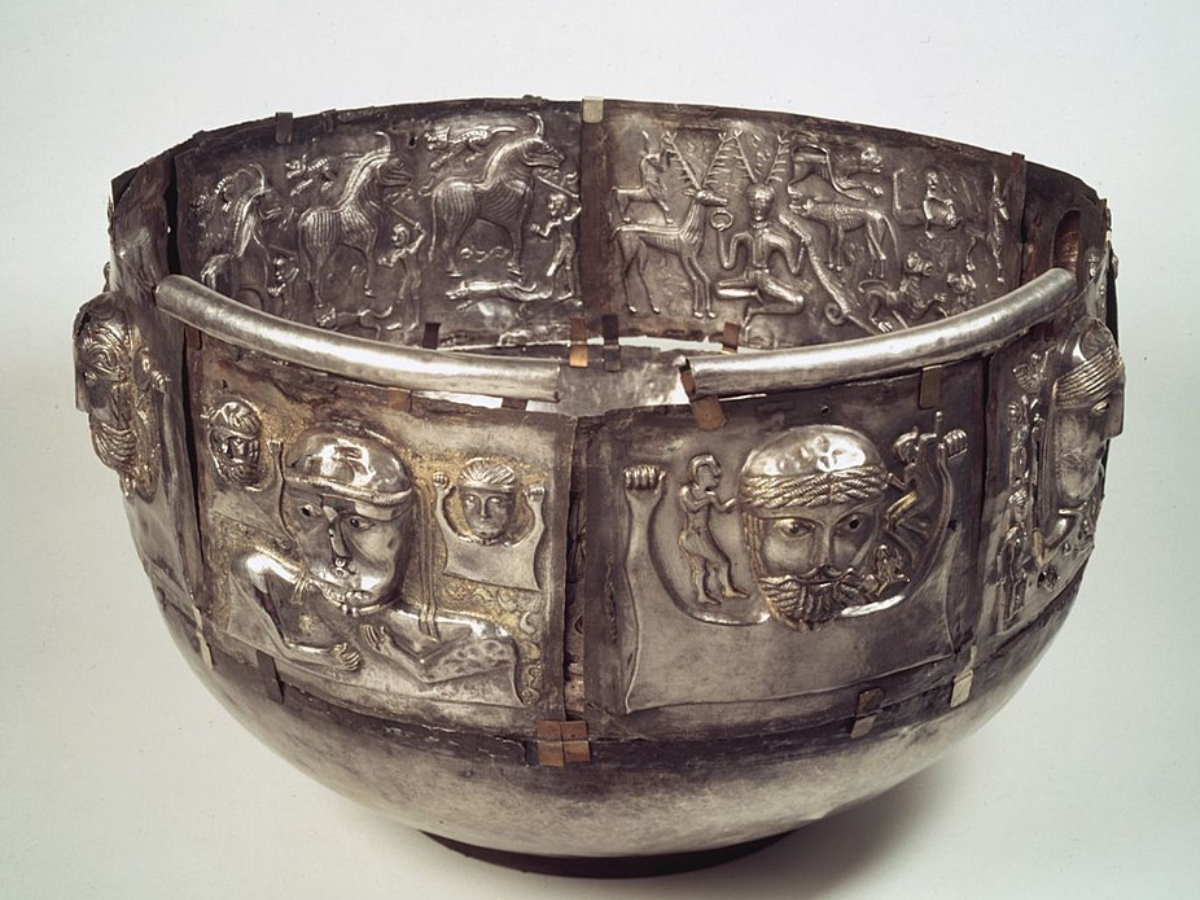
The Gundestrup cauldron is a richly decorated silver vessel, thought to date from between 200 BC and 300 AD. Image Credit: Wikimedia Commons
A silver cultural riddleAfter cleaning and studying the pieces the cauldron immediately began to question accepted historical accounts. The Harvard’s Celtic studies notes that the vessel is made entirely of beaten sheet silver.
Large, richly worked silver vessels are uncommon for Iron Age northwestern Europe, where metalwork is often simpler and more functional. “The silver is very high quality; the craftsmanship indicates it was a possession of the very elite, and was made by highly specialized artisans far from where it was eventually deposited.”The carved imagery on the silver plates added a whole new dimension of mystery. Scholars have successfully linked the visual style of the cauldron to both Celtic and Thracian artistic traditions, according to a report from Harvard University.
The mixture of stylistic influences complicates simple cultural classifications. The cauldron cannot be neatly assigned to a single tribe or territory. Instead, its mixed style points to an extensive web of trade, migration and cultural exchange throughout Iron Age Europe- underscoring the interconnectedness of ancient societies.Maintaining the intrigueMore than 130 years after its discovery it remains an important teaching tool, because it refuses to give easy answers.
The fact that it was found in pieces is still a matter of intense debate. In archaeology, objects deposited in wetlands are rarely seen as mere rubbish. The deliberate breaking and deposition may indicate ritual practice, though scholars remain divided on its precise meaning.The Gundestrup Cauldron remains a striking example of how much archaeologists can learn from a single find. Thanks to the protective embrace of a Danish bog it has survived and continues to prompt debate because its origins remain contested.









 English (US) ·