

 16 hours ago
7
16 hours ago
7
ARTICLE AD BOX

Keri: A researcher has come across a site of Ran Bibo, a critically endangered tree species, at Dhave in Sattari close to govt agriculture departmen’s Bibe farm.Found in the swampy relic characterised by waterlogged soil, perennial streams and high biodiversity, Ran Bibo generally grows up to 20m, says researcher Asavari Kulkarni.This swamp belongs to the category of the ancient and rare ecosystem that has been considered a living fossil. Kulkarni said, “I found this swamp dominated by the critically endangered species of Ran Bibo (Semicarpus katkekanensis), which has added immense ecological importance to this patch of forest, where the Malabar tree nymph butterflies are thriving.” Kulkarni also found Holigarna grahamii, a species of vulnerable, large evergreen tree, endemic to the Western Ghats.
Earlier, in Maloli and Brahmakarmali of Sattari, swampy relics were reported at the sacred grove of Ajobachi tali. Researchers, Ashish Prabhugaonkar, Divakar Mesta and M K Janarthanam had reported three red-listed tree species—Semicarpus katkekanensis, Syzygium travancoricum and Myristica fatua, in the Journal of Threatened Taxa in 2014.Ramesh Zarmekar, a wildlife researcher who visited the site, said the trees in this patch offer refuge to the Malabar giant squirrel, tree nymph and other species of wildlife.
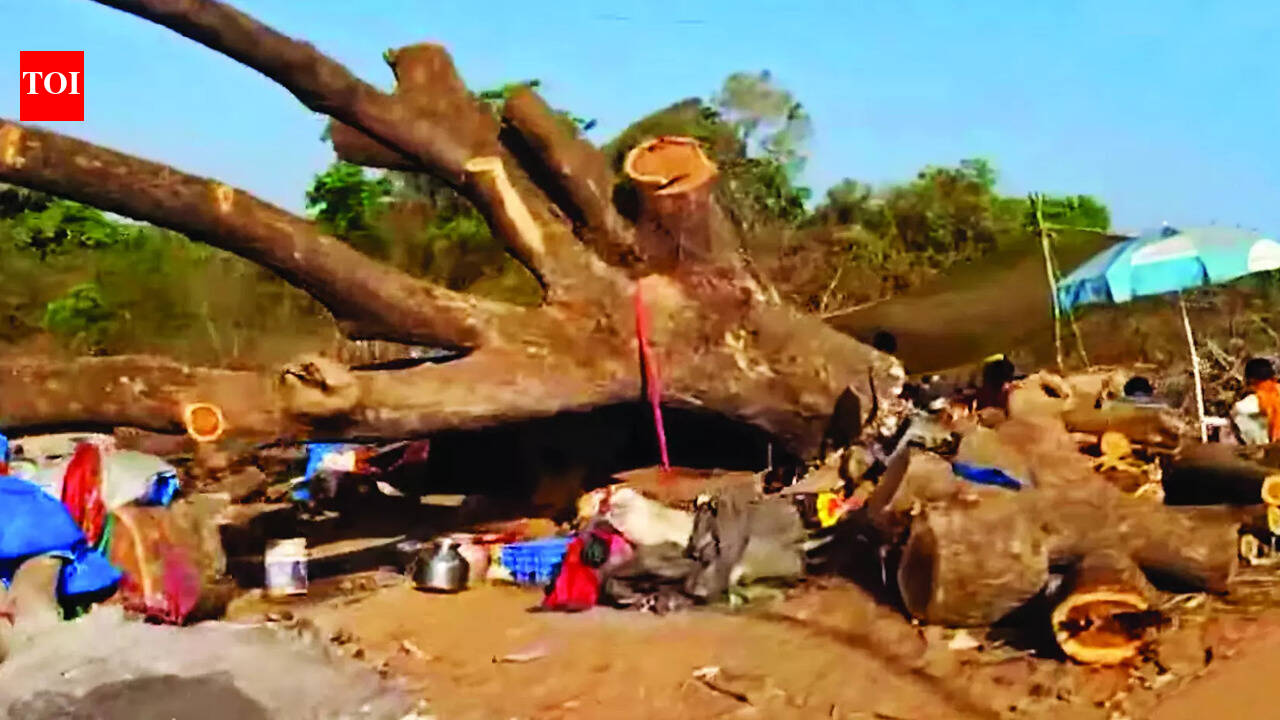
“They needed to be given protection at the earliest due to increased human activity.”Recently, locals put up a shed in view of the Lairai jatra close to the swamp.“In every village, such sheds are installed close to water bodies. Devotees remain stayput till the utsav gets over,” Zarmekar said.Ran Bibo flowers are borne in pinnacles of leaf axils and greenish in texture. It bears compressed, obliquely, kidney-shaped fruits.A study indicated that these swamp relics have a higher capacity to store carbon than non-swampy forests, making them important in mitigating climate change.





 English (US) ·