

 2 days ago
24
2 days ago
24
ARTICLE AD BOX
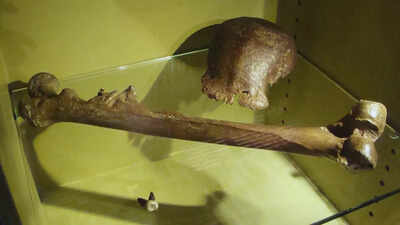
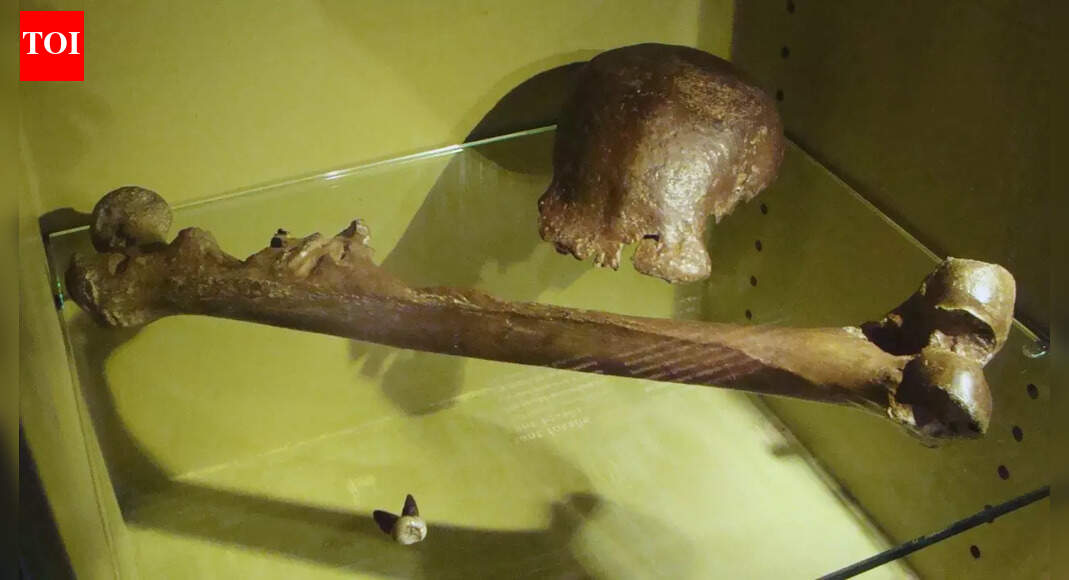
Decades after the ground-breaking find that changed humankind’s understanding of evolution, Homo erectus, popularly known as Java Man, has finally flown home to Indonesia, where it first emerged.
The decision is an important moment in the global debate about scientific heritage, collections from the colonial era and the repatriation of highly significant cultural and historical objects.According to a report by National Geographic, titled “The ‘Java Man’, the first fossil evidence of Homo erectus, is now home" the fossils, held in the Netherlands for more than a century, have now been returned to Indonesia. This event symbolically closes a chapter that began in the late 19th century colonial rule.Fadli Zon, the Minister of Culture of Indonesia, confirms this event on a post on X (@fadlizon)

@fadlizon on X
A discovery that changed human history
When it comes to the study of human evolution, the discovery of Java Man occupies a very special place. The fossil remains were discovered in the 1890s along the Solo River in the present-day East Java. It was the fossilised skullcap and thighbone that provided the first concrete evidence of Homo erectus, an early human ancestor that lived nearly one million years ago.
This discovery paved the way to new theories about human origins, one that proved that ancient humans had lived far beyond Europe.Soon after the discovery, the fossilised remains were transported to the Netherlands. There, these fossils were studied extensively for decades, and became an important part of the European scientific research and museum collections.
The journey back to Indonesia
The repatriation of the bones follows years of negotiations between Dutch institutions and Indonesian authorities.
European museums have been increasingly confronting the colonial circumstances under which many of their collections originated, but repatriation efforts have often been long and complicated, encompassing legal, scientific and diplomatic issues.New return has been a cause of national pride for Indonesian officials. The remains are being exhibited at the National Museum of Indonesia in the nation's capital, Jakarta.
Scientific importance remains undiminished
After more than a century of study, Java Man is still an incredibly important part of science. Homo erectus was one of the most successful early human species: it was distributed widely across Africa and Asia for nearly a million years. For instance, scientific reports suggest that the thighbone associated with Java Man suggested upright walking being. The size of the skullcap meant the brain size was larger than earlier hominins but smaller than modern humans.
Now that the fossils are back in Indonesia, their arrival is likely to give local researchers a greater role in such ongoing work.
Cultural and educational significance
For Indonesia, the repatriation of Java Man carries significance beyond science. It cements the nation’s place in our understanding of human origins and reassures us that Southeast Asia is a key theater in early human history. They will also be a linchpin for education, motivating new generations of Indonesian students and researchers as well as visitors to the country.The return of the fossils now provides Indonesia an opportunity to tell its own story of Java Man. The fossil is now back within the local geography, culture, and history, rather than in an European destination. After spending more than a hundred years thousands of kilometres away, the fossil evidence of Homo erectus is now back in the land where it lay buried for nearly a million years.







 English (US) ·