

 1 hour ago
3
1 hour ago
3
ARTICLE AD BOX
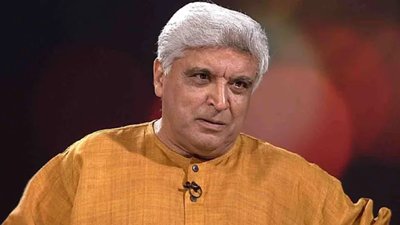
Veteran lyricist and screenwriter Javed Akhtar is known for his fearless opinions and speaking his mind. The ‘Sholay’ writer once again sparked a debate by questioning the idea of women covering their faces.
Speaking at a recent event, Akhtar questioned the social logic behind women being expected to cover their faces.
The session was attended by students and other people as well, and quickly turned into an open and engaging exchange of views. Rather than attacking faith or personal belief, Akhtar focused on what he described as deep-rooted social conditioning. According to him, face-covering is often less about personal freedom and more about invisible pressure from society.
Javed Akhtar raises a blunt public question
At the SOA Literary Festival 2025, the conversation became especially engaging during the interactive segment of the session. A young girl referred to Akhtar’s earlier remarks about growing up among women who did not wear burqas. She asked whether covering oneself automatically makes a woman less strong.Akhtar’s response was direct and unfiltered. “Why should you be ashamed of your face?” he asked, drawing attention to a question that many people rarely stop to examine.
Akhtar explained that dignity in dressing should apply equally to men and women saying, “I believe that revealing clothes, whether men wear them or women, don’t look dignified. If a man comes to the office or college in a sleeveless shirt, it’s not a good thing. He should dress decently. And a woman should also be decently dressed.” However, Akhtar made it clear that modesty and face-covering are not the same thing.
Javed Akhtar explains modesty versus face covering
Akhtar drew a clear line between dressing decently and hiding one’s face.
He questioned the logic behind treating a woman’s face as something that must be concealed. “But what makes her cover her face? What is so vulgar, obscene, undignified about her face that it is covered? Why? What is the reason?” he asked, pushing the audience to think beyond tradition and habit.According to Akhtar, the idea that face-covering is always a personal choice does not hold up under closer inspection. He argued that many women are influenced by their surroundings long before they believe they are choosing freely.
“This is peer pressure. If given a choice, she is brainwashed. If she says that she is doing it on her own, then she is brainwashed,” he said.He went on to explain that approval from family members and the immediate social circle plays a major role, “Because she knows that some peers in her life will appreciate that this is done.”
Javed Akhtar questions idea of free choice
Taking his argument further, Akhtar questioned whether face-covering would exist in the absence of social pressure.
“If you leave her, then why will anyone cover their face? Does she hate her face? Is she ashamed of her face? What? Why?” he asked.
Recent hijab incident sparks online outrage
Akhtar’s comments come at a time when discussions around women’s dignity, religion and public behaviour are already heated. Recently, a video from a government event in Patna went viral on social media, adding fuel to the ongoing debate. The clip showed Bihar Chief Minister Nitish Kumar pulling down a woman’s hijab during a public function.
The moment sparked strong reactions online, with many calling the act inappropriate and disrespectful.
Zaira Wasim reacts strongly
Among those who reacted strongly was former actor Zaira Wasim, known for her role in ‘Dangal’. The 25-year-old actor, who quit Bollywood in 2019 as it “interfered with her faith and religion”, demanded an “unconditional apology” from Nitish Kumar.Sharing her anger on X (formerly Twitter), Zaira wrote, “A woman's dignity and modesty are not props to toy with. Least of all on a public stage. As a Muslim woman, watching another woman's niqab being pulled at so casually, accompanied by that nonchalant smile, was so infuriating. Power does not grant permission to violate boundaries. @NitishKumar owes that woman an unconditional apology.”







 English (US) ·