

 1 hour ago
6
1 hour ago
6
ARTICLE AD BOX
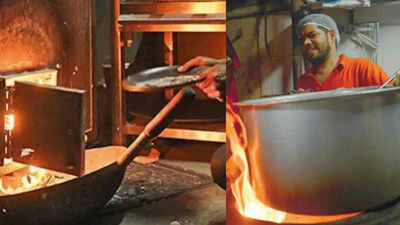
BHOPAL: A shortage of commercial LPG cylinders has begun to bite into the city's food business, forcing hotels and roadside dhabas to fall back on what traders call "black gold" - coal briquettes - to keep their kitchens alive.With supplies erratic and delivery times stretching beyond a day, operators are reviving traditional stoves and tandoors, even though the Bhopal Municipal Corporation (BMC) has banned the use of polluting fuels under its clean-air rules.Coal traders say demand has spiked sharply in recent weeks. "Earlier, small orders were around 50 kilograms, but now they hover closer to 70. For bulk buyers purchasing in quintals, the increase is about 20%," explained Zakir, a seller in Shahjehanabad.
He noted that delivery delays are now routine, with kitchens often waiting more than a day for supplies.Prices of coal have climbed sharply, with mined "patthar" coal now retailing at around Rs 35 per kilogram compared to Rs 25 before the crisis - nearly a 40% spike in basic fuel rates. Charcoal, the wood-based alternative, is even costlier, making coal briquettes the more practical fallback despite their smoke and slower cooking times.
Despite the rise, traders say the economics still work out for tea sellers, mid-sized eateries, and larger restaurants.A restaurant owner in the walled city, who requested anonymity, explained the calculation: "The regular price of a commercial LPG cylinder is about Rs 1,750, and I need two cylinders a day. By using around 50 kilograms of coal, my basic kitchen needs indoors are met, which also comes to about Rs 1,750 daily.
But the under-the-counter sales price of a commercial cylinder has now shot up to nearly Rs 4,000 each, so coal remains a viable alternative for us.
"Hotel operators, however, argue that coal is far from a cheap substitute. "Cooking with coal takes longer, and managing the smoke is difficult. But we have no choice if we want to keep serving customers," said one hotel owner. Another added, "It's not just me-there are about ten other livelihoods tied to my business.
If I don't adapt, all of them will be impacted."For now, most eateries are absorbing the extra costs rather than passing them on to customers. But with the festive season underway and night-time dining a major draw, operators warn that any sudden price hike could shrink footfall and dampen business at a crucial time.




 English (US) ·