

 1 hour ago
3
1 hour ago
3
ARTICLE AD BOX
Last Updated:May 01, 2026, 16:36 IST
2026 West Bengal Assembly election is not just about results; it marks a new phase in Mamata Banerjee’s politics. More than survival, it is about relevance, control & credibility


Mamata Banerjee’s rise was built on a politics of resistance. Her early years were defined by mass mobilisation, street protests and a narrative of disruption against the Left Front’s long rule. (Image: PTI/File)
As West Bengal awaits its verdict on May 4, Mamata Banerjee stands at a crucial juncture in her political journey. Once the street-fighting challenger who toppled a 34-year-old Communist Party of India (Marxist) regime in the state, she is now a long-serving incumbent, having governed the state for nearly 15 years while navigating the complex demands of governance and rising voter expectations.
The 2026 West Bengal Assembly elections are not just about the outcome; it also marks a new phase in Banerjee’s politics. Survival is no longer about defeating an entrenched opponent, but about sustaining relevance, control and credibility over time.
From Movement Politics To Governance
Banerjee’s rise was built on a politics of resistance. Her early years were defined by mass mobilisation, street protests and a narrative of disruption against the Left Front’s long rule. In the 1984 Lok Sabha elections, the then 29-year-old Youth Congress leader defeated CPM stalwart Somnath Chatterjee from Jadavpur, riding the sympathy wave that took the Congress past the 400-seat mark.
On August 16, 1990, Mamata Banerjee, then a rising leader in the Youth Congress, was violently attacked at Hazra Crossing in south Kolkata by alleged Left-backed cadres. Struck on the head with an iron rod, she suffered a skull fracture and was hospitalised for nearly a month. The image of a bandaged Mamata in a hospital bed quickly became emblematic of her politics — defiant, combative and rooted in street-level struggle. It marked a turning point, elevating her profile far beyond Bengal.
Her political style continued to be defined by confrontation. In August 2005, as a lone Trinamool MP in the Lok Sabha, she staged a dramatic protest after being denied the opportunity to raise the issue of illegal immigration. In a moment that captured national attention, she flung papers towards the Chair and even submitted her resignation, which was later rejected by then Speaker Somnath Chatterjee. The episode reinforced her image as an uncompromising opposition voice willing to challenge institutions head-on.
It was, however, her leadership during mass movements that paved her path to power. The protests in Singur and Nandigram against land acquisition policies of the Left government became defining moments in Bengal’s political history. In Singur, her 26-day hunger strike galvanised public support and gave rise to the slogan “Ma-Mati-Manush" — a phrase that would later anchor her political messaging. The Lalgarh protests further consolidated her position as a leader aligned with grassroots grievances.
The breakthrough came in 2011, when the All India Trinamool Congress, led by Banerjee, swept the Assembly elections with 227 seats, ending 34 years of Left Front rule in West Bengal. The victory was historic, not just for its scale but for what it represented — a complete political shift in the state. Kolkata witnessed scenes of celebration as one of India’s longest-running regimes came to an end.
A decade later, Bengal’s political landscape had changed once again. The rise of the BJP as the principal opposition brought a new level of competition. In the 2021 Assembly elections, Banerjee faced a high-stakes contest in Nandigram against her former aide Suvendu Adhikari. Despite suffering a leg injury during the campaign, she turned the moment into a symbol of resilience — addressing rallies from a wheelchair and amplifying the slogan “Khela Hobe" (the game is on).
The result was emphatic. The Trinamool Congress secured 213 seats with a vote share of around 48%, reaffirming Banerjee’s dominance in Bengal. Once again, adversity had been converted into political capital, reinforcing a pattern that has defined her career, from the streets of Kolkata to the corridors of power.
How Mamata Built Political Heft Over The Years
At the heart of Banerjee’s continued political strength lies a carefully constructed welfare ecosystem. Schemes targeting women, rural households and marginalised communities have become the backbone of her electoral appeal.
According to data shared by officials in the West Bengal government, the state currently runs nearly 100 welfare schemes that collectively reach over 90 million. Officials claim that close to 88% of households are covered by at least one such programme, highlighting the scale of welfare penetration in the state.
Delivery has been a key focus. Through the Duare Sarkar outreach initiative, more than 10.43 crore public services have reportedly been provided across over 8 lakh camps. In parallel, Bangla Sahayata Kendras — spread across more than 3,500 centres — have delivered close to 15.86 crore services, reflecting an effort to take governance closer to citizens.
One of the flagship programmes is the Lakshmir Bhandar scheme, which offers monthly financial assistance to women aged 25 to 60. Women from Scheduled Caste and Scheduled Tribe communities receive Rs 1,500 per month, while those from the general category receive Rs 1,000. The scheme currently covers around 2.21 crore beneficiaries and involves an annual outlay of nearly Rs 26,700 crore, with cumulative spending since its 2021 launch estimated at about Rs 74,000 crore.
Targeted support has also extended to social welfare schemes like Rupashree, under which Rs 25,000 is provided to women at the time of marriage. So far, over 22 lakh beneficiaries have been covered, with total expenditure crossing Rs 5,500 crore. The scheme is positioned as support for women from economically weaker families to begin married life with financial backing.
In the education sector, the Kanyashree programme has been one of the state’s most prominent initiatives. Since its launch in 2013, it has supported nearly 1 crore girls with financial incentives to continue their education, with spending exceeding Rs 16,500 crore. The scheme has often been cited as a model for reducing school dropout rates and promoting girls’ education.
The economic impact of these policies is also visible in entrepreneurship. West Bengal now accounts for over 23% of India’s women-owned MSMEs, ranking first in the country. The state also leads in the overall number of MSMEs, suggesting a broader push towards small business growth.
Skill development has been another area of focus. Under the Muktir Alo Yojana, vocational training is being provided to empower marginalised and distressed women. Though smaller in scale, with spending of around Rs 1.47 crore so far, the programme aims to promote self-reliance and income generation.
Healthcare coverage has expanded significantly under the Swasthya Sathi scheme, which offers cashless treatment up to Rs 5 lakh per family. The programme is said to cover around 2.45 crore families, or nearly 8.7 crore individuals, with healthcare services worth over Rs 13,000 crore already utilised. The state has also reported around 7 crore telemedicine consultations, along with initiatives like Choker Alo, which has facilitated lakhs of cataract surgeries and distributed spectacles.
In housing, the Banglar Bari Gramin scheme targets around 32 lakh families. Officials say about 12 lakh homes have been completed in the first phase, while another 20 lakh are planned in the next phase with an estimated allocation of nearly Rs 19,700 crore.
At the same time, welfare spending continues to intersect with electoral strategy. Banerjee recently announced the release of dearness allowance arrears under the ROPA 2009 rules from March 2026 — a move that underscores how subsidies and direct financial support remain central to her party’s political messaging ahead of the state elections.
How The BJP Became A Major Challenger For Mamata
Unlike her early years in power, Banerjee now operates in a far more competitive political landscape. The rise of the BJP as a major challenger has altered the dynamics of Bengal’s politics, transforming it from a largely bipolar contest into a sharper, more polarised battle.
From winning just three Assembly seats in 2016 to emerging as the principal opposition with 77 seats in 2021, the BJP has made rapid inroads into West Bengal’s political landscape.
Much of this growth has been concentrated in North Bengal, which has become the party’s stronghold. The region’s 54 Assembly constituencies — spread across districts such as Darjeeling, Kalimpong, Jalpaiguri, Alipurduar, Cooch Behar and parts of Malda and Dinajpur — have played a crucial role in the BJP’s rise.
The shift is stark when viewed over a decade. In 2011, the BJP failed to win a single seat and secured just 4% of the vote. By 2014, it had won two Lok Sabha seats with an 18% vote share. In 2016, it managed three Assembly seats with around 10% votes. But the real breakthrough came in 2021, when the party surged to 77 seats with over 38% vote share, displacing the Left and Congress to become the main opposition.
A key symbolic moment in that election was Suvendu Adhikari’s narrow victory over Chief Minister Mamata Banerjee in Nandigram. Winning by just 1,956 votes, Adhikari’s triumph, against his former mentor on her chosen turf, gave the BJP a major psychological boost.
The party also performed strongly across North Bengal in 2021, sweeping all seats in Alipurduar, winning seven of nine in Cooch Behar, four of seven in Jalpaiguri, and most seats in the Hills, including Siliguri and Darjeeling.
The 2019 Lok Sabha elections marked another high point, with the BJP winning 18 seats in the state, just behind the All India Trinamool Congress’s 22. It also swept seven of eight parliamentary seats in North Bengal, underlining its regional dominance.
However, in the 2024 Lok Sabha elections, the BJP’s tally dropped to 12 seats, while the Trinamool Congress strengthened its position with 29 seats.
Since 2014, the BJP has steadily expanded its organisational base through a strong grassroots network, supported by the Rashtriya Swayamsevak Sangh (RSS). It has also leveraged identity politics, consolidating Hindu votes among communities such as Rajbanshis, tribal groups and urban voters, while tapping into local grievances against the ruling party.
The party’s rise has been further aided by high-profile defections from the Trinamool Congress and Congress, as well as frequent visits by national leaders like Narendra Modi and Amit Shah, which have boosted its visibility and credibility among voters.
Leadership, Loyalty And Continuity
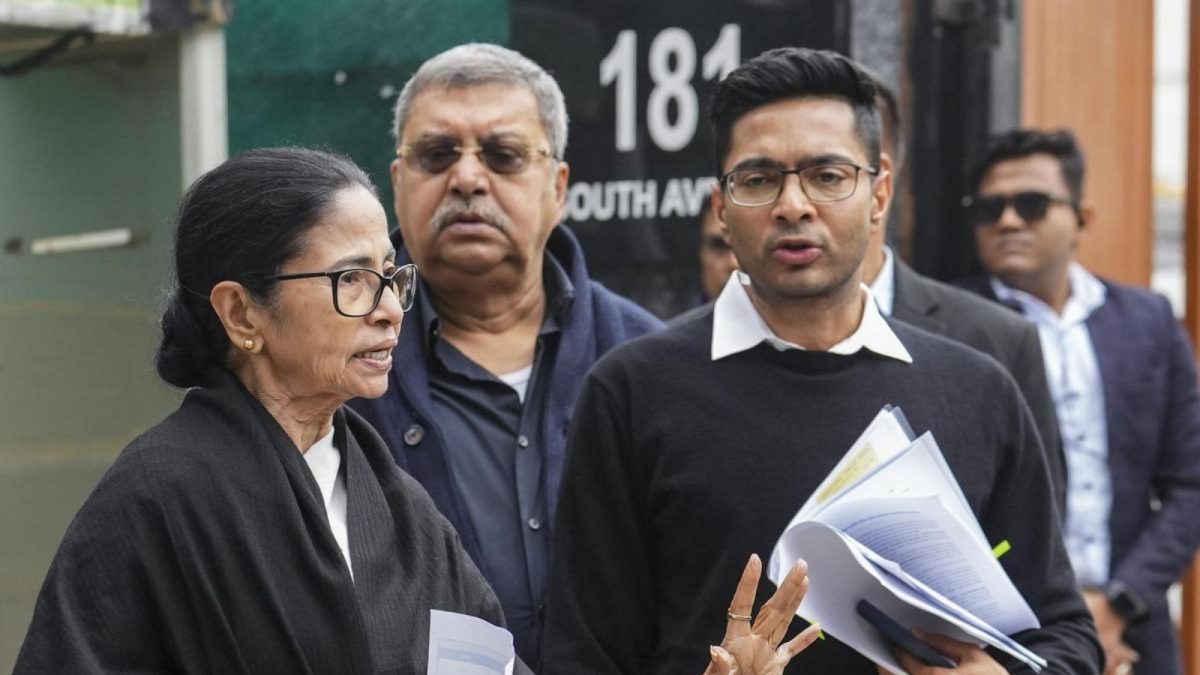
One of the defining features of Banerjee’s current phase is the consolidation of leadership within a close-knit circle. Figures like Abhishek Banerjee have taken on greater prominence, signalling a gradual shift towards structured leadership within the party.
This evolution reflects a broader question that all long-serving leaders eventually face: how to ensure continuity without diluting authority. While Banerjee remains the undisputed centre of power, the emergence of second-line leadership suggests an attempt to institutionalise decision-making.
At the same time, this concentration of authority also raises questions about internal democracy and the party’s ability to adapt beyond a single dominant figure. The balance between loyalty and organisational depth will be critical in shaping the party’s future trajectory.
Beyond Bengal: The Limits Of Expansion
Despite her national visibility, Banerjee’s political model remains deeply rooted in Bengal’s social and cultural context. Her appeal is closely tied to regional identity, linguistic connection and a style of politics that resonates strongly within the state.
Attempts to expand beyond Bengal have met with limited success. While she has positioned herself as a potential national alternative at various points, the transferability of her model remains uncertain. Regional leaders often command strong local bases but face structural challenges in scaling that influence nationally.
This does not diminish her significance. Instead, it highlights a broader trend in Indian politics, where regional leaders play a crucial role in shaping federal dynamics without necessarily dominating the national stage.
What Bengal Signals About Regional Leadership
Banerjee’s current phase offers a window into how strong regional leaders evolve over time. The shift from insurgent to incumbent requires not just policy adaptation but also a redefinition of political identity.
Her approach underscores how durability in politics today depends on a combination of welfare delivery, narrative control and organisational strength. Charisma alone is not enough; it must be reinforced by systems that sustain voter trust.
As the results approach, the outcome will determine more than just the immediate political future of West Bengal. It will also signal how effectively Banerjee has navigated this transition, and what it means for the next generation of regional leadership in the country.
Handpicked stories, in your inbox
A newsletter with the best of our journalism
News politics Mamata Banerjee’s Next Phase: Can She Balance Power, Welfare And Survival?
Disclaimer: Comments reflect users’ views, not News18’s. Please keep discussions respectful and constructive. Abusive, defamatory, or illegal comments will be removed. News18 may disable any comment at its discretion. By posting, you agree to our Terms of Use and Privacy Policy.

Stay Ahead, Read Faster
Scan the QR code to download the News18 app and enjoy a seamless news experience anytime, anywhere.





 English (US) ·