

 1 hour ago
4
1 hour ago
4
ARTICLE AD BOX
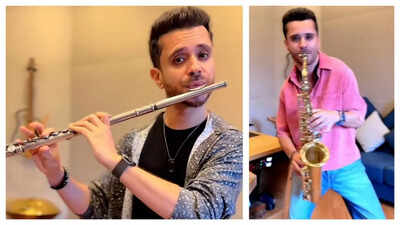
Composer Raghav Sachar talks about the diminishing recognition for instrumentalists in Bollywood, attributing it to budget constraints favoring synthetic sounds. He highlights how live music's depth is lost. Sachar also reveals music's personal power as a sanctuary, helping him navigate life's storms and find clarity, even during his father's critical illness.
Multi-instrumentalist and composer Raghav Sachar has spent decades shaping the sonic identity of some of Bollywood's most beloved films; often without audiences ever knowing his name.
From the strings of Salaam Namaste to the notes woven through Parineeta and Dhoom, his fingerprints are everywhere, even if his credit goes unnoticed. Soon to be featured in The Raghav Sachar Story, part of the docu-series Dreamers by Sudhanshu Rai, Sachar is finally stepping into the spotlight on his own terms. In a candid conversation, he speaks about the quiet erasure of instrumentalists from the industry's spotlight, and how music has served as both sanctuary and mirror through the personal storms of his life. ON RECOGNITION (OR THE LACK OF IT) "Instrumentalists often don't get the recognition they truly deserve. Many listeners don't even realise who's played the music they're enjoying." When Sachar began his journey in Bollywood, the landscape was different. "When I started working in films, live instrumentation was still very much a part of the process. Composers had the freedom to bring in talented musicians without worrying too much about budgets, as production houses would handle those costs."
But the economics of the industry shifted, and with it, the fate of the live musician. "Over time, things changed. Budgets became tighter, and a lot of responsibility shifted to a single music producer. That meant a choice had to be made; either invest in live musicians or rely on synthetic sounds. Naturally, many opted for the latter to save costs." The human cost of that choice, he says, has been significant. "This shift has had a direct impact on instrumentalists.
Their presence has reduced, and with it, their visibility. Even in my case, many people don't know the extent of my contributions across films, ads, and recordings because instrumental work often goes unnoticed." He is careful not to sound bitter, but the concern is real. "It's an unfortunate reality, because live music brings a depth and authenticity that's hard to replicate. While things are evolving, I do hope there's a renewed appreciation for instrumentalists and their craft in the industry." ON MUSIC AS LIFELINE Away from the debate around industry recognition, Sachar is remarkably open about what music means to him at a more personal, elemental level. "For me, music is absolutely a path to liberation. It's one of the purest forms of expression. When I'm playing or performing, there's no pressure, it's something I genuinely enjoy. And I think that joy translates to the audience as well." Life, he acknowledges, is never without its turbulence. "Like anyone else, I experience emotional ups and downs.
Life brings its share of challenges; family, relationships, responsibilities. But music has always been my anchor." The act of picking up an instrument, he says, is almost meditative. "The moment I pick up an instrument, I enter a different state of mind, a kind of zen space. It helps me calm down, gain clarity, and look at things from a fresh perspective. Playing music demands complete focus, so it naturally clears out distractions." Yet even this anchor has been tested. Sachar recalls a time when the music fell silent within him. "I remember a time when my father's health was critical, and I was deeply disturbed. For the first time, I found myself unable to perform something as simple as a musical line. That experience made me realise how closely emotional balance is tied to creative expression." The moment was a turning point. "Since then, I've become more conscious of managing my mental and emotional state. While challenges will always come, music continues to ground me. It helps me return to myself, every single time."



 English (US) ·