

 1 hour ago
4
1 hour ago
4
ARTICLE AD BOX
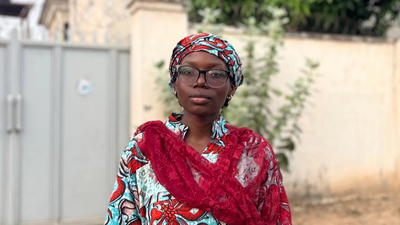
15-year-old Nigerian student Raheema Auwal-Panti is attracting international attention for an innovation that tackles two major challenges at once, plastic pollution and menstrual-product accessibility.
The founder of PantiPads, a biodegradable sanitary-pad initiative launched in 2025, has developed menstrual products made from agricultural waste materials that would otherwise be discarded. Her project uses cassava peelings, banana leaves and corn husks to create a more environmentally friendly alternative to conventional sanitary pads. The idea recently earned global recognition after being shortlisted among 35 teams worldwide in the 2026 Earth Prize competition.
Who is Raheema Auwal-Panti?
Raheema Auwal-Panti is a teenager from Minna, the capital of Nigeria's Niger State. She founded PantiPads after learning about the environmental impact of conventional disposable sanitary products.Many traditional sanitary pads contain significant amounts of plastic, which can remain in the environment for decades or even centuries after disposal. Concerned about the growing problem of plastic waste, Auwal-Panti began exploring ways to create a more sustainable alternative using materials readily available in her community.
Her motivation was not limited to environmental concerns. She also wanted to improve access to menstrual products for girls and women who struggle to afford them.
Turning agricultural waste into sanitary pads
The foundation of the project lies in the use of agricultural by-products that are commonly discarded after food processing and farming activities.PantiPads uses cassava peelings, banana leaves and corn husks. These materials are abundant in northern Nigeria, where agriculture plays a major role in local economies.Instead of ending up as waste, the plant-based materials can be processed into biodegradable sanitary products that break down far more easily than conventional plastic-based alternatives.Nigeria is one of the world's largest producers of cassava, a staple crop used in a variety of food products.Processing cassava generates large quantities of waste, including peelings and other by-products. When not properly managed, this waste can contribute to environmental problems such as water pollution, soil degradation and unpleasant odours.By incorporating cassava waste into sanitary-pad production, Auwal-Panti's project offers a potential way to reduce agricultural waste while creating a useful consumer product.
Addressing period poverty and menstrual stigma
Beyond its environmental benefits, PantiPads is designed to tackle challenges surrounding menstrual health.Access to affordable sanitary products remains a significant issue for many girls and women across parts of Africa. Limited access can affect school attendance, health and overall well-being.Auwal-Panti believes biodegradable sanitary products can help provide a safer and more sustainable option while encouraging greater awareness about menstrual health. She has also highlighted the need to address menstrual stigma, which continues to affect many young women and girls.
Recognition on the global stage
The project recently gained international attention through the Earth Prize, one of the world's leading environmental innovation competitions for young people.PantiPads was selected among 35 global finalist teams in the 2026 competition, which attracts entries from students across dozens of countries. The recognition has helped shine a spotlight on both the environmental and social goals behind the initiative.The Earth Prize is organised by the Earth Foundation, a Switzerland-based non-profit that supports young innovators working on solutions to environmental challenges.
Environmental benefits of biodegradable pads
Traditional disposable sanitary pads contribute significantly to plastic waste because many contain plastic-based layers and components.Biodegradable alternatives could help reduce landfill waste, lower plastic pollution, decrease dependence on petroleum-based materials and promote sustainable manufacturing practices.Because PantiPads relies on plant-based agricultural waste, the products are designed to decompose naturally and leave a smaller environmental footprint.
What comes next for PantiPads?
Although the project has gained international recognition, it remains in the development stage.Rather than immediately building a manufacturing facility, Auwal-Panti is focusing on working with existing producers, learning about production systems and building partnerships within the business community.Her long-term ambition is to establish local production facilities capable of manufacturing biodegradable sanitary pads on a larger scale.The initiative is also involved in awareness campaigns aimed at encouraging consumers to consider sustainable menstrual products as an alternative to conventional pads.
A young innovator tackling multiple challenges
What makes PantiPads stand out is its attempt to address several issues through a single solution. By transforming agricultural waste into biodegradable sanitary pads, Raheema Auwal-Panti is working to reduce plastic pollution, create value from farm waste and improve access to menstrual products. While the project is still evolving, its recognition on the global stage highlights how young innovators are increasingly contributing ideas that could help address environmental and social challenges in their communities and beyond.









 English (US) ·