

 4 days ago
5
4 days ago
5
ARTICLE AD BOX
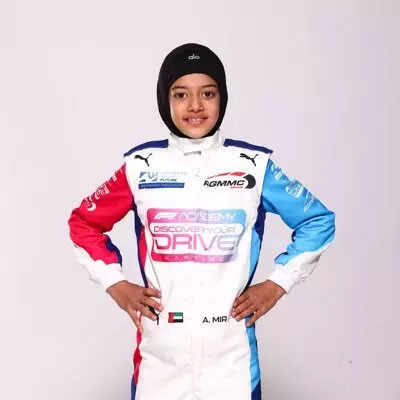
At just 11 years of age, Indian karting talent Atiqa Mir is fully aware of the magnitude of the task she has set herself. In a sport where no woman has competed in Formula 1 since 1992, she is chasing a dream shaped as much by history as by ambition. Racing in one of the most male-dominated environments in global sport, Atiqa says she prefers to confront stereotypes head-on rather than be overwhelmed by them. Speaking to PTI after an impressive international karting campaign, the young racer reflected on her journey so far and the obstacles she has learned to embrace. Atiqa believes entrenched perceptions play a major role in the lack of female representation at the highest level of motorsport.
She pointed out that Formula 1’s mixed-gender but heavily male landscape can discourage young girls, adding that her own self-belief and confidence are what drive her long-term ambition. Her rise through karting has rarely been comfortable. Often the only girl on the grid, Atiqa regularly finds herself racing against groups of boys who resent being beaten by her. She admits to facing frequent on-track intimidation, but says she responds with the same competitive edge.
According to Atiqa, the behaviour sometimes extends beyond aggressive racing. She has experienced brake checks and contact, incidents she notes are common in karting due to the lack of strict penalties. Over time, she says, learning how to handle such situations has become part of her development as a driver. Rather than losing focus, Atiqa uses each session as a learning opportunity, analysing what she can improve and allowing the rest to fall into place naturally. Motorsport is part of her family background. Her father, Asif Mir, is a former national karting champion and a Formula Asia vice-champion. However, Atiqa is clear that her career was not driven by parental pressure. She says she did not begin racing because of her father, nor did she initially harbour a clear ambition of reaching Formula 1. Her exposure to Formula 1 came only in 2021, when she watched her first race on television.
The Abu Dhabi Grand Prix that year, decided by Max Verstappen’s dramatic last-lap overtake on Lewis Hamilton, left a lasting impression and sparked her motivation. Verstappen has since become one of her role models, alongside her father. Atiqa admires the Dutch driver’s aggressive style and his ability to extract performance even when the car is not the fastest on the grid, pointing to his consistency and resilience during challenging seasons. On the track, Atiqa’s own results are beginning to reflect her potential. Competing in Europe for the first time this year, she finished inside the top nine at the RMC Euro Trophy, widely regarded as one of the toughest karting championships in the world. She described the season as a positive learning experience, particularly as she adapted to wet conditions and unfamiliar circuits. Racing in Europe, she said, exposed her to intense competition, new climates and varied driving styles. Atiqa has also achieved a significant milestone off the track. She became the first Indian driver to receive support from the F1 Academy, a key development pathway aimed at nurturing female talent. Asked about the difficulties women face in motorsport, Atiqa acknowledged that the early years can be especially challenging. She explained that newcomers are often dismissed as hobbyists rather than serious competitors. Over time, she believes, consistent speed and determination have helped change perceptions, allowing her performances to speak for themselves.



 English (US) ·