

 6 days ago
8
6 days ago
8
ARTICLE AD BOX
- News
- India
- Not feasible to impose blanket caps on domestic airfares: Civil Aviation Minister amid rising ticket prices
Ticket prices typically rise during festive seasons, Civil Aviation Minister K Rammohan Naidu said, but deregulation enables new airlines to enter the market and expand competition, he added.
Civil Aviation Minister K Rammohan Naidu on Friday said the Centre holds exclusive powers to cap airfares in extraordinary circumstances, but emphasised that fare caps are not a long-term or comprehensive solution to rising ticket prices.
Story continues below this ad
The minister was responding in the Lok Sabha during a debate on a private member’s resolution on regulating airfares across the country, moved by Congress MP Shafi Parambil. The resolution was later withdrawn.
 Naidu said the aviation ecosystem involves “multiple levels” and several commercial factors, including the financial viability of airlines. Domestic air ticket pricing remains “on par with other nations,” he said, adding that it would not be feasible to impose blanket caps on domestic fares.
Story continues below this ad
The minister underscored the government’s stance that a deregulated market benefits consumers. Ticket prices typically rise during festive seasons, he noted, but deregulation enables new airlines to enter the market and expand competition.
“If we want the civil aviation sector to grow, the first and foremost requirement is to keep it deregulated so that more players can enter the market,” Naidu said. However, he clarified that deregulation does not give airlines a free hand and that the government retains the authority to intervene when prices become abnormal.
Story continues below this ad
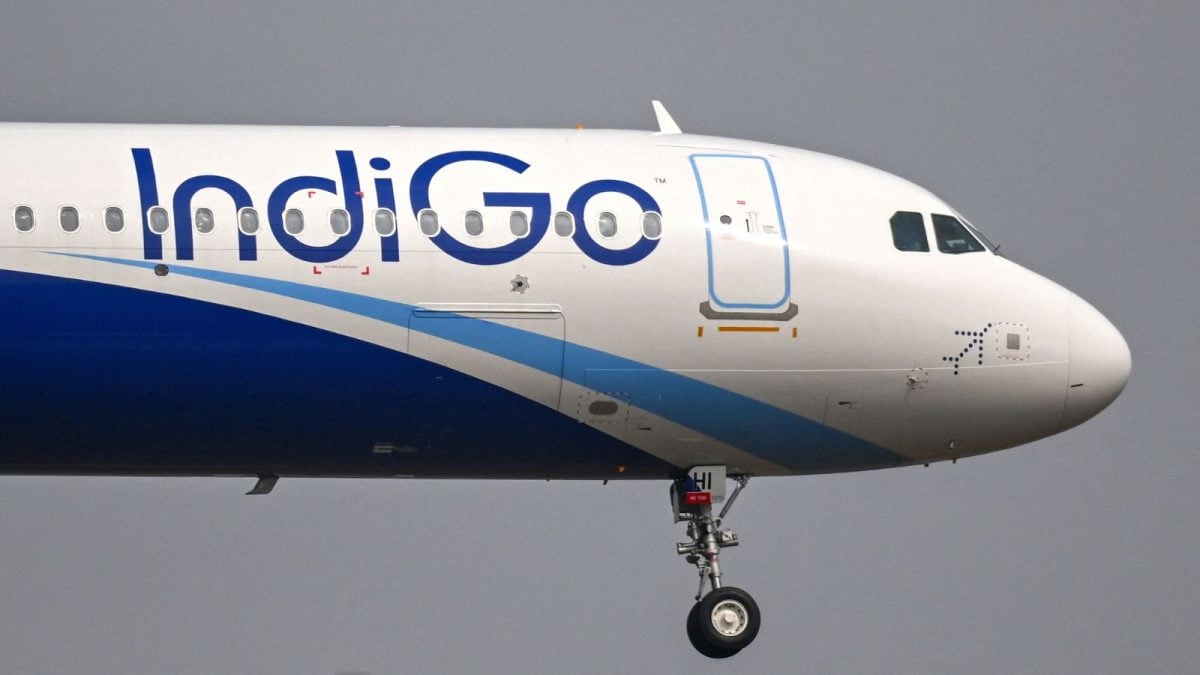
Earlier this month, the ministry imposed a distance-based temporary fare cap following widespread disruptions at IndiGo, citing it as an example of intervention triggered by extraordinary circumstances.
Pilot scheme for fixed fares underway
Naidu informed the House that state-owned Alliance Air had begun a three-month pilot programme offering fixed airfares. After assessing passenger benefits and reviewing feedback, the government may consider extending similar schemes to private airlines.
Stressing that fare caps cannot by themselves stabilise the market, Naidu said that airfares in India have seen a 43 per cent decrease when adjusted to the Consumer Price Index, making them affordable relative to inflation. He did not specify the time period for this comparison.
Story continues below this ad
A key bottleneck for airlines, Naidu said, is the limited availability of aircraft. Indian carriers collectively have more than 1,700 aircraft on order, but global supply chain disruptions continue to delay deliveries.
To address this, the government is pushing for aircraft manufacturing within India. “We are going to create a programme where aircraft can be built in the country. We should have a Made in India aircraft,” he said.
He mentioned that Hindustan Aeronautics Ltd (HAL) is in discussions with Russian partners regarding the Sukhoi SJ-100 regional aircraft. “They are going to get technology here so that we can build the plane here,” Naidu said. Talks are also underway with Brazilian manufacturer Embraer to encourage production in India.
Story continues below this ad
Opposition flags ‘loot in airfares’
During the debate, Congress MP Varsha Gaikwad argued that air travel has become inaccessible for many passengers. “There is loot in airfares… A ticket that earlier used to cost around Rs 5,000 to Rs 6,000 now costs Rs 25,000 to Rs 30,000,” she said, alleging a proliferation of hidden charges and reduced competition following mergers and shutdowns of airlines.
Samajwadi Party MP Ramashankar Rajbhar echoed similar concerns, saying that when a few companies dominate the sector, “they decide the fares as per their own will,” leading to overpricing fears.





 English (US) ·