

 1 hour ago
3
1 hour ago
3
ARTICLE AD BOX
3 min readMar 18, 2026 07:29 PM IST
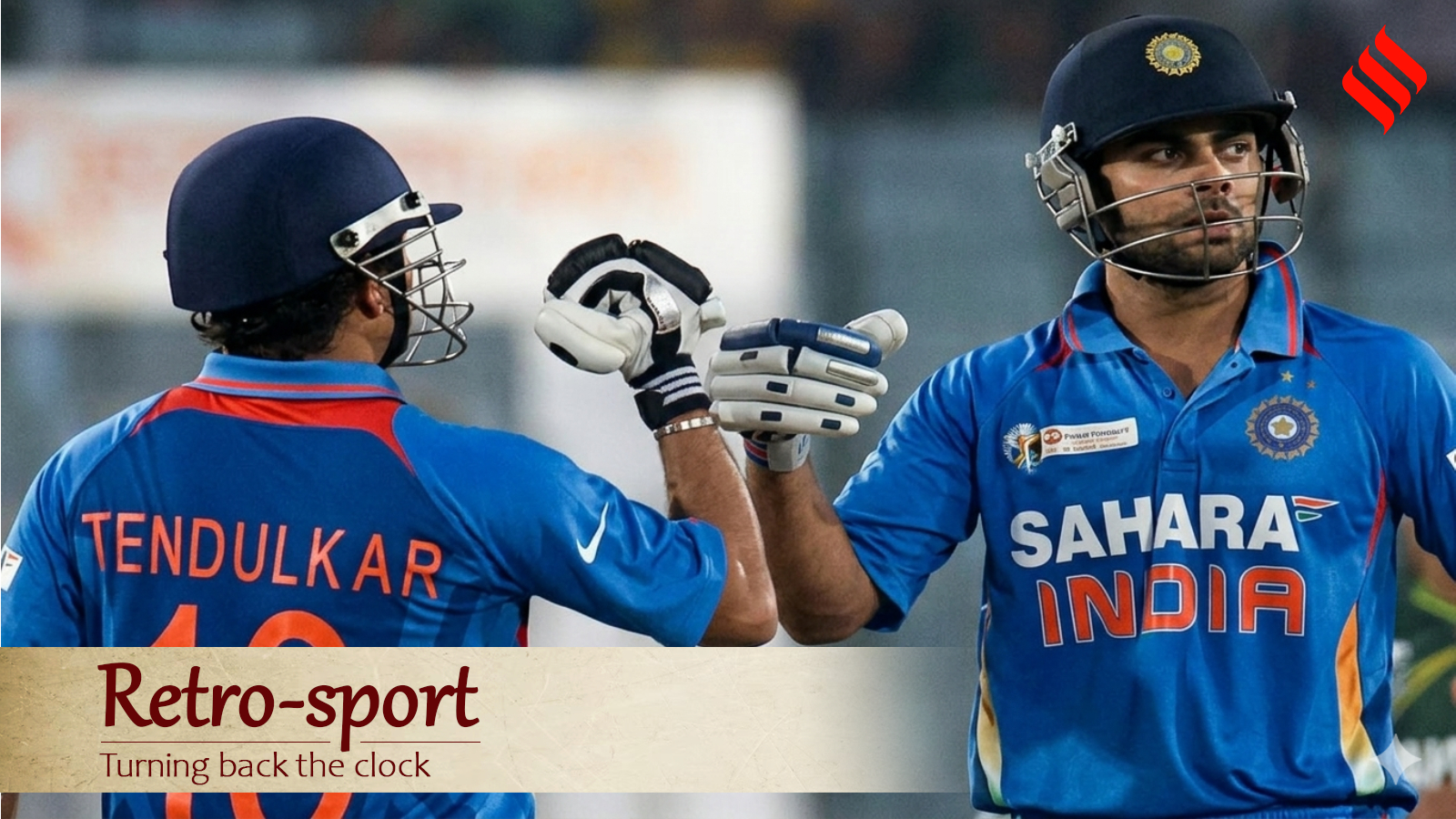 Sachin Tendulkar and Virat Kohli together at the crease as they help India chase a Pakistan's target. (Screengrab via YouTube)
It’s fitting in a way that Sachin Tendulkar’s last ODI appearance, on this day 14 years ago, coincided with his heir apparent firmly taking on the mantle of India’s batting talisman.
Virat Kohli already had Hobart – the unbeaten 133 off 86 balls against Sri Lanka helping India chase down 320 well inside 40 overs, keeping alive their hopes of making the tri-series final. The way the youngster dealt with the menace of Lasith Malinga – still a formidable force with his speed, yorkers, deception and change of pace – was a sight to behold. The Slinger went for 96 runs in just 7.4 overs that day.
But the knock against Pakistan 18 days later in Dhaka, where the Delhi boy’s mammoth 183 off 148 balls helped the team chase down 329 with more than two overs to spare, firmly gave him the moniker ‘chase master’.
It wasn’t known then but Tendulkar’s innings of 52 off 48 balls turned out to be his last in ODI cricket, and it was apt that he and Kohli had a 133-run partnership in just over 19 overs – after Gautam Gambhir got out to the second ball of the chase – to set the stage for the huge chase before spinner Saeed Ajmal became the last bowler to dismiss him in the format, caught by Younis Khan at slip off a doosra.
In fact, three of the best exponents of ODI batting came one after another that day, with Rohit Sharma (68 off 83 balls) putting on 172 for the third wicket alongside Kohli, a precursor of many such jugalbandis for India in the future.
Wahab Riaz was an upcoming Pakistan left-arm speedster in those days but had a day to forget as his four overs went for 50 runs.
That India had to chase down such a big score was understandable if one had a look at their bowling attack. It featured the likes of Praveen Kumar, Ashok Dinda – the latter giving a decent account of himself in a high-scoring game – and Irfan Pathan, who also went for quite a few. Off-spinner Ravichandran Ashwin was the most economical bowler, going for 56 in his 10 overs.
Story continues below this ad
The Pakistan innings was highlighted by the 224-run opening partnership between Mohammad Hafeez (105 0ff 113 balls) and Nasir Jamshed (112 off 104) in less than 36 overs.
Younis gave the team some late boost with a 34-ball 52, but all that has been relegated to the footnotes of history as Kohli made the match his own, taking another step towards becoming arguably the best batsman in the history of the 50-over format.
The high of the victory over the arch rivals was an isolated silver lining for India in the tournament. They had earlier lost to Bangladesh and eventually failed to make the final. It was Pakistan who faced the hosts in the title clash, scraping home by two runs to take the Asia Cup crown for the second time.
Nevertheless, the tournament was one of the first steps Kohli took towards becoming an ODI behemoth.





 English (US) ·