

 1 day ago
3
1 day ago
3
ARTICLE AD BOX
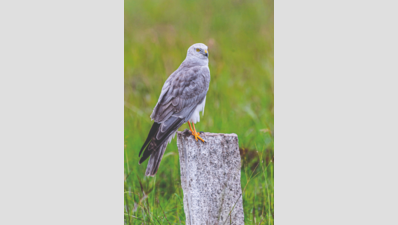
The pallid harrier that returned. Pic Sankar Subramaniam
Six countries and 6,000km, reads the geotag data on the pallid harrier which recently returned from Kazakhstan to the arid grasslands of Tirunelveli. “But the data will show us much more than its route,” says Arjun Kannan, researcher at Ashoka Trust for Research in Ecology and the Environment, which tagged the bird in 2023 as part of its project Harrierwatch, headed by T Ganesh.
“This bird has been returning to Tirunelveli during the winters in Kazakhstan. This time it landed back in mid-Oct,” says Arjun, adding that his team studies raptors based on the data retrieved from geotags. “We are still in the process of analysing the location data from the birds.” But the fact that the bird landed in the exact same spot it left shows how crucial the grassland landscape is for them, he says. “Fragmenting of habitat makes them disoriented.
They’re selective and choose only grassland habitats, not croplands.”In a similar study conducted on Montagu’s harriers earlier, the team had published their migration routes, how they respond to wind, where and how they use the stopover sites such as the Thar Desert and how they avoid high altitudes of the Himalayas. The birds are tagged using a GPS-GSM tag. Since 2016, eight harriers have been tagged by Harrierwatch and the data studied.
“The harrier is a solo traveller and not a flock migrant, but the interesting fact is that no one teaches them these routes. The juveniles make their first trip by themselves, not by following the adults. The route is mapped in their genetics. The birds have been following this route for centuries, probably,” says Arjun. For Montagu’s harriers, the females migrate first from central Asia, followed by the males, and then the juveniles.The typical route of the birds is India-Pakistan-Afghanistan-Tajikistan-Uzbekistan and then to Kazakhstan, a trip that takes them about 20 days. While the pallid harriers in Central Asia choose India, those in Europe migrate to Africa during winters as it’s closer for them. The bird flies through the day and rest for the night, hunting for prey in between. “We call them ‘fly and forage’ migrants. They’ll fly for a few 100km and by the time it’s dusk they roost in one place.
Then next morning, they start again,” says Arjun.On the way, they hunt and feed on birds and rodents, their primary prey. The Montagu’s harrier, on the other hand, preys majorly on grasshoppers, because of which the fragmentation of agricultural land affects them most. Harriers are an understudied species as they are rather inconspicuous, says Arjun. “They fly close to the ground and are not as big as many other raptors. Spotting them is not easy as they roost on the ground unlike other raptors, amid grass cover. Though they fly solo, they roost communally, in one place.” Besides the loss of grasslands, many of their foraging areas get converted to agriculture which is also a major threat to the species. “Spraying of pesticides means loss of prey.”HOMEBOUND









 English (US) ·