

 1 hour ago
2
1 hour ago
2
ARTICLE AD BOX

In Tanzania, Lake Natron's crimson waters, formed by volcanic activity and rich in sodium carbonate, preserve animals in stone-like forms. This highly alkaline lake, reaching 60°C, scorches unadapted creatures, while salt-loving microbes create its vibrant red hue. Despite its deadly nature, it's a vital breeding ground for lesser flamingos.
Nature hides some of the most incredible secrets, some of which are still unknown to mankind. Among these, there are stories that whisper surprising truths of life, death, and ancient forces changing our world.While water bodies are considered sacred to most Indians, who pray to them on special occasions and in daily life and pay gratitude for life and sustainability, among the hot water springs, lakes, and rivers in India, there is a unique water body in Africa that is red in colour and turns creatures into a stone-like material.There is a crimson, mirror-like lake under African skies, where nature plays creator and destroyer.Flamingos dance on its edges, defying the odds in a pink parade against red chaos. This isn't just geography; it's a reminder of Earth's wild balance.
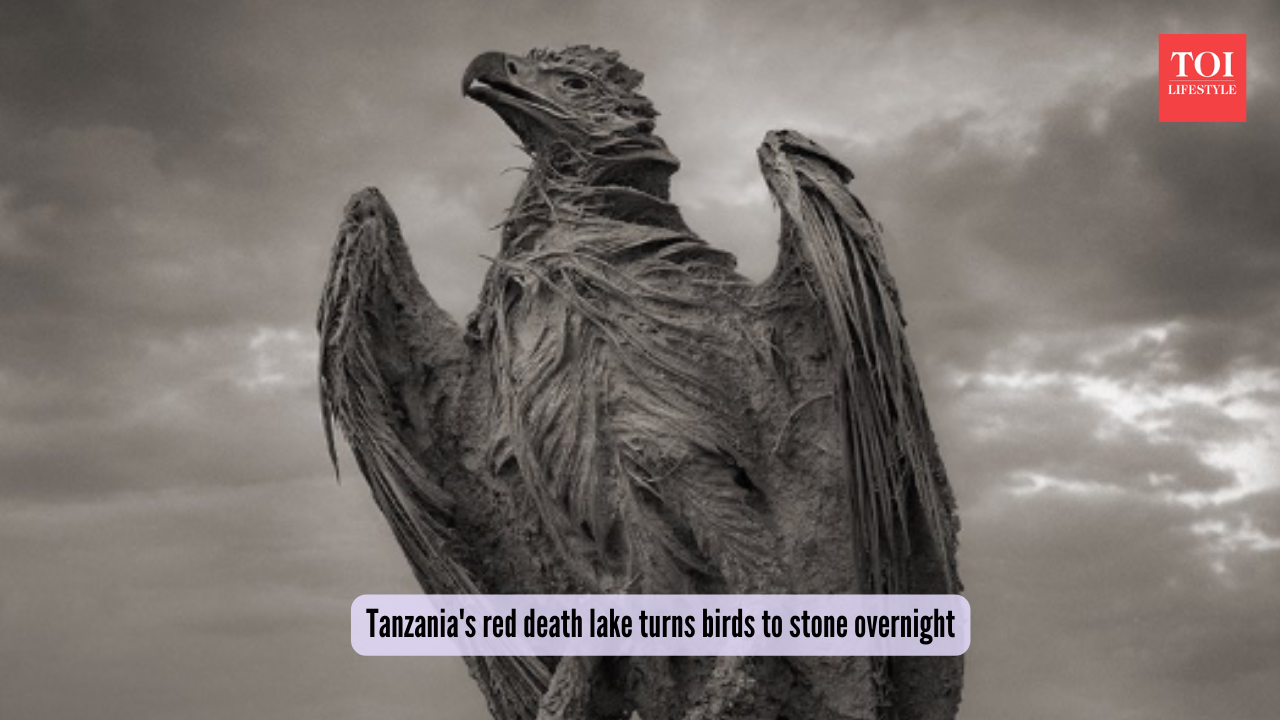
Tanzania's red death lake turns birds to stone overnight (Photo: @nickbrandtphotograph/ Instagram)
How was Lake Natron formed
Located in northern Tanzania, Lake Natron is one of East Africa's primary alkaline lakes, formed approximately 1.5 million years ago through intense volcanic rifting and tectonic movements.As detailed in Bradt Guides, these geological forces gave rise not only to the lake but also to the neighbouring Ol Doinyo Lengai, or the Maasai “Mountain of God,” while infusing the waters with high concentrations of calcium bicarbonate and sodium carbonate.
Live Science reports that salts and minerals continue to seep into the lake from surrounding hills and subsurface hot springs, maintaining its status as a terminal basin with no outflow to rivers or oceans. In summer, the shallow waters can reach temperatures of 60°C, and the pH ranges from 10.5 to 12, rendering it as corrosive as ammonia.Its sibling, Lake Bahi, shares this terminal fate, but Natron steals the spotlight with its blood-red glow from haloarchaea and cyanobacteria.
The stone-making magic
Nick Brandt's 2013 book Across the Ravaged Land became the talk of the town for his unique photographs of petrified animal remains along Lake Natron's shores. “I unexpectedly found the creatures, all manner of birds and bats, washed up along the shoreline of Lake Natron,” Brandt wrote.
“No one knows for certain exactly how they die.” He carefully positioned the calcified carcasses into lifelike poses before photographing them, reminiscent of the basilisk's stone-turning victims in Harry Potter and the Chamber of Secrets.
How do animals turn to stone
The lake's extremely high pH levels scorch the eyes and skin of creatures unadapted to its conditions, leading to dehydration through the rapid loss of fat and moisture.
Sodium carbonate, the same substance ancient Egyptians used for mummification, acts as a natural preservative, encasing the bodies in stone-like shells that resist decomposition. Birds often plunge to their deaths after mistaking the reflective surface for solid ground; rather than instant demise, they endure a gradual, fatal process.
Red waters but hidden life
Salts explain the colours of the water body, but salt-loving microbes like cyanobacteria turn it vivid in colour, thriving where others perish. Lesser flamingos flock here as their sole East African breeding site, feasting on the algae for pink feathers.Millions gather in the breeding season, turning the shores crimson-pink, with no predators daring the caustic brew. Fish eagles, doves, wildebeest, and ostriches stick to nearby wetlands and not the lake.Photo: @nickbrandtphotograph/ Instagram









 English (US) ·