

 1 day ago
2
1 day ago
2
ARTICLE AD BOX
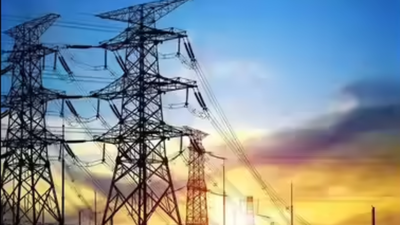
The Centre on Wednesday released the Draft National Electricity Policy (NEP) 2026 for public consultation, linking it with a roadmap to overhaul India’s power sector in line with the Viksit Bharat @2047 vision.The draft policy, issued by the Ministry of Power, seeks to replace the existing National Electricity Policy notified in 2005, reflecting the transformation of the sector over the past two decades and addressing persistent challenges in distribution, tariffs, and financial viability.Draft National Electricity Policy 2026: Top points to know
- Replaces 2005 policy: NEP 2026 will supersede the National Electricity Policy of 2005, which focused on power shortages, access deficits and infrastructure gaps.
- Public consultation opened: The draft has been released for stakeholder feedback, including states, DISCOMs, regulators, industry and consumers, before finalisation.
- Higher consumption targets: Per capita electricity consumption is targeted at 2,000 kWh by 2030 and over 4,000 kWh by 2047, compared with 1,460 kWh in 2024–25.
- Aligned with climate goals: The policy supports India’s commitments to cut emissions intensity by 45% by 2030 (from 2005 levels) and achieve net-zero emissions by 2070, accelerating the shift to low-carbon energy.
- Mandatory resource adequacy planning: DISCOMs and State Load Dispatch Centres will prepare advance Resource Adequacy plans, while the Central Electricity Authority will draw up a national-level capacity plan.
- Tariff reform push: Automatic annual tariff revisions linked to an index are proposed if state regulators fail to issue tariff orders, alongside greater recovery of fixed costs through demand charges.
- Cross-subsidy reduction: The draft proposes exempting manufacturing, railways and metro railways from cross-subsidies and surcharges to improve industrial competitiveness and reduce logistics costs.
- Renewables and storage expansion: Market-based renewable capacity addition, large-scale battery and pumped storage deployment, parity in scheduling of renewable and conventional power by 2030, and peer-to-peer trading of distributed renewable energy are envisaged.
- Thermal power repositioned: Older thermal plants may be repurposed for grid support, integrated with storage, and explored for industrial uses such as district cooling and process steam.
- Major nuclear push: In line with the SHANTI Act, 2025, the policy targets 100 GW of nuclear capacity by 2047, including small modular and advanced reactors, with scope for commercial and industrial use.
- Distribution overhaul: Measures include achieving single-digit AT&C losses, shared distribution networks, creation of a Distribution System Operator (DSO), N-1 redundancy in large cities, and undergrounding networks in congested areas.
- Power market and transmission reforms: Stronger market surveillance, parity in transmission tariffs for new renewable capacity by 2030, and safeguards against speculative holding of connectivity are proposed.
- Cybersecurity and data sovereignty: Mandatory domestic storage of power-sector data and a robust cybersecurity framework are part of the draft.
- Technology indigenisation: Transition to indigenously developed SCADA systems by 2030 and domestic software solutions for critical power-system applications is planned.




 English (US) ·