

 1 hour ago
3
1 hour ago
3
ARTICLE AD BOX
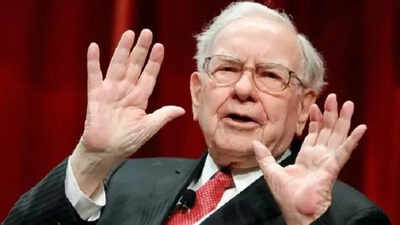
The world's richest investor, Warren Buffett, did not build his reputation purely on financial acumen. Much of what has kept him trusted across decades is something far less quantifiable: a plain-spoken relationship with the truth.
That quality shows up in how he runs Berkshire Hathaway, how he writes his annual shareholder letters, and how he talks about failure, his own included. So when he says something about honesty, it carries a particular kind of credibility.Quote of the day by Warren Buffett (Chairman and CEO of Berkshire Hathaway)"Honesty is a very expensive gift. Don't expect it from cheap people."
Breaking down what Warren Buffett’s quote actually means
The quote works in two parts, and they need each other. The first part, that honesty is expensive, reframes something most people assume should come naturally. We are taught early that telling the truth is simply the right thing to do, a baseline, not a sacrifice.
But Buffett's framing pushes back on that. Honesty, genuine honesty, costs something. It can cost comfort, approval, convenience and sometimes relationships.
Telling someone what they need to hear rather than what they want to hear is rarely the path of least resistance.The second part follows from the first. If honesty carries a real cost, then not everyone is willing to pay it. The word "cheap" here is doing specific work. It does not mean poor in a financial sense.
It refers to people who are unwilling to bear any personal cost for the benefit of other people, whose default is self-preservation over truthfulness. Put together, the quote is essentially a warning dressed up as wisdom: know who you are dealing with before you go looking for straight answers.
Why this quote lands differently depending on where you are in life
There is also disappointment in being honest with someone who has never been capable of being honest in return. We have all been there before, dealing with someone who gives you vague information to dodge confrontation, or a friend who says only what he thinks will make your life easier.We feel betrayed at that moment. With time, we come to understand that this person was not being malicious but simply unwilling to invest in honesty. They avoided the discomfort that comes with telling an uncomfortable truth. That is what Buffett is pointing at, not evil, but a kind of smallness.The quote resonates because the experience it describes is so common. Whether you are a first-year employee trying to figure out if your work is actually good, or someone navigating a personal relationship where you need a real answer, the question of who will actually be honest with you is not trivial.
Knowing the answer in advance saves you from building expectations on unstable ground.
Honesty is something that requires character, not just intention
Most people believe they are honest. Very few people think of themselves as liars. But there is a wide stretch of territory between outright lying and genuine honesty, and that is where much daily communication lives.Buffett's framing draws attention to that territory. Being honest is not only about avoiding false statements. It is about volunteering, the thing someone needs to know, even when it would be easier to stay quiet. It is about giving a real opinion rather than a vague one, which would create less friction. It is about being willing to say "I was wrong" when the evidence points that way.None of that is free. Each of those moments requires a person to put something like their comfort, their image, their short-term ease, on the line. People who are unwilling to do that will find ways around it. They will phrase things carefully. They will speak in half-truths. They will stay silent when speaking would cost them something.This is what separates honesty as a value from honesty as a habit. A lot of people hold the value.
Far fewer have built the habit because it demands repeated payments.
How Buffett has lived this principle and not just quoted it
What gives the quote its weight is that Buffett has not simply said things like this; he has demonstrated it throughout his career. His annual letters to Berkshire Hathaway shareholders are notable in the investment world partly because he writes openly about mistakes. He names them, explains what went wrong and does not hide them inside language designed to soften the damage to his reputation.That is not standard practice. Most corporate communication is carefully managed to minimise exposure. Buffett chose a different approach, which, over time, has built more trust than careful messaging ever could have.He has also been direct even when it was uncomfortable. He has spoken plainly about companies he considered overvalued, financial instruments he deemed reckless, and practices in the investment industry he found hollow.
These were not cost-free positions to take. They invited disagreement and sometimes ridicule. He took them anyway.Whether that reflects a principled commitment to honesty or simply a temperament that finds straightforwardness easier than most, probably both, the pattern is consistent enough to suggest the quote is not abstract philosophy. It is something closer to a description of how he actually operates.
What does the quote mean practically
Outside the realm of business, the quote has a quiet utility in everyday life. It changes the question from "why isn't this person being straight with me?" to "Is this someone who is actually capable of being straight with me?"That shift matters. The first question often leads to frustration or self-doubt.
The second tends to produce clarity. If someone consistently softens everything, avoids giving direct answers, or adjusts their opinion to match whoever they are talking to, that is information. It tells you something about where they stand and what you can reasonably ask of them.Buffett's quote does not suggest that dishonest people are inherently bad or should be cut off. It suggests something more measured: calibrate your expectations to the person in front of you. Some people have built the capacity and the willingness to be genuinely honest. Others have not. Expecting the same thing from both is where the disappointment comes from.That is practical advice. And it comes from someone who has had a long time to observe how people behave when truth and convenience point in different directions.








 English (US) ·