

 1 hour ago
4
1 hour ago
4
ARTICLE AD BOX
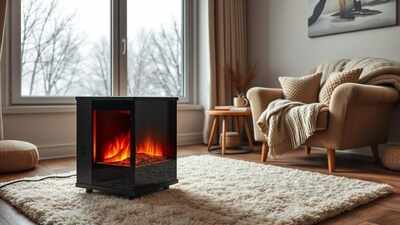
AI-generated image for representation purpose
Think of those foggy, chilly cold winter mornings when the alarm goes off. Instead of jumping out of bed, you find yourself pulling the blanket tighter, dreading the moment you'll have to step onto the cold floor.
The bathroom feels like a freezer, and even after getting dressed, the chill seems to follow you around the house. Your favourite hoodie isn't cutting it anymore, and those thick socks barely help. That's when it hits you: this is the winter you actually need to buy a room heater.With the onset of harsh winter weather, an appliance like a room heater has become a necessity in most homes. However, there is a world of difference between buying a room heater and buying the right room heater.
While the primary function of a room heater is to provide warmth, there are many associated factors, including electricity consumption, safety, air quality, and ease of use.The challenge arises as soon as consumers begin their purchase research. There are a variety of unfamiliar terms used to describe products on sale these days, including oil-filled radiators, halogen heaters, convection heating, quartz tube heaters, watts, and energy efficiency factors.
Different heaters sell for a range of prices that are not clear to the buyer.
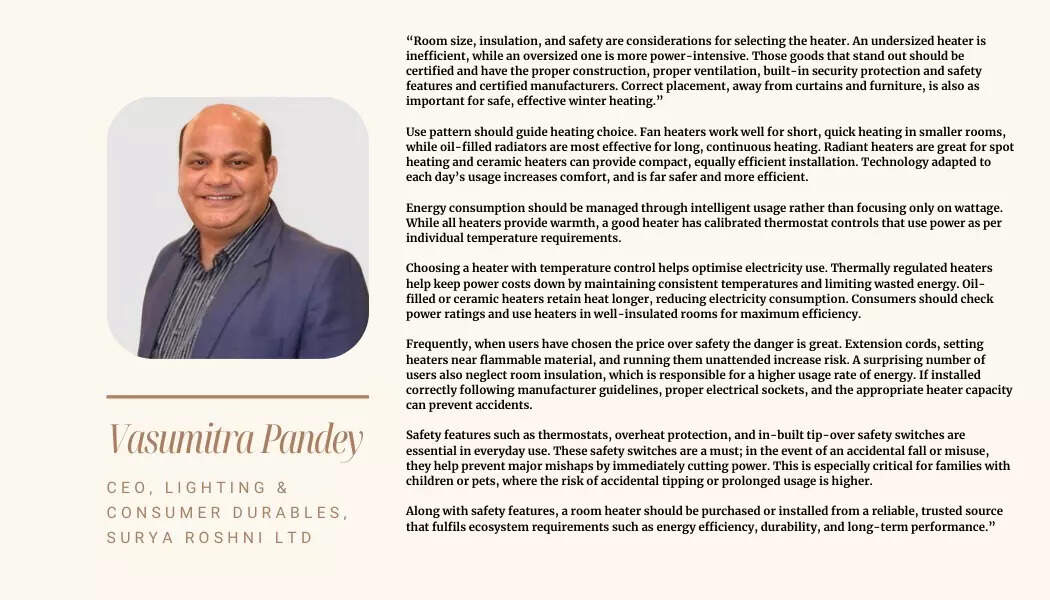
One aspect that goes unnoticed is the cost of a heater. A bad choice can escalate electricity bills by thousands of rupees, while a cheaper one may lack essential safety features. Since a room heater is used in winters daily for an extended period of time, hopefully for several years, buying a heater requires some serious consideration.It begins by explaining what room heaters are, then presents a list of points outlining why a room heater is a worthwhile product for readers to buy.
Different kinds of room heaters
Room heaters vary in heating type, each with its own merits and demerits:Oil-Filled Radiators: Oil-filled radiators heat oil inside the heater, which then emits heat into the room. Oil-filled radiators operate noiselessly and continue to release their retained warmth even after they go off. This type of electric heater does not consume oxygen. However, its drawback is that it heats slowly, requiring 15 to 20 minutes to warm up the room.These types of heaters warm air through convection. The warmed air rises, thus allowing it to circulate effortlessly. These heaters are small, portable and can be stored in a corner. However, they are designed for small, enclosed spaces.
Quartz heaters: These heaters feature quartz heating elements that heat quickly, providing instant heating. Quartz heaters are suitable for temporary heating, such as heating a bathroom and a study.
However, they provide directional heating, warming the person in front of them rather than the whole room.Halogen heaters: These heaters function like quartz heaters but sometimes include an oscillating function for better coverage of larger spaces. They cool down faster than a convection heater and consume less energy, although, like quartz, they use radiant heating rather than heating the air.Ceramic Heaters: Ceramic heaters use ceramic heating rods and incorporate a fan to circulate heated air.
They heat quickly, retain heat, and are considered a safer alternative to other metal coil heaters.Fan heaters or blowers: These heaters are the most common and least expensive. They warm up the room fast through coils of metal and the aid of a blower. However, the appliances are pretty loud and can dry up the air. Prolonged exposure may trigger skin dryness, irritated eyes, and respiratory discomfort.
Understanding your heating requirements
It is crucial to evaluate your needs before you start comparing different heater models.
Room size is the most significant factor in determining how much and what type of heating you require.Smaller areas hold heat better than larger ones. A small bedroom with one window needs far less heating capacity than a large family room with several windows and balcony doors. An adequate space heater for a 10×10-foot room is nowhere near as effective in a 15×20-foot hallway.
Room placement can also play a role. Heaters must be at least 2 feet away from furniture, curtains, bedding, or any combustible materials.
This can become a problem if the rooms are crowded with furniture, no matter the power rating. Buyers need to consider the available floor space when positioning the heater safely.
Selecting the right wattage
The wattage of heaters may range from 400W to 2000W, or even higher. It prevents underheating or excessive electricity bills.Typically, 10 watts per square foot is recommended. For a 150-square-foot room, 1500 watts of heating power is required.
However, this also depends on the ceiling height, insulation, window sizes, and climatic conditions.Rooms with high ceilings and poor insulation require higher wattages. High-floor apartments lose more heat, so they need higher wattage than those on lower floors. Also, a hotter area needs lower wattage than a colder one.However, it is not necessarily an advantage to go for the highest wattage available for purchase.
For instance, a 2000W room heater will be a waste in a small bedroom, as it will consume a lot of energy and cause discomfort due to frequent start-ups and cut-offs.
Crash avoidance and prevention
Safety features are essential to ensure peace of mind. Emphasise the importance of tip-over protection and overheat protection to help readers feel confident in their choice, especially in households with kids or pets.Overheat protection (thermal cut-out): A safety device that turns off the heater when it gets too hot from lack of air circulation or from prolonged use.
Cool-touch surfaces protect against burns during adjustment and movement after prolonged usage.Safety grills are barriers that shield the user from coming into contact with the heating elements. The buyer needs to check that the gaps between the grills are small enough that fingers cannot pass through.A stable base design prevents tipping. A heater with a broad, heavy base will be more secure than one that stands tall and thin.
ISI certification ensures that the heater is safe for use in Indian conditions, about electrical insulation and heat resistance.
Check energy effiency to save on power bills
Understanding energy efficiency helps you better manage electricity costs. Highlight how choosing an energy-efficient heater can make you feel responsible and in control of your expenses.Room heaters are some of the most electricity-consuming domestic appliances. This can be observed when the appliance is used for several hours daily.The BEE rating serves as a tool for selecting energy-efficient models. More efficient heaters are rated higher and use less power to deliver the same level of heating. Although they are costlier, they may prove to be economical over one or two winters.Even thermostats help regulate temperature, preventing heating when the room is warm enough. ECO mode operation is at low wattage to provide warmth.Timer functions help prevent the heaters from running when there is no need, such as when people are sleeping or away.Different technologies influence power consumption. Oil-filled radiators store heat for longer, while ceramic heaters are more efficient compared to coil heaters; in most cases, however, fan heaters tend to consume more power.
Health and comfort factors to keep in mind
Heaters vary in their effects on indoor air quality and comfort. Some types may slightly reduce the oxygen content and dry out the air. One might experience dry skin, red eyes, and congestion.
Oil-filled and ceramic radiators are more tolerable than other types that use fans and coils.Asthmatic and respiratory patients should avoid heaters that circulate dust and cause dryness. Oil-filled and ceramic heaters will be more suitable for such households. For households with newborn or elderly members, it is essential to have gentle yet constant heating. Oil heaters with thermostat controls can ensure this.
Always check for noise levels
Noise is an essential factor, especially in bedrooms and office spaces. Oil-filled heaters are virtually noiseless. Convection heaters are also noiseless, though there may be a slight clicking sound. Fan heaters and ceramic heaters with a fan are louder, while halogen heaters with oscillation can produce a slight mechanical sound.Comparing noise levels (in decibels) may also be helpful. Noise levels below 40 dB are considered quiet, and those above 50 dB may be distracting.
Portability and storage points you should know
When using heaters in multiple rooms, portability matters. It can be very easy with light-weight heaters that have handles. Even oil-filled radiators come with wheels.Compact heaters are convenient to store, but may not effectively warm large areas. Storage-friendly models are applicable when winters are short.
Understanding the true cost
The purchase is only a part of the total price and is usually lower than the operating expenses. For example, a 1500W heater, working for 5 hours a day, 90 days, at a unit price of Rs 8, can swell the bills to around Rs 5,400 per year.Operating costs enable the calculation of value by comparison. A higher-priced, energy-efficient heater may cost less than a less expensive, less efficient one.To select an appropriate room heater, factors such as room size, safety, efficiency, comfort, noise levels, and price must be considered. There is no room heater suitable for all houses. Safety and proper wattage are, at all times, a priority. Other considerations in this context include remote control or digital displays. With proper selection, a room heater could supply a room with adequate warmth, controlled electricity bills, and peace of mind during the winter months.









 English (US) ·