

 1 hour ago
2
1 hour ago
2
ARTICLE AD BOX
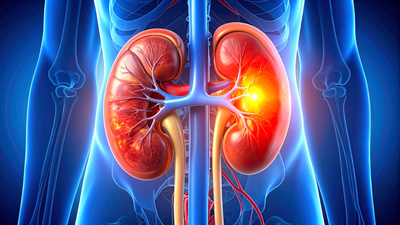
Bhubaneswar: Sambalpur and Cuttack districts have reported around 7,000 CKD cases out of the state’s 19,888 cases in the last 3 years.While there is a study on chronic kidney disease (CKD) prevalence in Narasinghpur, Cuttack district, a hotspot, there is no govt-sponsored study in Sambalpur district to find out the reason behind the increase in CKD cases.Dr Bibekananda Kar, a senior nephrologist, said his team conducted a study in the Narasinghpur area of Cuttack district in 2014 to find out the reason behind the high incidence of CKD cases. “We found the presence of heavy metals and fluoride in the drinking water. It affected the kidneys,” he added.He said they did not conduct any study in Sambalpur district. “We need to know whether heavy metals and fluoride are present in the drinking water of Sambalpur district.
A study can help us understand the reason behind the increasing CKD cases in these 2 districts,” he added.Additional director of health services (non-communicable diseases) Susanta Kumar Swain said there is no concrete data about CKD prevalence in the state. “To record each CKD patient, we are readying to start a CKD registry in the state by the end of this financial year. Even the block-level hotspot identification and follow-up investigation will help us know the exact cause of CKD in particular areas,” he added.
“We only collect data on patients undergoing dialysis at different units of govt hospitals across the state. As Cuttack has the premier SCB Medical College and Hospital and Sambalpur has VSS Institute of Medical Sciences and Research (VIMSAR), many CKD patients prefer dialysis and further treatment at these hospitals. Because of this, these 2 districts report a huge number of CKD cases,” he added.Swain further said many people who work outside the state get CKD at their workplace and get dialysis and further treatment at their native places in these districts.
“To get a real picture of CKD prevalence, we need to wait for our detailed study to be over,” he added.Dr Sai Prasad Sahoo, a senior consultant nephrologist, said there is a need for a thorough study of the issue by conducting medical investigations in areas to determine the exact cause of the problem. A genetic study of the population is also required, he added.









 English (US) ·