

 1 hour ago
4
1 hour ago
4
ARTICLE AD BOX
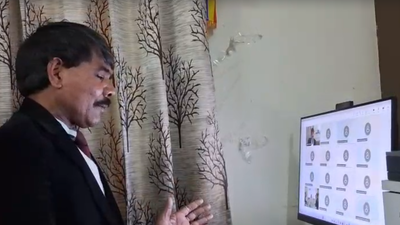
LUCKNOW: The proposal for a ‘shared' power distribution system through the amendment of Section 14 of the Electricity Act, 2003, hogged the limelight in a meeting to discuss 424 suggestions and objections received on the draft Electricity (Amendment) Bill, 2025, on Friday.The meeting was chaired by Union power secretary Pankaj Agarwal and attended by Central Electricity Authority (CEA) chairperson Ghanshyam Prasad and 35 others, including representatives of FICCI, MSME, private discoms, consumer advocacy groups, and discoms.While the issues ranged from cost-reflective tariffs to renewable obligations, the group focused on proposed amendment to a clause in Section 14 of the Act which will allow multiple distribution licensees (private discoms) in the same area to share the existing power distribution network.Proponents call it "the missing link for true retail competition" while sceptics warn that "it could fracture accountability and push household tariffs higher if legacy costs are left unresolved".At the heart of the debate is a simple edit in the clause with the addition of the word "shared".The existing law envisages private discoms operating through their own distribution systems parallel to the state-owned discoms.
The 2025 draft flips that premise by explicitly permitting supply "through their own or shared distribution system, in accordance with the framework as specified by the power regulatory body".Paired with a re-cast Section 42(1) that makes "non-discriminatory open access a statutory duty" (non-discriminatory access to power distribution infrastructure to any private player), the reform would enable one licensee's network to be used by another on regulated terms.In plain terms, the wires can be common; the suppliers can compete. Officials described this as the "competition on the wires" moment the sector has long anticipated, aiming to curb wasteful duplication — two sets of poles and cables for the same street — and to lower long-run system costs by using a single set of assets more intensively.Consumer advocacy groups, however, issued sharp warnings.Member of the Central Electricity Regulatory Commission's (CERC) advisory committee and chairman of the Uttar Pradesh Rajya Vidyut Upbhokta Parishad (UPRVUP), Avadhesh Kumar Verma, who was among the 37 participants shared the concerns."Our first concern was tariff stress on the owner of the network. These discoms carry capital expenditure (legacy capex), long-term power purchase agreements (PPAs), and regulatory assets built over the years to serve everyone. If new entrants cherry-pick high-value consumers using the existing infrastructure, the owner must still recover historical costs," Verma said."Without a carefully designed cost-sharing and settlement mechanism, we argued, household tariffs could rise to plug unrecovered gaps.
New suppliers riding the shared network may not face any capital expenditure (spent on creation of infrastructure)," said Verma.Between 2022 and 2030, state-owned discoms require an estimated Rs 7.42 lakh crore of investment and the Centre's Revamped Distribution Sector Scheme (RDSS) is already underwriting recovery — Rs 44,000 crore earmarked for Uttar Pradesh alone."If private companies wish to use the public distribution network, they should also participate proportionately in long-term investments that sustain reliability and resilience.
Otherwise, operational and legal complications may multiply, and public interest may yield to corporate advantage," Verma said.Drawing on experience in generation — where private players now account for roughly 54% of capacity — the advocacy group cited instances of peak-hour prices touching Rs 10 per unit as a ground for caution.Other issues discussed in the meeting included cost-reflective tariffs, giving regulators power to issue suo motu tariff orders if discoms delay filings to end regulatory asset spiral that has pushed losses to Rs 6.9 lakh crore in power sector across India.A regulatory asset spiral is when delayed tariff increase cause unpaid costs to pile up year after year, causing huge losses for discoms.Further, the draft eliminates subsidies for manufacturing enterprises, metro systems, and railways within five years — a move welcomed by the industry but opposed by those representing vulnerable groups.They claim that subsidy rollback will hurt agricultural and small consumers, until govts step in to bail out the affected people.
"Subsidies are not free gifts. They are social justice mechanisms for those who cannot compete in an open market," said a member of the advocacy group.With smart prepaid meters and Meter Data Management/Head-End Systems scaling nationwide, the group member in the meeting pushed for stronger cybersecurity safeguards, noting that practice must catch up with ambition.At the same time, the group underscored consumer choice under Section 47(5), arguing that households should retain a legal option between prepaid and postpaid, rather than being nudged into a single mode through subordinate rules. The group said that rules should not be formulated in conflict with the provisions of the Act.The suggestion and objections raised during the meeting will now be a part of the final draft of the Electricity (Amendment) Bill which is expected to be tabled in the upcoming parliament session scheduled in Feb.







 English (US) ·