

 1 week ago
5
1 week ago
5
ARTICLE AD BOX

‘Ticket resale may be smaller in India – but it’s still a growing threat’
The UK government is cracking down on the sky-high resale prices, moving to make it illegal to sell live-event tickets for anything above face value. The push follows a chorus of big-name artistes – including Sam Fender, Dua Lipa, and Coldplay – urging Prime Minister Keir Starmer to shield fans from runaway markups.
For now, platforms like Ticketmaster, Viagogo, and StubHub remain the major verified resale hubs in the UK, even as the rules tighten around them.Recently, Olivia Dean also called out the reselling of her North American tour tickets, which reappeared on resale sites at more than 14 times their face value after selling out. “@Ticketmaster @Livenation @AEGPresents you are providing a disgusting service…The prices at which you’re allowing tickets to be re-sold is vile and completely against our wishes.
Live music should be affordable and accessible and we need to find a new way of making that possible.
BE BETTER,” she wrote on Instagram.In India, ticket scalping and “sold out” hype were widely discussed during announcements of concerts like Coldplay and Diljit Dosanjh in 2024. Live tour organisers acknowledge the problem in principle but say India’s market functions very differently – and that the issue isn’t formally widespread yet.
How ticket reselling happensAs soon as a big act is announced, scalpers – or even regular fans – buy tickets in bulk, sometimes using multiple IDs or automated bots. These tickets are then resold at inflated prices on secondary platforms.UK govt’s crackdown on ticket resale● Ticket resale above face value will be illegal – this will be defined in legislation as the original ticket price plus unavoidable fees, including service charges● Service fees charged by resale platforms will be capped to prevent the price limit being undermined● Resale platforms will have a legal duty to monitor and enforce compliance with the price cap● Individuals will be banned from reselling more tickets than they were entitled to buy in the initial ticket saleThe practice of ticket resale in India● Scalpers buy early-phase tickets in bulk, often using multiple IDs or bots● When organisers move to higher phases, scalpers resell old-phase tickets at inflated rates● Fans are misled by seemingly cheaper tickets, often from unofficial sources, leading to fraud or duplicate entries● Organisers don’t benefit – scalpers pocket the difference, while fans face higher prices and risk invalid tickets – Avadh Nagpal, co-founder of Souldout
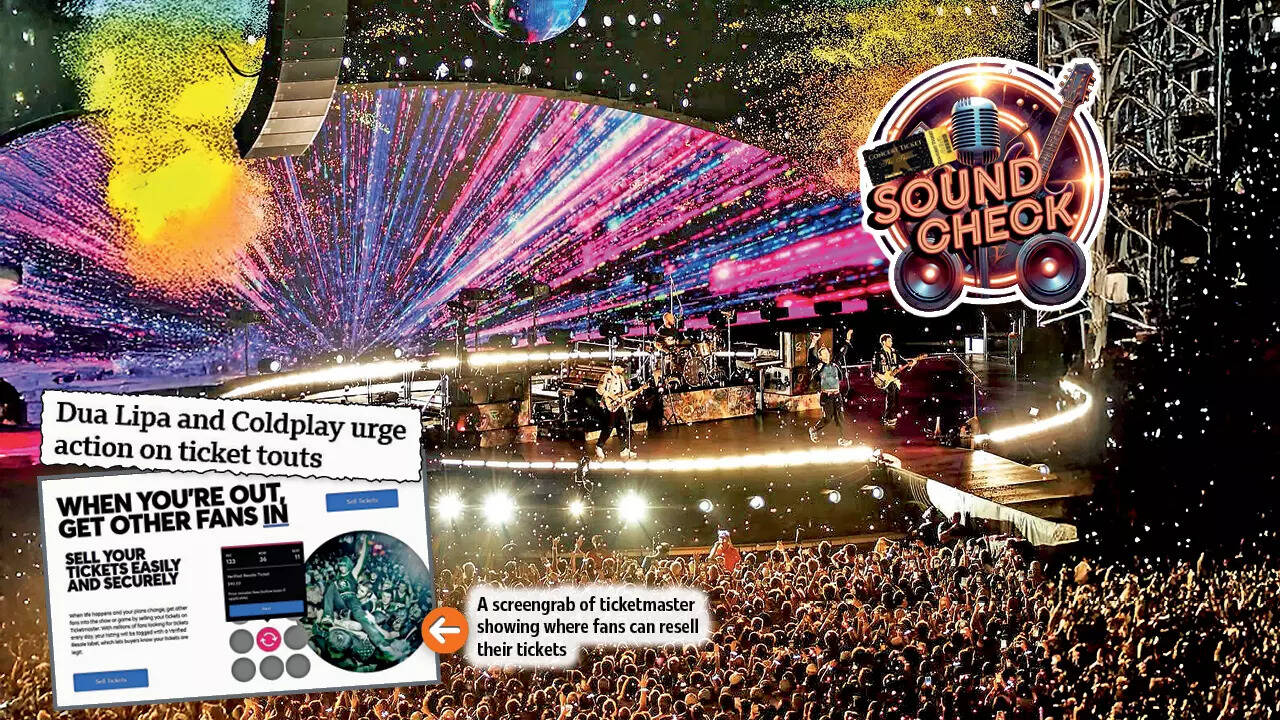
A screengrab of ticketmaster showing where fans can resell their tickets
‘In India, it is not a big business – people buy tickets offline’Deepak Chaudhary, founder of EVA Live, explains that India does not currently have any regulated secondary ticketing platforms like the UK.
“Nobody puts tickets on sale on any official website. In India, this isn’t a big enough business yet, so most of the sites reselling tickets aren’t authenticated platforms. In India, offline systems exist, nobody can question that. If we give tickets to an offline promoter, they may end up selling for less or more – we don’t know.
We cannot control that.”Elaborating on the current Indian concert ecosystem, he says, “The whole ‘no Coldplay tickets’ situation is something we’ve heard about for the first time.
But that was one concert. We are five years away from a matured ecosystem. It’s a big market, but our segment of the business isn’t that large, so supply and demand end up balancing themselves out. Also, our consumers are also very smart. They know who they have to buy from.
People here will directly call the promoters – it is an easy means to reach in India. Internationally, it’s legal for someone to buy, say, ten Coldplay tickets and resell them.
A lot of times, students do this: they invest time and money so they can make a profit. It’s a very regular ecosystem abroad because the demand is simply higher than the supply.”He adds that in India, there is no demand offline because tickets are always available online on the ticketing platforms. “The online resale market only really comes into play when the offline channels shut down. In India, even now, only about 5% of shows are truly big – and those few account for nearly 30% of the overall business.
But that 5% basically comes down to just one major show at a time,” shares Deepak.‘Our market works differently. But inflated resale prices are still a problem’ Mohit Bijlani, founder, Team Innovation, believes that while the Indian live gig market is inherently different from that of the UK, the issue raised is just as relevant.“ In principle, India can absolutely adopt a similar framework, but the execution would require collaboration between promoters, ticketing platforms, venues and regulators.
We don’t currently have a formal secondary ticketing market or dedicated legislation, so implementinga cap on resale value would mean building new systems – like identity-linked tickets or official resale exchanges. It’s not impossible, but it would need clear policies and industry-wide alignment.
For big artistes – whether Indian or international – a regulated resale system would be hugely beneficial. It would make pricing more transparent, reduce fan frustration and help us maintain the integrity of the artist’s brand,” he explains.‘Scalping is one of the biggest threats to building a fair ecosystem’“India’s concert economy is booming. We’re seeing bigger artists, bigger productions, and bigger audiences every year. Right now, scalping is one of the biggest threats to genuine fans and to organisers who are trying to build a fair, structured market. If a similar regulation comes to India, it will protect fans from exploitation, encourage more trust in the ticketing ecosystem, and push the market towards global standards,” says Avadh Nagpal.







 English (US) ·