

 5 days ago
7
5 days ago
7
ARTICLE AD BOX
Last Updated:December 19, 2025, 18:19 IST
News18 repeatedly reported that ISI was whipping up a storm against India in Bangladesh. The current unrest is being viewed by many as a 'managed' crisis

By fostering instability, radical elements are consolidating their influence on the streets while the interim government appears either unwilling or unable to stem the tide. File pic
As Bangladesh grapples with a volatile transition, intelligence reports suggest that a darker, coordinated influence is taking root in Dhaka. For the first time in over fifteen years, the “long shadow" of Pakistan’s premier intelligence agency, the Inter-Services Intelligence (ISI), is being cast across the country’s political and security landscape.
What began as a diplomatic “thaw" following the fall of the Sheikh Hasina government in August 2024 has rapidly evolved into a strategic re-entry, with New Delhi now raising red flags over a burgeoning Dhaka-Islamabad axis.
The Establishment of the ‘Dhaka Cell’
The most alarming development for regional security is the reported establishment of a dedicated ISI Special Cell within the Pakistani High Commission in Dhaka. First exposed by CNN-News18 in late October 2025, the unit is said to be heavily staffed by a team of high-ranking military and intelligence officers. According to top intelligence sources, the cell’s initial phase includes one Brigadier, two Colonels, four Majors, and several officials from Pakistan’s Navy and Air Force.
This infrastructure was reportedly formalised following the four-day visit of Pakistan’s Chairman Joint Chiefs of Staff Committee, General Sahir Shamshad Mirza, to Dhaka in late October 2025. During this tour, General Mirza and senior ISI officers held multiple rounds of closed-door meetings with Bangladesh’s National Security Intelligence (NSI) and the Directorate General of Forces Intelligence (DGFI). Sources indicate that these meetings resulted in a joint intelligence-sharing mechanism, ostensibly aimed at Bay of Bengal surveillance but widely believed to be a front for monitoring India’s eastern borders.
A Tightening Strategic Embrace
The speed of this rapprochement has been unprecedented. Since August 2024, the Muhammad Yunus-led interim setup and the Shehbaz Sharif government have moved with startling coordination:
Visa-Free Access: On July 23, 2025, the two nations agreed to grant visa-free entry for diplomats and official passport holders—including military personnel—significantly lowering the barrier for intelligence transit.
Defence Thaw: High-level military exchanges, including visits by Bangladesh’s Quartermaster General to Rawalpindi in August and Pakistani Lt. Gen. Tabassum Habib to Dhaka in October, have signalled a pivot toward deep defence cooperation.
Economic Corridors: The launch of a direct Karachi-Chittagong shipping route and upcoming direct flights have provided the logistical cover for increased bilateral movement.
The Radicalisation Mission
Intelligence analysts warn that the ISI’s “core mission" in Bangladesh is the systematic radicalisation of the youth and the promotion of religious extremism through groups like Jamaat-e-Islami and the Inqilab Manch. The ultimate goal appears to be the creation of a “Hybrid Regime"—modelled after Pakistan’s own political structure—that is inherently hostile to Indian interests.
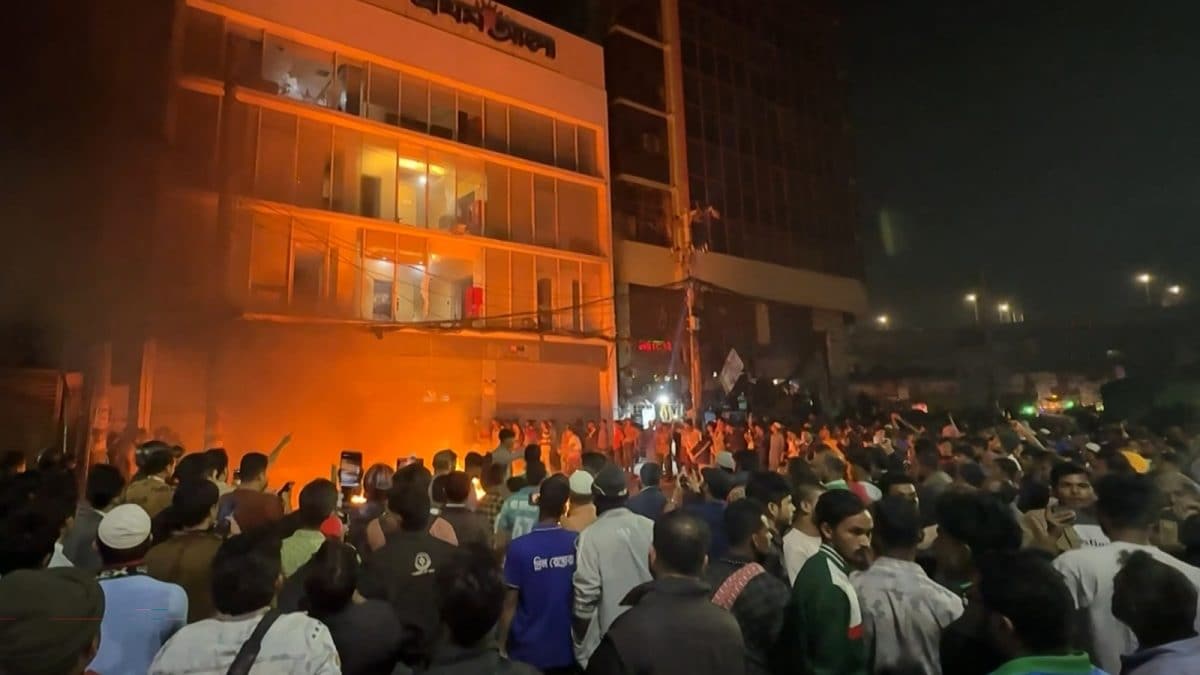
The current unrest following the death of student leader Sharif Osman Hadi on December 18 is being viewed by many as a “managed" crisis. Observers argue that the resulting atmosphere of fear—marked by attacks on the Indian High Commission in Dhaka and the Assistant High Commission in Chattogram, as well as the burning of media offices like The Daily Star—is being used to delay the February 12 elections. By fostering instability, radical elements are consolidating their influence on the streets while the interim government appears either unwilling or unable to stem the tide.
Pakistan-Bangladesh Relations After Sheikh Hasina’s Ouster in August 2024
07-Aug-2024: Pakistan’s government expressed solidarity with the people of Bangladesh following the fall of Hasina’s government amid widespread protests.
07-Aug-2024: Pakistan welcomed Bangladesh’s Chief Advisor Muhammad Yunus and assured full support in the transition.
30-Aug-2024: Pakistan and Bangladesh agreed to work closely for South Asia’s progress.
25-Sept-2024: PM Shehbaz met Bangladesh Chief Advisor Yunus on the sidelines of the UN General Assembly.
19-Dec-2024: Pakistan PM Shehbaz Sharif met Bangladesh Chief Advisor Yunus in Cairo on the sidelines of the D-8 summit; both leaders agreed to work together for stronger cooperation and relations.
14-Jan-2025: Senior Bangladeshi general Lt-Gen Kamr-ul-Hassan held separate meetings with Pakistan’s army chief Asim Munir and CJCSC Sahir Shamshad at GHQ Rawalpindi.
19-June-2024: A meeting involving the vice foreign minister/foreign secretary of Bangladesh, China, and Pakistan took place in Kunming, Yunnan province of China.
15-July-2025: Pakistan’s intelligence delegation visited Dhaka and held meetings with Bangladeshi intelligence officials.
23-July-2025: Pakistan and Bangladesh agreed to relax visa rules, allowing visa-free entry for diplomats and officials, including military personnel.
28-July-2025: Pakistan and Bangladesh vowed to deepen bilateral ties. Pakistani FM Dar and the Bangladesh envoy held talks on the sidelines of the UN two-state conference.
21-Aug-2025: Bangladesh Army’s Quartermaster General (QMG), Lieutenant General Md Faizur Rahman, visited Pakistan’s General Headquarters (GHQ) in Rawalpindi and met with the Chairman of the Joint Chiefs of Staff Committee, General Sahir Shamshad Mirza. The meeting, which signals deepening defence cooperation, focused on regional security, defence ties, and bilateral relations between the two countries.
21-Aug-2025: Pakistan’s commerce minister visited Bangladesh to boost trade amid thawing relations.
22/23-Aug-2025: Pakistan’s Deputy PM Dar visited Dhaka and met with the Chief Advisor, top leaders of Bangladesh, including Jamat-I-Islami, ex-PM Khaleda Zia, and top military commanders. Ishaq Dar doubled the staff size at the Pakistan High Commission in Dhaka.
25-Sept-2025: Prime Minister Muhammad Shehbaz Sharif met Professor Muhammad Yunus, Chief Advisor of the Government of Bangladesh, on the sidelines of the 80th session of the UNGA in New York.
06/07-Oct-2025: Pakistan’s Lt Gen Tabassum Habib received a red-carpet welcome in Bangladesh.
26-Oct-2025: The 9th Pakistan-Bangladesh JEC meeting was held in Dhaka after a two-decade hiatus.
25-28-Oct-2025: Pakistan’s top General, Sahir Shamshad Mirza, concluded a four-day visit to Bangladesh.
India’s Diplomatic Pushback
India has not remained silent. On November 19, 2025, during the Colombo Security Conclave Summit in New Delhi, Indian NSA Ajit Doval reportedly raised the issue of the “ISI Cell in Dhaka" directly with his Bangladeshi counterpart, Dr Khalil-ur-Rehman.
While New Delhi continues to support the people of Bangladesh, the “Pakistani pivot" in Dhaka’s power corridors is increasingly seen as a direct threat to India’s “Neighbourhood First" policy and regional stability.
First Published:
December 19, 2025, 18:19 IST
News world The Long Shadow: How Pakistan’s ISI Is Recalibrating Its ‘Eastern Front’ In Bangladesh | Exclusive
Disclaimer: Comments reflect users’ views, not News18’s. Please keep discussions respectful and constructive. Abusive, defamatory, or illegal comments will be removed. News18 may disable any comment at its discretion. By posting, you agree to our Terms of Use and Privacy Policy.
Read More


 English (US) ·