

 1 week ago
9
1 week ago
9
ARTICLE AD BOX
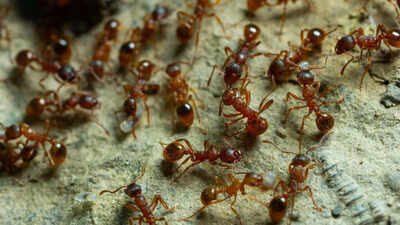
In the forests of California’s Sierra Nevada, nature takes a dark, cunning turn. There’s a species of red ant, Polyergus mexicanus, that doesn’t just fight its neighbours. It kidnaps not a few, but hundreds of black ant pupae from nearby Formica accreta colonies.
Once stolen, these young ants are taken back to the red ant nest, where their lives are changed forever. They hatch into a world that’s not theirs and are tricked into thinking it is. Scientists call it “obligate social parasitism,” and it’s as brutal as it sounds. These ants have no chance of escape. Once inside, they tend to their captors, feed them, and maintain the colony. It seems like something out of a horror story, but it’s everyday life for these enslaved insects.
Red ants grab black ant pupae to grow their colony
Red ants appear to operate like tiny raiding parties. They locate a neighbouring black ant nest and swarm it with relentless energy. The pupae, basically baby ants in cocoons, are snatched in their hundreds.Observers say the raiding ants are incredibly efficient. They know exactly where to strike. They seem to avoid unnecessary fighting, focusing on capturing their prey rather than annihilating it. Once the haul is secured, they march the stolen pupae back to their nest, as if on a conveyor belt.
Here’s where it gets even stranger. When the pupae hatch inside the red ant colony, they are coated in secretions from special glands.
This chemical bath disguises their original scent. Suddenly, these young ants believe they belong. Experts note that scent is everything in the ant world. Belonging is determined chemically. And for these captives, the deception is complete.From that moment, the formerly black ants begin work. They forage for food, tend the red ant brood, and maintain the nest.
They feed their captors through regurgitation, essentially sustaining ants that could not survive on their own.
Red ants take black ants to help their colony survive
Red ants are obligate social parasites. Their jaws are unsuitable for foraging or processing food, and they rely entirely on their kidnapped workforce. Without the captives, the red ants would starve. This system has reportedly evolved over millennia. It’s not just opportunistic; it’s essential for survival.The enslaved ants work tirelessly, unaware of their own exploitation. Their biology and behaviour are subtly altered by the colony’s chemicals. Some scientists liken it to brainwashing, a permanent, unbreakable trick. The phenomenon of slave-making ants reminds us how complex and ruthless evolution can be. Seven or eight species worldwide are known to engage in such kidnapping, but the Polyergus raids in California are among the most studied.
Observers have noticed that the raids are timed with precision and that the ants target specific stages of the black ant lifecycle, mainly pupae, which are easiest to manipulate.






 English (US) ·