

 1 hour ago
4
1 hour ago
4
ARTICLE AD BOX
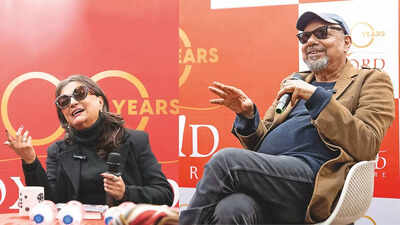
What I want to say about Anjan is that it’s a pleasure to share screen space with him as well as direct him,” said Aparna Sen. The director-actor was sharing the dais with singer-actor Anjan Dutt during an interaction at a city bookstore. What started out as the launch of Dutta’s memoir soon turned into an intimate, free-flowing conversation about cinema, creativity, and more.
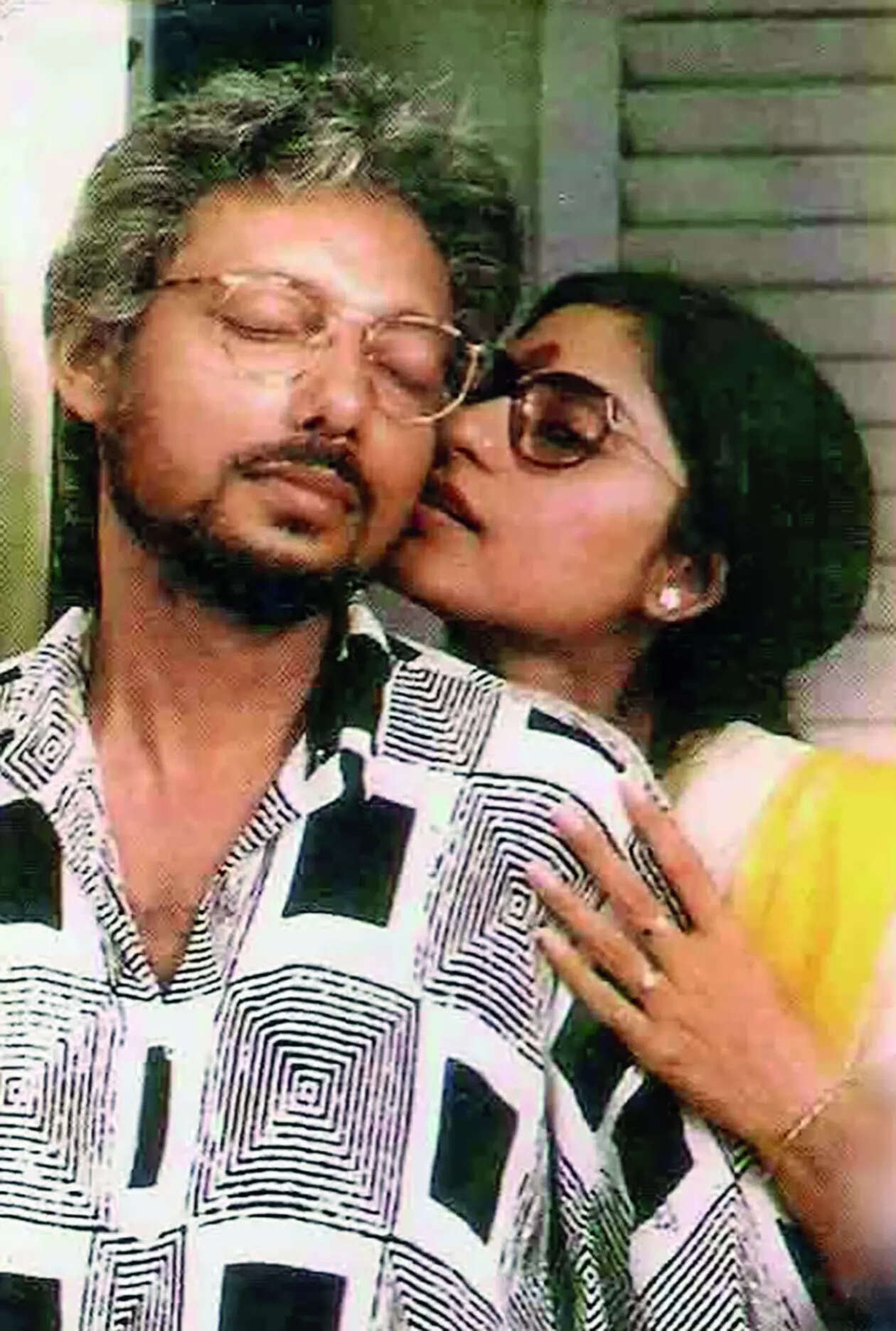
Anjan is among the few actors who think before they speak on screen: Aparna SenSen said she observed that Dutt is among the few actors who think before they speak on screen during the shoot of Yugant in 1995. “I also discovered his singing talent and deliberately incorporated songs, which he performed effortlessly,” she said.She also praised him as an interviewer, recalling the engaging conversations they shared during interviews he conducted.
“I’m keen to read Anjan’s memoir because I want to discover the facets of him that even I may not yet know,” she added.I wanted honesty, humour, and no melodrama: Anjan Dutt“I didn’t want my sense of humour, which is so integral to my writing, to get lost with age,” Dutt said, adding, “In any art form, humour is essential. With age, I felt there was a risk of becoming overly sentimental, so I decided to write now. I don’t like melodrama, and I wanted to avoid that.
For me, life is a circus – everything around me feels funny.”About their relationship with KolkataRecalling a conversation with playwright Badal Sircar, Dutt said, “Badal-da once asked me what I could see on my right, left, and in front of me. I looked around and said, ‘There’s a temple on my right, I can hear the sound of azan on my left, and in front of me I see a church. That was the exciting Kolkata we grew up in – a city of coexistence and openness.
It shaped who I am today. That Kolkata is missing now, and I feel its absence deeply.
” But I still love Kolkata and will not leave this city, as there is a deep love for this city.”“Kolkata today has largely become a Bengali middle-class city, and I don’t like that. There was once a madness, a paglami, rather than mere khapami in this city, and that spirit is missing now.” At the same time, she acknowledged that the city’s creative pulse is still alive.
“Young bands like Hooliganism are emerging and young directors are making remarkable films with newcomers and almost no budget. That too is Kolkata’s madness – and it deserves praise,” shared Sen with a smile.I wanted to observe my city, instead, I was observed: Aparna Sen I was involved in acting from a very young age, so people knew my identity. Because of that, I could never roam freely in the city,” she said. “I wanted to observe my city, but instead, I was being observed.”While researching for Nilkantho, she went to Sonagachi to under-stand it better. “But everyone there began talking to me. I became the subject of observation.”Despite that, Kolkata remained a lived-in city for her. “We would still go to Trincas, Park Street, New Market and other places. The Jewish and Anglo-Indian communities lived here, and I feel Anglo-Indians, in particular, have played a crucial role in Kolkata’s cultural history,” she said while recalling with gratitude how Anglo-Indian families generously lent their furniture for Yugant, without any expectations.Quotes: In my memoir, I’ve referred to Satyajit Ray as Satyajit, Mrinal Sen as Mrinal, and Aparna Sen as Aparna. In my life there can be only one Satyajit, one Mrinal, or one Aparna – Anjan DuttFor the past 30 years, I’ve been working tirelessly in the realm of direction, yet people still refer to me as an actress. It would be nice if people addressed me as a director-actor – Aparna SenWhen Anjan delivers a line, it seems as if he has thought about the situation rather than memorising the script. The pauses show that he thinks before he speaks – Aparna SenKolkatar rastar naam bodlalei, history remains intact. Today’s generation is largely unaware of what the city once was. That depth of the city is no longer part of everyday memory – Anjan Dutt






 English (US) ·