

 1 week ago
14
1 week ago
14
ARTICLE AD BOX
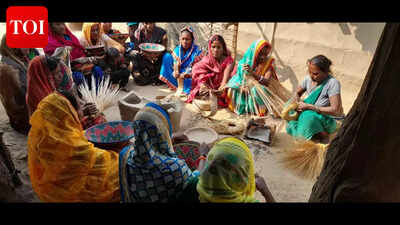
Bettiah: In the tribal belts of West Champaran, women are steadily scripting a story of self-reliance by turning traditional skills—from handloom weaving to small enterprises—into sustainable sources of income.
What began as small livelihood efforts has now grown into a grassroots movement empowering hundreds of women across Harnatand, Bagaha and neighbouring villages.At the weaving centre in Harnatand, often regarded as the capital of the Tharuhat region in Bagaha II block, more than 150 women produce woollen shawls, bedsheets, gamchas, towels and curtains on traditional handlooms. Once confined to local markets, their products now find buyers at the national and international levels.
Harendra Mahto, who runs the centre, said most women earlier worked as farm labourers or domestic workers. “Today, the same women are earning through self-employment and contributing to their families’ income,” he said.According to him, products made at the centre generate an annual income of over Rs24 lakh, including multicoloured hospital bedsheets supplied across the state.Paradeshi Devi, who joined the centre in 2017, said the opportunity transformed her life.
“Earlier I worked as a farm labourer. Now, after finishing household chores, I come here and earn Rs10,000–Rs12,000 every month. It helps us manage household expenses comfortably,” she said.Beyond weaving, women in the region are also engaged in soap-making, honey production, mushroom cultivation and fish pickle preparation, further diversifying income sources.Kriti, who runs a small fish-pickle unit, said International Women’s Day is a reminder of women’s potential.
“Earlier, most women here depended on daily wage labour and had limited access to education. Now things are changing, and women are steadily moving towards self-reliance,” she said.Women in villages such as Harnatand, Binwalia, Bodhsar, Santpur and Semra also use naturally growing grass from forests and riverbanks to produce traditional baskets, mats and storage containers.Rani Kumari, who has trained nearly 200 women from Chiutaha and nearby villages in making basketry items, said many of these skills are rooted in community heritage.
“With proper training and opportunities, women are turning these skills into livelihoods and supporting their families financially,” she said.The rising participation of women in such initiatives is not only boosting household incomes but also reshaping the social landscape of the tribal belt, setting an example of grassroots empowerment through skill and enterprise.Nita Kumari, president of the women’s wing of the Bharatiya Tharu Kalyan Mahasangh, said the organisation celebrated International Women’s Day on Sunday, marking the growing empowerment of women in the region.






 English (US) ·