

 3 hours ago
3
3 hours ago
3
ARTICLE AD BOX
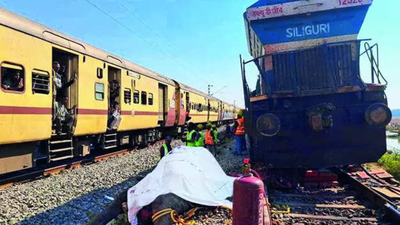
SANGJURAI: The New Delhi- bound Rajdhani Express from Sairang in Mizoram thundered through fields of ripening paddy before dawn Saturday as fog clung to steel rails. Then bodies met metal.
Seven elephants - four of them calves - were killed and another calf was injured when the train struck a wild herd crossing tracks at Sangjurai, a village in central Assam's Hojai district, about 126km east of Guwahati. The locomotive and five coaches derailed. Railways reported no human deaths or injuries. The collision came around 2am. Four of the dead elephants were male and three female, with one of them being pregnant.
Autopsies were followed by cremations later in the day. Villagers said the herd numbered more than 50. What followed was a familiar exchange of blame. Forest department sources said railway officials had been alerted about the herd. "A team of forest guards attempted to drive the herd away from the tracks and was just a few metres away from the herd when the collision took place," an official said. NF Railway CPRO KK Sharma rejected that account, saying the track is elevated.
"Sangjurai is not recognised as an elephant crossing area. The collision was totally unexpected," he said, adding the train driver applied emergency brakes, but could not stop in time. NF Railway CPRO KK Sharma said the railways had no specific input that elephants were approaching that exact point.Forest officials seized the engine and detained the two drivers, actions railways described as procedural steps.
The drivers were released on personal bond after 12 hours. Shamim Aktar, range forest officer at Kampur - a town south of Nagaon district - said alerts had gone out Friday evening as elephants moved near tracks."The station master at Kampur was informed about a potential crossing near pillar 125, but the collision occurred 700 to 800m away. It was not possible to predict the exact movement point of elephants," she said.About 32km away, between Hawaipur and Lumding - towns linking central Assam to Barak valley and Mizoram - tracks in a notified corridor are fitted with an AI-enabled Intrusion Detection System (IDS) to warn trains of animal movement. IDS uses thermal cameras, sensors and AI to spot elephants near tracks in low visibility, sending real-time alerts to railway staff and triggering speed restrictions to avert collisions.
Locals said a similar system at Sangjurai, a known jumbo passage, may have averted the deaths. "About 70km of rail track in Assam is currently covered under IDS. IDS was not installed in Sangjurai," Sharma said.Assam CM Himanta Biswa Sarma wrote on X: "We are deeply saddened by the death of seven elephants... I have directed the forest department to conduct a detailed inquiry... and take steps to further secure our wildlife corridors, particularly during low visibility seasons."Train-elephant collisions recur across Assam, where expanding rail lines cut through migration paths from forested hills to cultivated plains. Saturday's impact tore through the Jamunamukh-Kampur section of NF Railway. Senior railway officers rushed in from headquarters at Maligaon and Lumding.After detaching damaged coaches, the Rajdhani rolled into Guwahati at 6.11am, where additional coaches were added before the journey resumed.
PM Narendra Modi had flagged off Mizoram's first Rajdhani on Sept 13.Nine local passenger trains were cancelled dueto the crash. Several long-distance services were regulated. Movement continued on the up line, but full restoration eluded Saturday evening.By dusk, fields fell quiet again. On the edge of Sangjurai, villagers watched the fog return - and wondered how many more crossings would end the same way.








 English (US) ·