

 3 days ago
6
3 days ago
6
ARTICLE AD BOX
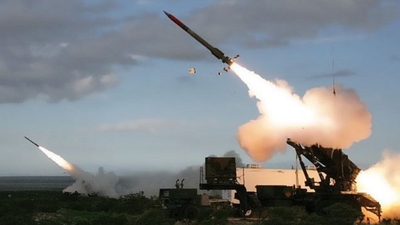
Lockheed Martin cannot say when key US allies will receive Patriot interceptor missiles despite a major expansion in production, as the war with Iran continues to strain Western weapons stockpiles.According to the Financial Times, Brian Dunn, Lockheed Martin’s vice-president for strategy and business development for missiles and fire control, warned that the company has no control over how newly produced PAC-3 missiles are allocated among customers. Speaking to journalists at the ILA Berlin Air Show, Dunn said the US defence giant was working to increase output amid a growing supply crunch that has been intensified by the conflict with Iran.Lockheed Martin earlier this year secured a $4.7 billion Pentagon contract to increase annual production of PAC-3 missiles from 650 to 2,000 by 2030. The interceptors are used in Patriot air defence systems operated by countries including Germany, Japan, Poland, Saudi Arabia and the UAE.While the increased production capacity should help meet demand more quickly, Dunn told the FT that the company could not provide certainty to allies waiting for deliveries.
“We do not control what the allocation of those missiles is going to be. We can’t tell anybody where you’re going to be on that [priority list],” he said. Referring to discussions within the US government, he added that officials were considering “how they’re going to reorder, reorganise, who’s going to get missiles first”.The FT reported that demand for PAC-3 interceptors had already been rising before the Iran war placed further pressure on Western inventories.
The missiles have also become crucial for Ukraine’s air defences, particularly against ballistic and hypersonic missile attacks.The conflict with Iran has prompted Washington to prioritise replenishing its own stocks, leading to concerns among allies about delays in weapons deliveries. The FT reported last month that several European countries, including the UK, Poland, Lithuania and Estonia, had been warned to expect longer waits for US-made weapons as stockpiles were redirected and replenished.The uncertainty comes as President Donald Trump pushes for a diplomatic breakthrough with Tehran. Trump has said the US and Iran could reach an agreement this weekend that would create a pathway to ending the three-month conflict, which has unsettled global energy markets and raised concerns about regional stability.Even if a deal is reached, defence analysts expect demand for advanced air-defence systems such as Patriot missiles to remain high, reflecting growing security concerns across Europe, the Middle East and Asia.







 English (US) ·