

 2 days ago
5
2 days ago
5
ARTICLE AD BOX
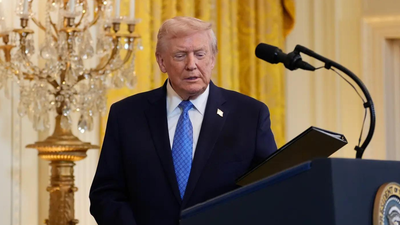
US President Donald Trump (AP photo)
TOI Correspondent from Washington: The Trump administration on Tuesday announced a major expansion of its 2025 US travel ban, nearly doubling the number of countries – mostly from Africa – subject to full or partial restrictions on entry to the United States.
The policy, slated to take effect January 1, 2026, adds multiple African, Middle Eastern and other nations to an existing list of travel prohibitions and limitations that will now span 39 countries – about 20 percent of the global comity of nations. Under the latest expansion, the administration is adding five countries to the full travel ban — Burkina Faso, Mali, Niger, South Sudan and Syria — and also broadly restricting entry for individuals holding travel documents issued by the Palestinian Authority.
In addition, 15 more countries will face partial travel restrictions affecting immigrant and non-immigrant visas. These include Angola, Antigua and Barbuda, Benin, Côte d’Ivoire, Dominica, Gabon, Gambia, Malawi, Mauritania, Nigeria, Senegal, Tanzania, Tonga, Zambia and Zimbabwe.
Some of these countries, notably Tanzania and Zambia, have a significant and prosperous Indian-origin community. Ban on some Caribbean countries, such as Antigua & Barbuda, appear linked to their offering of "Citizenship by Investment," which provide a pathway to U.S to third country nationals.
The travel ban expansion follows an earlier June 2025 proclamation that barred nationals of 19 countries from entering the U.S due to what the administration described as national security and public-safety concerns. That earlier ban included full entry suspensions for countries such as Afghanistan, Iran, Somalia, and Yemen, and partial restrictions on others including Laos and Venezuela. While President Trump has openly indicated he prefers immigration from white Nordic countries such as Norway, Sweden and Denmark, and is loath to have immigration from places he regards as “shithole” countries, the ostensible trigger for the latest ban is the shooting of two National Guard troops in Washington, DC, by an Afghan national who was recruited by the CIA during US occupation of Afghanistan.
The incident is being cited as exposing vulnerabilities in screening and information-sharing processes with certain countries.Even though the Afghan assailant underwent multiple screenings, the White House justified the expanded ban on the grounds that such countries have “widespread corruption, fraudulent or unreliable civil documents and criminal records,” making it difficult for US authorities to properly vet travelers. The administration also cited high visa overstay rates, a refusal by some governments to accept deported citizens, and weak security cooperation as reasons for the restrictions. The restrictions are “necessary to prevent the entry of foreign nationals about whom the United States lacks sufficient information to assess the risks they pose… and advance other important foreign policy, national security, and counterterrorism objectives,” officials said.
Supporters of the expanded ban — including some Republican lawmakers and immigration hardliners — have portrayed it as a logical extension of the administration’s tough stance on illegal immigration and national security, arguing that enhanced vetting and travel restrictions are necessary to protect US citizens and manage entry flows. They say that holding foreign governments accountable for security cooperation and documentation standards strengthens border integrity.However, legal experts, immigration advocates, and civil rights groups have sharply challenged the policy’s merit, calling it discriminatory, and asserting it will have far-reaching implications for immigration, foreign relations and global mobility. They argue that by using nationality as a proxy for security risk, the travel ban vilifies countries and millions of its nationals with no ties to criminal or extremist activity.









 English (US) ·