

 3 days ago
6
3 days ago
6
ARTICLE AD BOX
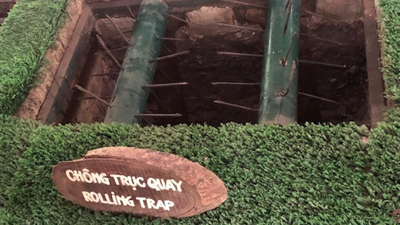
An immersive experience awaits here, bearing tell-tale signs of human resolve triumphing over a disproportionately superior adversary I stopped for a second or two. Still caught in two minds on whether I should step inside those rectangular openings dug into the ground, barely 40 cm x 30 cm. The words of our tour guide still ringing in my ears: “Enter ONLY if you have strong lungs and if you’re 100% sure about your physical fitness.
” Throwing caution to the wind, I decided to take the plunge. One foot at a time, I lowered myself down a steep staircase that led me directly into the darkness that lay beneath. Yes, ‘darkness’, and it was right in the middle of a by-and-large sunny afternoon! As I kept going down a clayey flight of stairs, each step cut me off from the ground above and the hustle-bustle, ushering me into a labyrinthine world of gloom and silence that made itself only barely visible in the flickering flames of those indigenous lamps that burned in some of the crevices of the downward spiral.
As I kept going down that winding staircase, its sharp turns took me by surprise, barely allowing me to keep my shoulders from banging against the side walls as the trajectory of the path needed me to twist and turn my body, quite literally, every now and then. There were moments when I almost banged my head on to the ceiling that was no more than a few inches above or was on the verge of slipping perilously — fear of a fractured skull bone or a broken limb gripping me and posing serious questions about my common sense that allowed valour to get the better part of my discretion in pooh-pooing the guide’s statutory warning!
It took me only about 2-3 minutes to complete the climb down and reach level ground that looked like an assembly point or a small hallway, with another steep flight of stairs visible at one end, bearing hope of an eventual exit route. Yet, in those 3 minutes, I had started panting — the near-zero ventilation, oppressive heat, and smell of stale air posing a serious threat to respiratory functions and I could feel some sort of a fatigue creeping in, as I began climbing up, desperate to be back on terra firma – ALIVE.If barely 5 minutes into that never-seen-before world could leave me so petrified and numb, how on earth did the guerrillas manage to spend years holed out there, with sunlight and clean air being dreams from another world? “Welcome to Cu Chi Tunnels”, I told myself — trying to visualise the nemesis that had confronted American troopers as they stumbled upon what is still regarded as the most fearsome booby trap that lay in the tropical jungles of Vietnam.
Underground traps that ensnared a military equipped with the best of training and hardware that could ever be and yet left haplessly wrong-footed on a terrain that was as alien as the grit and ferocity of the Viet Cong and NVA ally guerrillas that outsmarted them.For every waking hour of those 20 years that the American soldiers drained their sweat and blood in pursuit of a mirage in Vietnam, they were made to realise, the hard way, how woefully inadequate conventional military technique can be in the face of an army steeped in improvisation and with supreme knowledge of the terrain.
‘Home’ advantage could perhaps never have had a better reference point in military parlance, with these tunnels emerging a defining symbol of asymmetric warfare.
Fifty years have passed since the Vietnam War that stunned the world and blew an imperialist America’s push for supremacy in a bipolar world into smithereens. Yet, time seems to stand still at the Cu Chi Tunnels, about an hour’s drive from Ho Chi Minh City, beneath those quaint rubber plantations. These tunnels, today a popular stop for visitors, were originally carved out of necessity. What visitors now explore with a tourist’s unmistaken inquisitiveness, used to be a vast underground network where an entire ground force survived and fought one of the grittiest battles in the history of mankind. “The days belonged to them [US troops]; but the nights belonged to us,” our Vietnamese guide had said as he took us on a curated tour of the Cu Chi Tunnels, and I realised the full import of those words as I emerged out of that labyrinthine world down under: Breathless and shaky. The tunnels date back to the late 1940s, during Vietnam’s struggle against French colonial rule. Small passageways were dug by the villagers to move undetected and store supplies. However, it was during the Vietnam War, especially from the early 1960s onwards, that the network expanded into an extraordinary underground survival zone. Stretching over 250 km at their peak, the tunnels were dug primarily by hand — sometimes with nothing more than hoes, shovels, and baskets to carry soil.
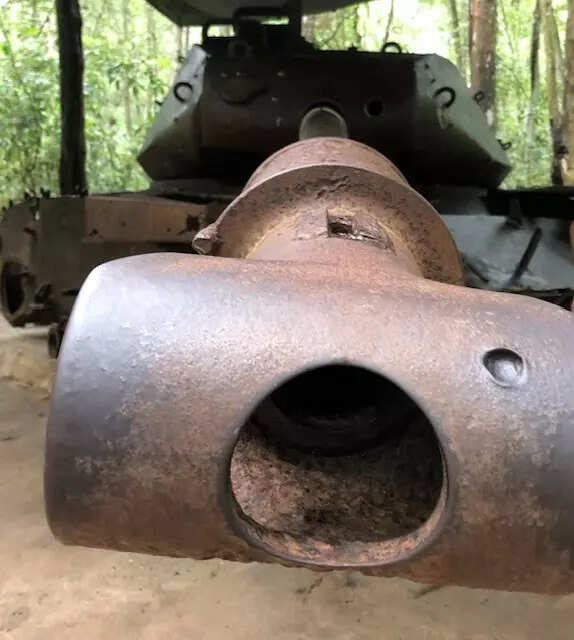
The earth in Cu Chi, rich in laterite, hardened when exposed to air, which helped create bomb-resistant bunkers of sorts. Inside this underground world, the Viet Cong built meeting rooms, makeshift hospitals, kitchens, armouries and even sleeping quarters. The tunnels were typically only large enough for slender Vietnamese fighters to move through; many being just 0.8 to 1 metre in height. They were hot, dark, suffocating and infested with insects and snakes. While for the guerrillas they offered unmatched protection and mobility, for the American troops, they represented a frustrating, invisible enemy. The Viet Cong could launch surprise attacks, disappear into concealed trapdoors and emerge kilometres away, leaving the American soldiers confounded. Despite heavy US bombardment — including the use of B-52s — the tunnels were difficult to destroy. Their multi-layered levels, narrow entrances, and maze-like routes meant that even when the surface was devastated, the core network often remained intact.Today, transformed into a major tourism site, Cu Chi Tunnels offer an immersive experience, allowing visitors to crawl through the widened sections, observe reconstructed trapdoors and even try their hands at firing an AK47 under supervision at the firing range. In 1969, with the Vietnam War still at its peak, the then US President Richard Nixon had famously said: “No event in American history is more misunderstood than the Vietnam War.
It was misreported then, and it is misremembered now.” While Nixon’s words were probably meant for an American audience, an average traveller who has ever stepped into Cu Chi Tunnels will beg to differ, for these still bear some of the most tell-tale signs of human resolve triumphing over a disproportionately superior adversary. That’s Cu Chi Tunnels — earthy, evocative, experiential. The writer was part of a media tour hosted by VietJet airlines









 English (US) ·