

 1 hour ago
5
1 hour ago
5
ARTICLE AD BOX
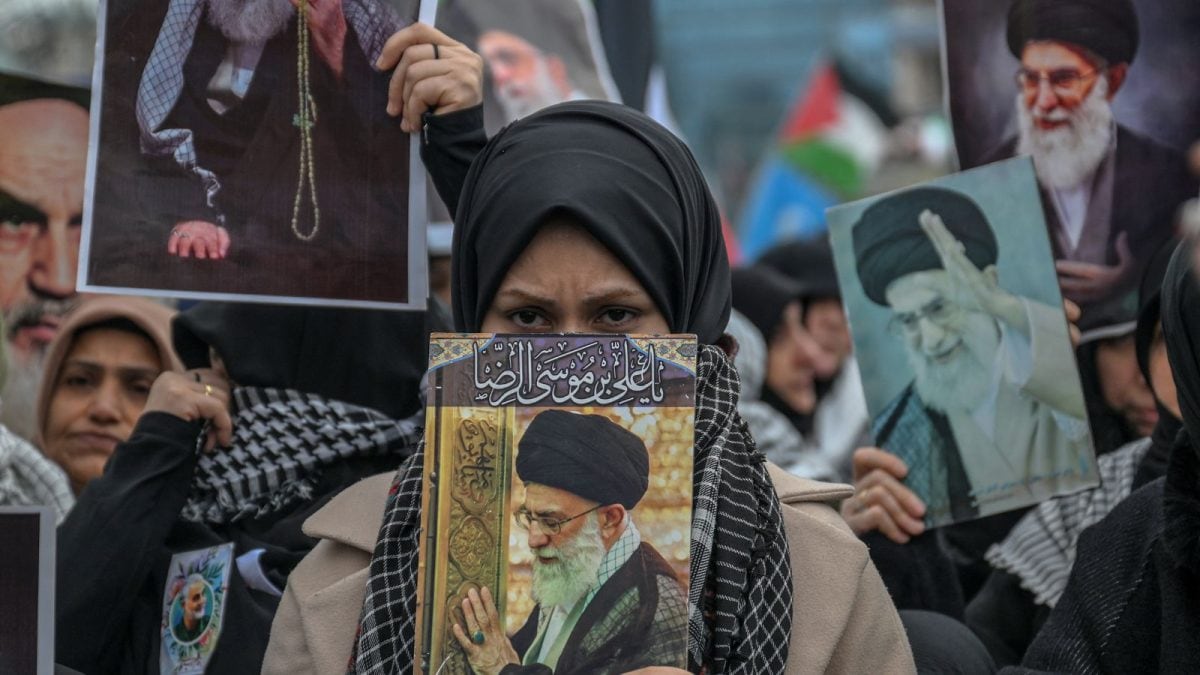
In 2017, Iran's Supreme Leader, Ayatollah Ali Khamenei, called on the Muslim world to mobilise support for what he described as 'oppressed Muslims of Kashmir'. In 2020, after the riots over the Citizenship Amendment Act (CAA), Khamenei again interfered in India's internal affairs, calling to confront extremist Hindus, describing the riots as a massacre of Muslims and threatening India with isolation from the world of Islam. He went to the extent of using the hashtag Indian Muslims in Danger.
These were neither the first nor isolated incidents of Iran's supreme leader interfering in India's internal affairs. He did so four times between 2019 (abrogation of Article 370) to 2024 (comparing India to Gaza) and each time the Ministry of External Affairs (MEA) summoned the Iranian envoy to criticise his interference.
2017, Kashmir: Khamenei called on the Muslim world to mobilise support for what he described as "oppressed Muslims of Kashmir" — a framing that mirrored Pakistani state propaganda on the issue. India had not made any policy change on Kashmir at the time.
August 2019, Kashmir: After India revoked Article 370 in August 2019, Khamenei publicly demanded India adopt a "just policy" on Kashmir. MEA summoned the Iranian envoy.
March 2020, Delhi riots: Khamenei tweeted that India should "confront extremist Hindus," described the riots as a "massacre of Muslims," and threatened India with "isolation from the world of Islam." He used the hashtag #IndianMuslimsInDanger. MEA summoned the Iranian Ambassador.
The Delhi riots had targeted Hindus as well — something Khamenei made no mention of. His tweets presented a selective version of events to incite Muslim sentiment against India, consistent with narratives circulated by Pakistani state agencies at the time.
January 2020, CAA: Iran's parliament speaker condemned India's Citizenship Amendment Act as "anti-Muslim discrimination." India rejected the remarks as interference in internal affairs.
September 2024, placed India alongside Gaza: In September 2024, Khamenei placed India alongside Myanmar and Gaza in a tweet seen by 2.7 million people. MEA responded: "misinformed and unacceptable."
Iran is now involved in military escalations in the region, including missile and drone strikes targeting Saudi Arabia, the UAE and other Muslim-majority countries that are among India’s closest strategic partners. These nations host more than nine million Indian nationals.
Prime Minister Narendra Modi has spoken to leaders across the region — from the UAE and Saudi Arabia to Jordan and Bahrain — expressing concern over the evolving situation and thanking them for ensuring the safety of the Indian community. India has reiterated its consistent position in favour of peace, stability and de-escalation.
Incidentally, Ayatollah Ali Khemenei was seen as a major oppressor of women in Iran and against equality and women's rights.
Following his death, global reactions were mixed. Of the 57 member states of the Organisation of Islamic Cooperation (OIC), fewer than 10 publicly expressed condolences. Countries such as the United States, Israel, Argentina and Ukraine welcomed the development. Meanwhile, treaty allies and partners including Russia, China and North Korea, along with several Islamic countries such as Pakistan, Iraq, Malaysia and Turkey, either condemned the strikes or offered condolences.
In India, the spokesperson for the Ministry of External Affairs called for "restraint, dialogue and de-escalation."
Sovereign nations decide their responses based on national interest.
Government sources say during 2004-14 the Congress-led UPA government voted against Iran three times at the IAEA — in 2005, 2006, and 2009 — during negotiations for the India-US Civil Nuclear Agreement. A senior US official later stated the votes were coerced.
2005: UPA voted against Iran at the IAEA. Resolution GOV/2005/77, finding Iran in non-compliance with its safeguards agreement. Vote: 22 in favour, 1 against, 12 abstained. Tehran threatened to cancel a 1 lakh crore LNG deal. India broke with the majority of NAM countries.
2006: UPA voted to refer Iran to the UN Security Council. Vote: 27 in favour, 3 against, 5 abstained. India sided with the US even as Russia and China hesitated.
2009: UPA voted against Iran a third time. The resolution censured Tehran for uranium enrichment activities and the secret Qom facility. The India-US nuclear deal was concluded that year.
2022: NDA abstained on a similar IAEA resolution on Iran's nuclear programme.
- Ends
Published On:
Mar 3, 2026 14:07 IST





 English (US) ·