

 1 week ago
4
1 week ago
4
ARTICLE AD BOX
A term that has become increasingly mainstream within the past few years, including as captions on social media posts, TikTok posts, and all other types of online platforms, is “woke,” which has been widely accepted as one of the most utilised terms of slang by generation Z (Gen Z).
While it appears to be another buzz term of the online generation, the term woke has a rich history.
The meaning of “woke”
Awareness means conscious and alert to realities of injustice and inequality. Going by commonly accepted definitions in dictionaries, to be woke is to refer to a person that is socially conscious of social problems associated with race and discrimination.The historical reference for woke specifically involves an understanding of racial injustice; however, the current use of woke can relate to an individual who is overall conscious of different issues surrounding society that deal with racism, sexism, homophobia, and inequality.
The mainstream slang reference for woke can relate to being “with it” or being aware of certain social events.For many young people, especially in the Gen Z generation, woke reflects an ongoing commitment to thinking critically about power structures and how they affect marginalised communities.
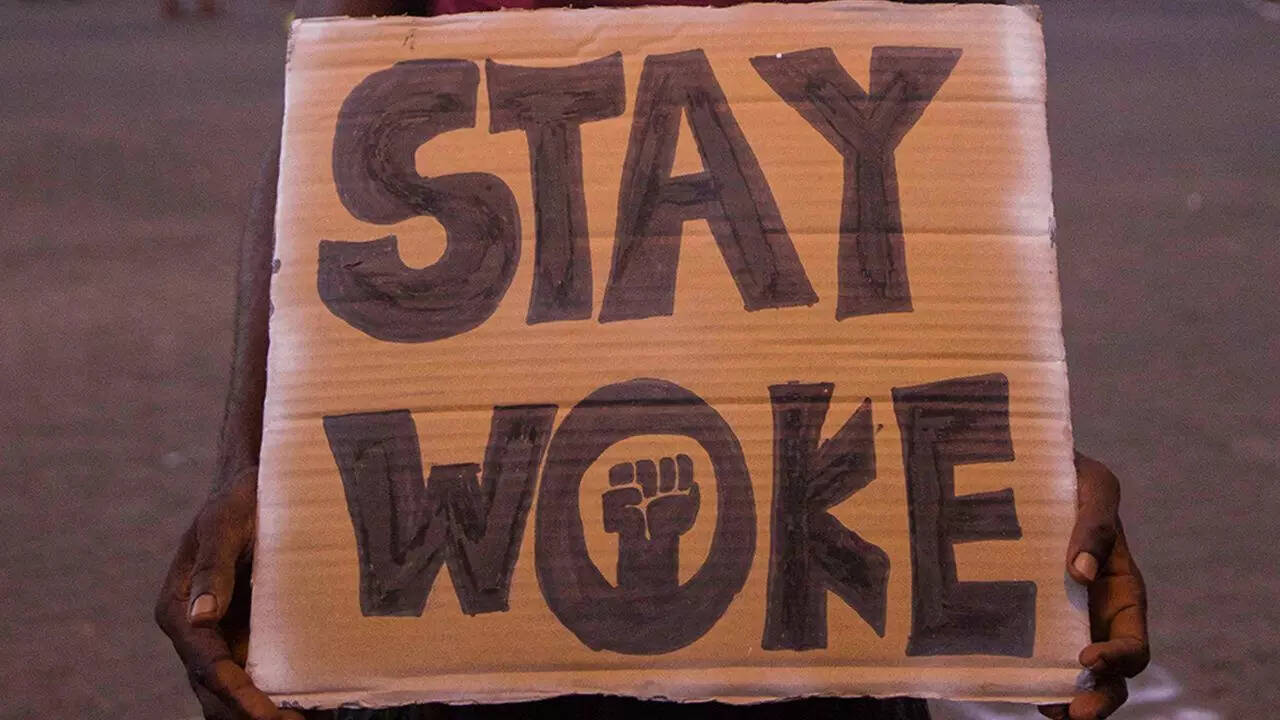
Image Credit: Canva
Historical Origins: From African-American Vernacular English to mainstream
"Woke" did not begin with Generation Z; rather, its origin stretches almost a century in the past. When tracing the origin of "woke," the earliest usage can actually be found in African-American Vernacular English (AAVE), in which "woke" meant "awake" or "alert."
"Stay woke" began in the early 20th-century African-American community as an alert for the dangers faced daily by Black Americans.One of the earliest uses of the phrase “stay woke” was found to be as early as 1938, when blues singer Lead Belly used the phrase as a call to awareness within the lyrics of his song “Scottsboro Boys.”Later, in the Civil Rights Movement era of the 1960s, woke was established in Black communities to stress social-political inequality understanding.
Decades later, in the 2000s, artists like Erykah Badu brought the word back to the world of music.The term received mainstream media coverage in 2014 when there were protests in Ferguson, USA, after the killing of Michael Brown by the police. The term #staywoke was widely used by social activists who were associated with the Black Lives Matter social movement to remind people to be alert to police brutality and racial inequality.
This incident brought the term woke into mainstream prominence.
Why Gen Z uses “woke” so frequently
Image Credit: Canva
There are several reasons woke has become especially common among younger generations like Gen Z:Social media amplificationSites such as Twitter, TikTok, and Instagram have swept languages and cultural expressions around the globe at a rapid pace. Terms that reflect a social movement or cultural commentary may be widely disseminated on the internet, and slang can be disseminated and defined through millions of postings.The term can also refer to individuals from Generation Z, that generation of people that is particularly well-acquainted with digital activism, as it is often used as a way for that generation to show awareness about current events, climate justice, LGBTQ+ movements, and more.Cultural engagement and political awarenessThe generation Z demographic is considered one of the most politically and socially conscious generations in history. The use of woke by Gen Z represents an overarching cultural shift in being socially conscious in terms of being informed and taking a stance against the norms and supporting progressive ideals.For many young individuals, woke can evoke a sense of collective responsibility, recognising that it takes not just awareness but action to address systemic issues.Evolving meanings and mainstream adoptionOriginated within discrete communities, the meaning of the term woke grew as it entered mainstream discourse; starting as a term urging awareness of racial injustice, it now encompasses awareness of many forms of social inequity.Not always all use of the term, however, carries a positive meaning.
In recent years, woke has also been adopted by political critics-most notably, conservative commentators-as a pejorative to mock or criticise progressive politics, suggesting that wokeness represents extreme political correctness or performative activism.This change in practice partly explains why the word occurs so often; its meaning dramatically shifts, depending on the context, from earnest endorsement of social causes to sarcastic dismissal of what critics see as excessive modern activism.
How its use has changed over time
What makes woke particularly interesting is how its meaning has transformed:Because of the evolution, woke can mean different things to different people, ranging from genuine social awareness to mockery of progressive culture.A slang word with deep roots and broad impact
Image Credit: Wikipedia
In a nutshell, the word "woke" originated from the African American vocabulary of awareness and alertness and is now a mainstream slang word. This is a reflection of the rising concern of the cultural identity in this generation regarding social topics, online communications, and politics. However, its widespread use among social circles, whether sincere, critical, or even satirical, also portrays the dynamic nature of words that are often imbued with diverse meanings.Woke has been drawn from a history of social struggle and has become a term labelling consciousness as well as an interpretive framework for how justice, identity, and consciousness are discussed in modern society.






 English (US) ·