

ARTICLE AD BOX
The future of daughters born in red-light areas of India is rarely discussed, yet their lives reveal some of the most powerful stories of resilience and aspiration.
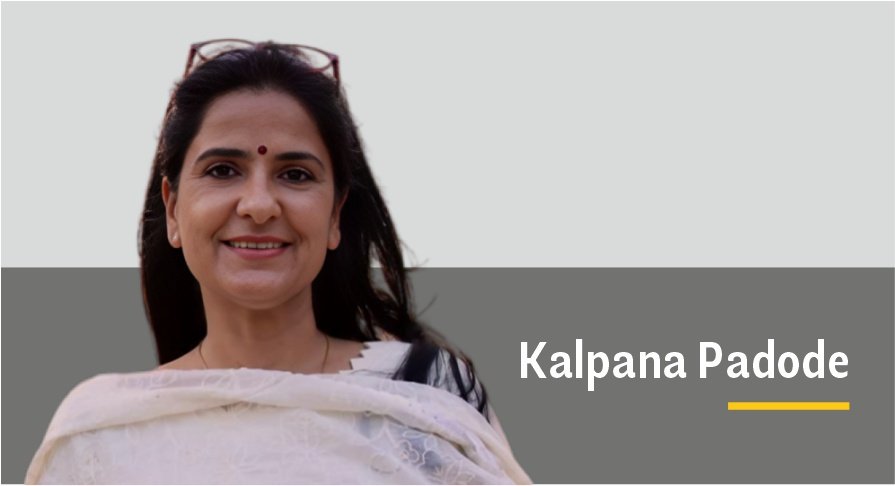
By Kalpana Padode
Governing Board Member of Vijaybhoomi University
This is a question we often avoid asking because we shudder to consider their stark reality. In Kamathipura, one Asia’s largest red light districts, daughters born to sex workers are expected to have a life mirroring their mothers. Children in such places are born with a glass ceiling. They are never asked what you want to become in life. No education, no prospects, no safety. When they do make a life for themselves, however, they show the world a mirror and exemplify determination and hard work against all odds.
Ambition Against Odds
Anu (name changed) is the living example of what unstoppable ambition looks like. The daughter of a commercial sex worker in Kamathipura, Mumbai, she grew up with poverty and instability as her sole constants. Her mother’s struggles with alcohol deprived her further of familial support. All she held onto through this time was a dream – to study and make a better life for herself. She was supported through her school level education by Mumbai Smiles, and she grabbed every opportunity with both hands and relentless grit. It soon became clear, however, that her dreams were too big for the access she had at the time. So, when she went looking for bigger opportunities, she was presented with a full scholarship to pursue a degree in Social Work through Kanyathon, who was working with Mumbai Smiles to equip girls like Anu to make a life for themselves.
Structural Inequality Challenge
Anu’s issue was never will or grit. It was the most mundane struggle – money. The banality of her circumstance, and that of countless such girls in India is firmly rooted in gendered and financial oppression policy and philanthropy have done much to alleviate these struggles, but the demand-supply gap in opportunity provision for the most marginalized sects continues to grow. This simply means that women from red-light areas, financially unstable homes and Adivasi communities still do not feel the trickle down effect of existing beneficiary structures. It is the belief and unyielding spirit of the ones that do find their own ebay that shows the world the true realities of their hardships and their hard work.
Scholarship Changes Lives
Another exemplary instance of tenacity comes in the form of Tanushka, freshly promoted to 12th grade in Vijaybhoomi Singapore International School. Hailing from an underprivileged community did not stop her or her parents from dreaming of a better life for her. Her parents went above and beyond to put her in a school they could barely scrape funds for, and she always exceeded expectations and excelled in academics. When she came to know that her education after her 10th grade would be taken care of under scholarship, her first and enduring feeling was a deep sense of relief that her parents would not have to bear the financial load of her dreams anymore. She has represented Raigarh on the Viksit Bharat platform in idea based rounds, showing her sharp mind and quick communication skills. A science student with a keen interest in physics and math, Tanushka’s unrelenting hunger for knowledge and new experiences have made her explore activities beyond the classroom to make the most of the opportunities she has been given.
Education Creates Change
Financial support does not simply mean handing wads of cash to students and calling it CSR completion. It also often means providing for the girls’ daily expenses, making sure they have resources to complete and submit their assignments and even mental and emotional support to ensure that they and their parents will be well taken care of. Students require a safety blanket to relieve them of the guilt of having to worry about the financial burden of their education. Supporting structures often must act as caregivers to these young women to give them a holistically safe environment to flourish. To sponsor a student is akin to being part of the village that raises her, and if she has what she needs she will take care of others going forward as well. For instance, another scholarship recipient, a first year BBA student named Anita, has vowed to sponsor the education of other girls once she is financially able. Educating women has historically been the beginning of a positive ripple effect in society. This is encapsulated best in the Marathi saying mulgi shikhli, pragati jhali (educating the girl child brings progress). Policies such as the Beti Bachao Beti Padhao campaign, along with organizations like Kanyathon, Mumbai Smiles, Sparsh and others have brought the school enrollment percentage for the girl child to just under 50% according to the 2024-25 numbers. However, true progress is not possible when more than half the young population of India is left without structured and supported education. So we must ask ourselves how this gaping demand-supply disparity in opportunity must be closed in a sustained, long-term fashion so that no girl ever needs to see doors close to her dreams because they were too big for her wallet.
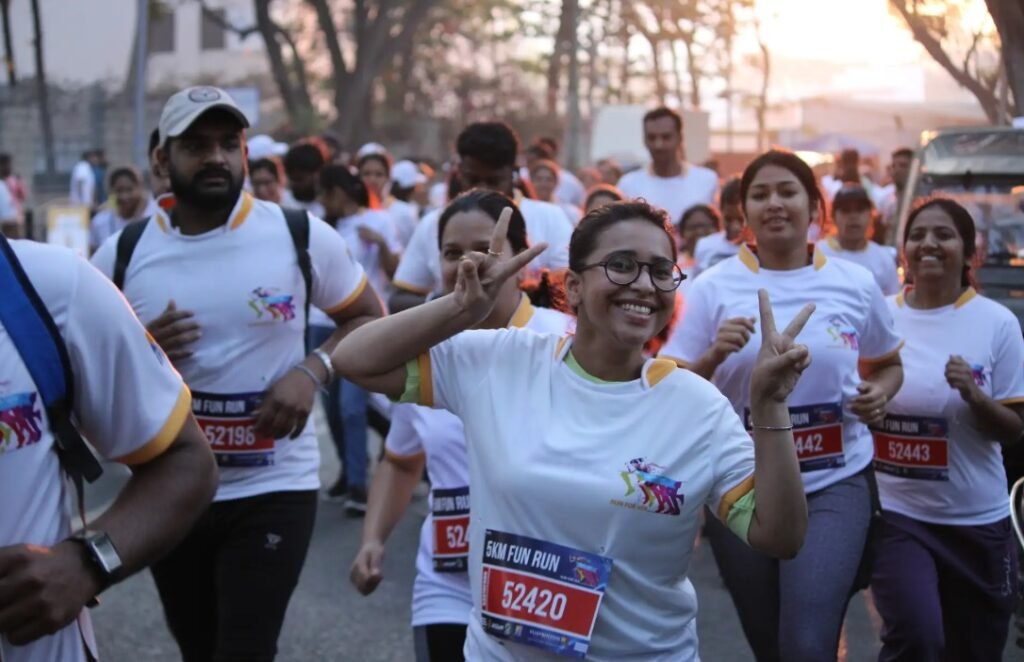 Kanyathon- by Kalpana Padode
The Author
Kalpana Padode is a Governing Board Member at Vijaybhoomi University and serves as the Director of Infrastructure and Campus Development at the university in Greater Mumbai. She is also the Secretary of the Centre for Developmental Education (CDE), the society that runs IFIM Institutions and JAGSoM. An educationist and entrepreneur, Kalpana holds a postgraduate degree in English Literature from Kurukshetra University and a Women Entrepreneurship Diploma from IIM Bangalore. She began her entrepreneurial journey in 2004 by founding Home Food Catering Services, a cloud kitchen that scaled to serve over 4,500 meals daily to educational institutions and corporates. Deeply committed to social impact, she initiated Kanyathon in 2011 to raise funds for the education and empowerment of underprivileged girls. What began with 200 runners has grown into India’s largest student-led charity run, attracting thousands of participants across Bengaluru and Greater Mumbai. Through the Kanyathon Shiksha Kendras and scholarships supported by the initiative, her efforts have helped improve access to education and opportunities for girls from economically disadvantaged communities.

ADVERTISEMENT

ADVERTISEMENT

ADVERTISEMENT
ADVERTISEMENT







 English (US) ·