

 1 hour ago
3
1 hour ago
3
ARTICLE AD BOX
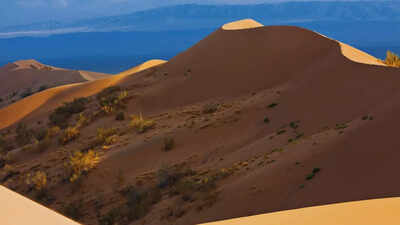
Singing Dunes in Gobi Desert
Deep in the heart of the Central Asian desert, one of the world’s greatest acoustic enigmas has been hiding in plain sight: the Singing Dunes. Famed for their deep humming and booming noises, which have been likened to the sounds of a giant organ, the Singing Dunes are one of the strangest and most fascinating natural attractions in Central Asia.
The Singing Dunes have been puzzling travelers, scientists, and explorers for centuries, and they have become one of the most famous sights in southeastern Kazakhstan.The famous Singing Dune can be found in the Altyn-Emel National Park, a massive protected area of desert, geology, and wildlife. The Singing Dune rises dramatically from the desert plain near the Ili River.The dune is approximately 150 meters in height and spans a distance of 3 kilometers in length.
However, what makes this dune special is the fact that when sand starts sliding down its steep surface, a humming sound is produced. When winds blow or people climb up and then climb down the dune, the sand particles rub against each other and produce a humming vibration.
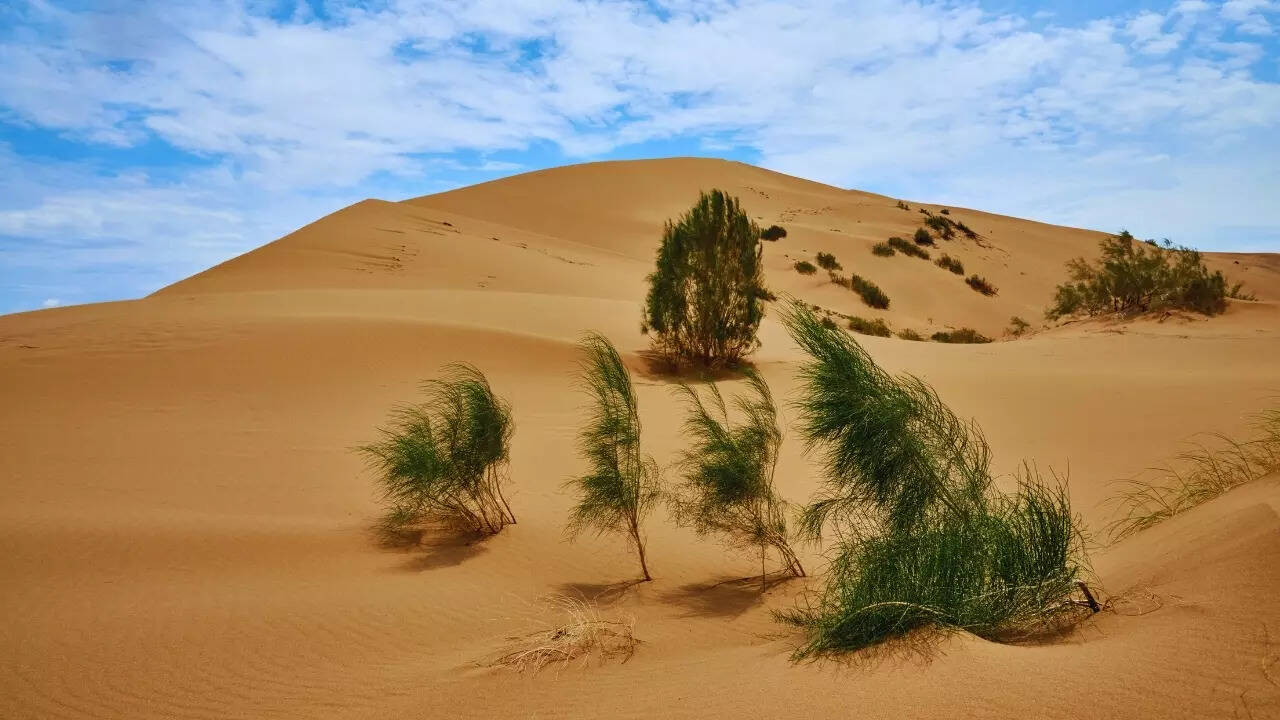
Singing Dunes in Kazakhstan
Because of this humming sound produced when winds blow or when people climb up and then climb down the dune, this dune was given the name Singing Dune. Locals in the area also refer to this dune as Singing Barkhan, where a barkhan is a type of crescent-shaped sand dune.
The Singing Dune is located in a geographic area that is within the desert ecosystem associated with the larger Gobi Desert in Central Asia. While the larger Gobi is located in Mongolia and northern China, a similar desert environment can also be found in southeastern Kazakhstan.
Why the sand “Sings”
The phenomenon has fascinated scientists for decades. The sound is observed only in extremely specific conditions:
- The sand should be extremely dry.
- The sand should be smooth and similar in size.
- There should be a large quantity of sand moving down the dune.
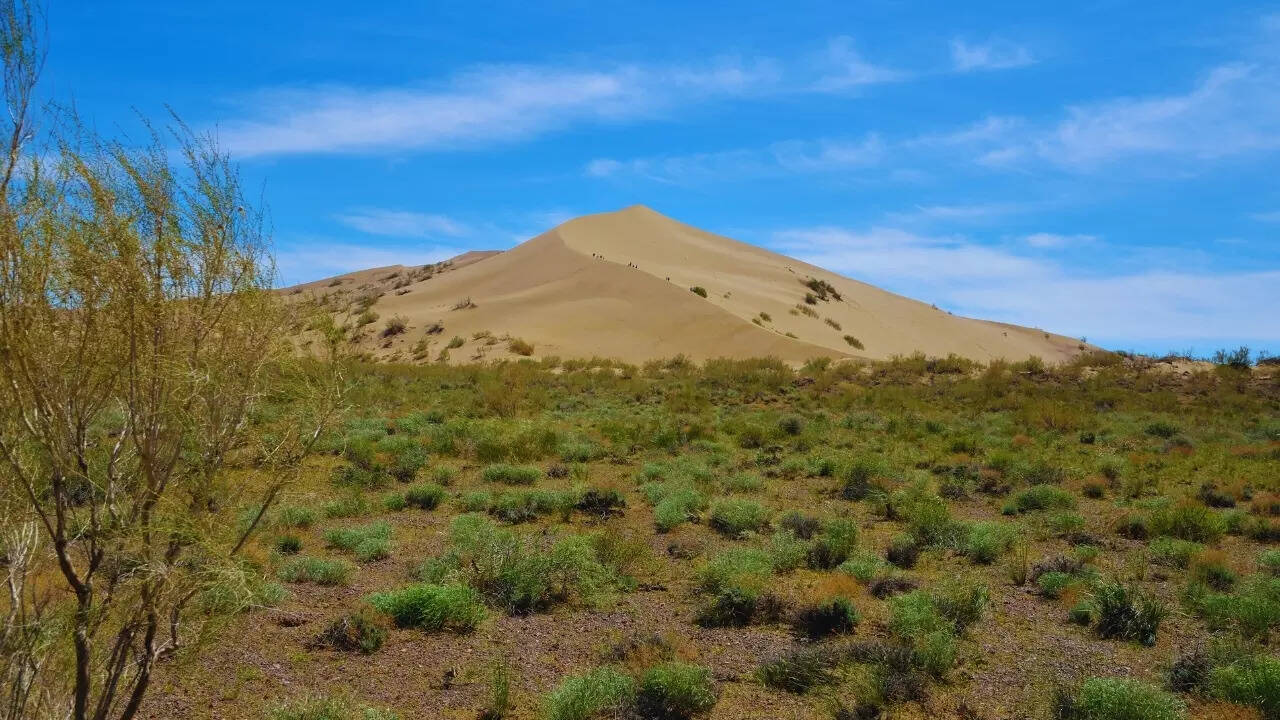
Singing Dunes
The sound is created by the vibration caused by moving sand down the dune.
The sound resembles that of a plane’s engine or a giant musical instrument.It is interesting to note that the dune does not “sing” all the time. The sound can be observed during strong winds or when sand slides down the dune.
A unique attraction for adventurous travellers
The Singing Dune has become one of the main attractions in Altyn-Emel National Park. Adventurous travelers climb the towering dune to see the breathtaking view of the surrounding desert and mountains.
Sliding or walking down the steep slope sometimes triggers the famous sound, giving travellers a rare chance to hear the desert “sing.”The dune’s golden colour, dramatic height, and strange acoustic behaviour make it one of the most memorable landscapes in Central Asia. Combined with the wild beauty of the surrounding desert, it provides an experience that is both surreal and ancient.Whilst scientists have been able to get to the bottom of some of the physics behind the phenomenon, the Singing Dune remains one of the most entrancing of nature’s curiosities. Silently rising out of the desert near the Ili River, it is a reminder to the travelling visitor that some of the most basic components of the natural world, such as sand and wind, can combine to produce some of the most extraordinary natural wonders.For the visitor to the remote regions of Kazakhstan, the Singing Dune is not simply a natural phenomenon, but one in which the desert literally finds its voice.






 English (US) ·