

 1 hour ago
4
1 hour ago
4
ARTICLE AD BOX
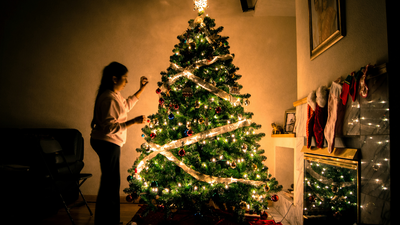
“It’s the most wonderful time of the year.”The song returns every December, filling shops, classrooms and homes with a familiar sense of arrival. Christmas feels known before it is explained. Lights go up, music loops, and the calendar signals a pause.
Yet much of what shapes this holiday sits outside the way it is taught, or not taught at all.For students, Christmas often appears as a fixed tradition. In reality, it is a holiday shaped by belief, history, power and change.
A holiday that feels familiar, but isn’t fully explained
In classrooms, Christmas often appears as a settled story. A date, a figure, a set of customs. What is missing is how these pieces came together, and how much of the holiday was shaped by history rather than certainty.
Here are ten facts that add context to the season many grow up celebrating.No one knows the exact date of Jesus’ birth
Christmas is not celebrated on the same day everywhere
In several countries with large Orthodox Christian populations, including Russia, Christmas falls on 7 January.
This difference comes from the use of older church calendars that calculate dates differently.
‘Xmas’ is older than it looks
The word Christmas comes from the Old English Cristes maesse, meaning Christ’s mass. The shortened form Xmas dates back to the 16th century. The X represents the Greek letter Chi, the first letter of Christos, the Greek word for Christ.
Many familiar traditions are relatively recent
Christmas cards, crackers, gift-giving customs and foods such as mince pies and roast turkey became widespread during the Victorian era in Britain.
Queen Victoria and Prince Albert helped popularise these practices, turning Christmas into a domestic and social event.
Christmas trees have roots outside Britain
Decorated trees became popular in Britain in the 19th century, but the practice began earlier in Germany. Fir trees were decorated with fruit, nuts and later candles. Some historians trace the use of evergreen plants back to Roman and ancient Egyptian customs linked to ideas of life continuing through winter.
A Christmas tree is sent to London every year
Each year, Norway sends a large Christmas tree to Trafalgar Square. It is a gesture of thanks for Britain’s support during World War II. The tree stands as a public reminder that Christmas traditions can also carry political memory.
Santa Claus is based on a real historical figure
The name Santa Claus comes from Sinterklaas, the Dutch name for Saint Nicholas. He was a Christian bishop in the 4th century, remembered for generosity. Over time, stories about him evolved into the modern image of Santa delivering gifts on Christmas Eve.
Not every country has Santa
Christmas folklore differs across cultures. In Italy, La Befana, a witch-like figure, delivers gifts. In Iceland, children leave shoes out for the Yule Lads, a group of mischievous characters who reward good behaviour and punish bad habits.
‘Jingle Bells’ was not written for Christmas
One of the most recognisable Christmas songs does not mention Christmas, Jesus or Santa. Jingle Bells was written in 1850 for Thanksgiving and later became associated with the Christmas season.
Christmas was once banned
In 1644, Christmas celebrations were made illegal in England and later in parts of colonial America. Authorities argued that the holiday had drifted away from its religious meaning. Celebrations continued quietly until the ban was lifted nearly twenty years later.For students, these details matter not because they change how Christmas feels, but because they explain how traditions are made. Holidays are not static. They are shaped by belief systems, social shifts and historical moments. Christmas, often presented as timeless, is also a record of change.









 English (US) ·