

 1 hour ago
2
1 hour ago
2
ARTICLE AD BOX
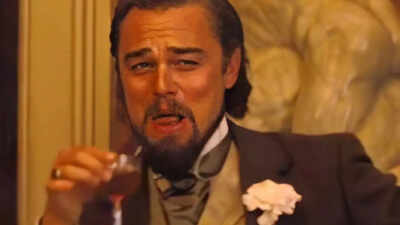
Just last year — actually, not even a month back — my city (of joy?) was easing into the much-awaited December vibe. Kolkata was basking in the warmth of Christmas lights, familiar chatter, and the unmistakable sound of footsteps of our favorite people coming home for the year-end ritual of catching up with friends and family.
If you’ve ever been around, you’d know the drill: Nahoum’s decadent cakes, Saldanha’s delicious savories, mulled wine, slow-cooked musical evenings — classic Kolkata December energy. Cozy. Nostalgic. And so wholesome!And yet, for a few of us, things got slightly complicated.My friends and I ended up canceling a concert we’d been pondering for weeks. Tickets were added to the cart. Plans were loosely hatched. And then — all discarded in one go.
It wasn’t even a close call. We, in fact, collectively decided to “cancel” the artist himself.Now, this might sound silly, trivial, or somewhat performative, even. But here’s what made it not quite so: this particular artist in question was someone whose music we had literally grown up with. I’m not exaggerating — at least five of his songs sit comfortably on our all-time favorite playlist. So yes, this wasn’t an impulsive decision of rejection — it was a conscious choice.
When word got out in our extended circle, these obvious questions kept coming back to us: “Why do you think artists owe you a foolproof moral compass? Who cares if they’re ethical and responsible enough to pass some test for being an ideal public figure, to avoid getting ‘canceled’ left, right, and center? Isn’t their art enough to buy them immunity from all this ‘conscience’ nonsense?”Those piercing questions are where this story really begins.There’s a particular brand of celebrity mockery that operates as both fodder for entertainment and ethical side-eye — sort of a half joke and half moral nudge.
It typically arises when a specific behavior becomes so repetitive that it stops being incidental and begins to form a prominent pattern, defining the public persona itself. Especially when the person in question is a revered, acclaimed artist, that pattern eventually overshadows their whole body of work.For example, who is Leonardo DiCaprio? He’s the man who, despite being over 50, almost exclusively dates women in their early to mid-twenties.
According to pop culture commentary and charts tracking his relationships, his public partners historically haven’t been older than 25 until recently, feeding the internet-coined idea known as “Leo’s Law.”Now, this may sound reductive, because after all, we’re talking about an Oscar-winning actor of his stature. But here’s the bitter pill to swallow: Leo DiCaprio’s dating history is one of those glaring patterns.
For decades, he has repeatedly been linked with women who are barely out of their teens or just entering their twenties. The internet famously calls it “Leo’s Law.” Comedians and late-night hosts have turned it into a running gag.
Meme pages across various social media platforms highlight his girlfriends’ ages like data points on a graph — earning brownie points in analytical dissection. Even fellow colleagues have now (and finally) begun making sly, public jabs at his antics — sometimes subtle, sometimes unmindful even (thank you, Jennifer Lawrence, nevertheless).But what remains once the punchlines fade and the laughter settles?Is a man in his 50s — as powerful and well-connected as DiCaprio is, both within Hollywood and the global entertainment industry — repeatedly choosing partners in their early twenties really just “personal preference”? Or have we normalized this pattern simply because wealth, fame, and cultural capital allow these men to get away with almost anything — especially when it’s wrapped in luxury and sold as romance?
The pattern in the spotlight
It’s hard not to notice the running gag: Leonardo DiCaprio, now in his 50s, seems to have a dating-age limit set at “25 and under” — give or take a few years.
In a recent Variety interview, Jennifer Lawrence took a subtle jab at this widely but hush-hushly discussed “Leo’s Law”: “I’m so sad that you don’t have a teenage daughter. You look great with one.” Even for someone who hasn’t managed to keep track of all of Leo’s girlfriends, it wasn’t hard to understand that this was a sly reference to his string of dating only 20-something-year-old women.The 2026 Golden Globes saw a similar repetition when Nikki Glaser quipped about the Oscar winner: “You’ve accomplished all that — and the most impressive thing is you did it before your girlfriend turned 30.”
Of course, she was talking about his 27-year-old girlfriend Vittoria Ceretti. Glaser deadpanned that Leo had “worked with every great director … and you were able to accomplish all of that before your girlfriend turned 30,” emphasizing that for him, the defining milestone is always his girlfriend’s age — not his own.Some well-lit studios or the Golden Globes stage aren’t the only places for these jokes on “Leo’s Law.”
Even on social media, memes are more or less saturated with DiCaprio’s “Forever Under-25” dating pattern.Sure, the jokes are funny, the host nails the roast, and gets the laughter points — a successful gig altogether. The interview makes a splash online, reels of that particular moment are featured in several publications and pages — but at what cost? Rather, at whose cost?
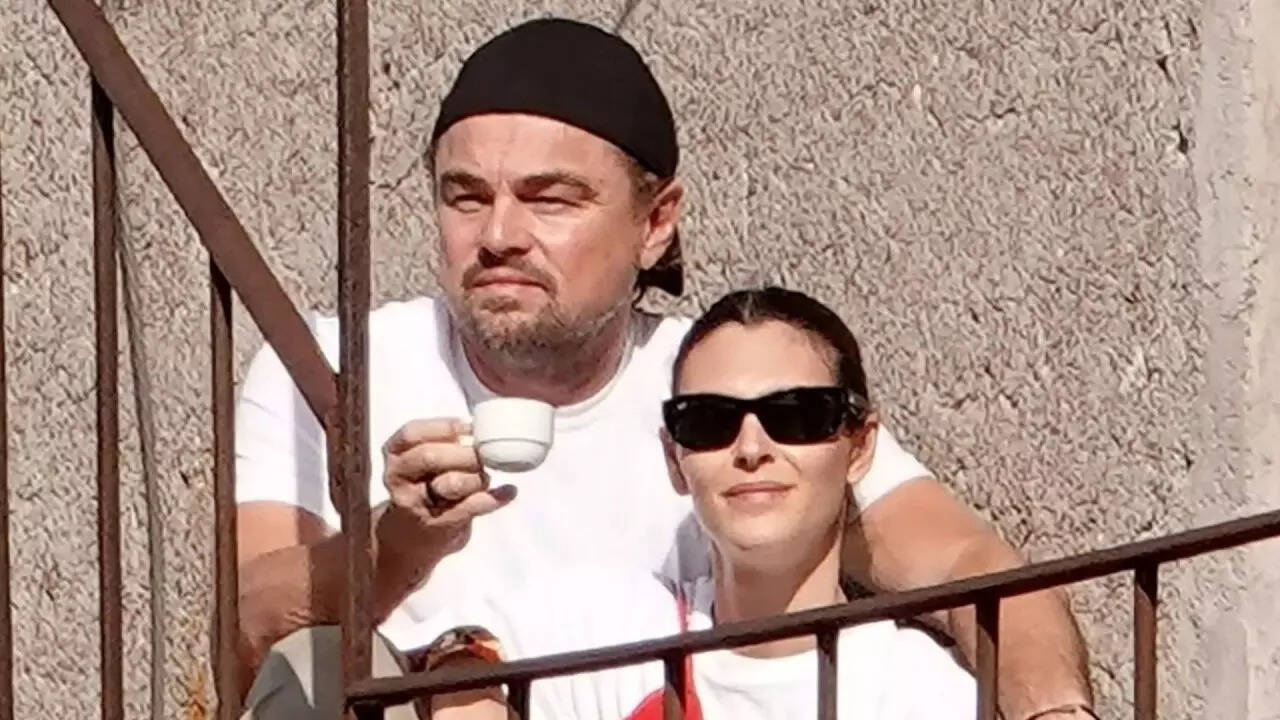
The fault in Leo’s Law
Here comes the dicey bit of delirious “Leo’s Law”: DiCaprio’s choices have always been legal and (apparently) made with consenting adults. So, what exactly is the ick?Well, part of why this rubs us (read, me) the wrong way comes down to science — yes, science.
For starters, cognitive research shows that brain development continues into the mid-20s and arguably even into the early 30s before reaching full maturity. A large study of brain scans found that a major organizational shift in brain structure stabilizes around age 32.For example, neuroscientists point out that the prefrontal cortex — the brain’s center for impulse control, judgment, and decision-making — isn’t “finally complete” until around age 25. One NPR-backed report cited in The Guardian even put it simply: “At 25 you have reached maturity and have a fully formed brain.”
In other words, if DiCaprio is 50 dating a 24-year-old, he’s fully two decades past the point where her brain stopped the final wiring for adulthood.A Cambridge study extends this timeline even further. Brain scans of thousands of people show that our neural wiring continues to refine through our 20s. In fact, the authors of the said study found that the brain remains in an “adolescent era” until around age 32, only then shifting into true “adult mode.”
As Cambridge professor Alexa Mousley explained, by the early 30s, our brain’s network plateaus in efficiency. In plain terms, a 22-year-old’s brain is still wiring itself for adulthood, while a 42-year-old’s brain (DiCaprio’s age when he started dating Camila Morrone) has long been on its adult track.
The colored brain MRI images supplied by the Cambridge team illustrate this scientific fact beautifully — those scans show multiple brains from ages 20 through 30, highlighting how connections keep reorganizing until the early 30s.Now, if you superimpose that on a romantic relationship, a large gap means the younger partner is still developmentally “learning” the world, whereas the older partner already has life on automatic. This might not seem like a big deal, because “then one party can teach/guide/mentor the other party.” But that precisely is the issue here. Because this “guidance,” this “mentoring,” can affect impulse control, risk assessment, and even decision-making.That’s not to say a 25-year-old is a “child” — of course, legally, they’re adults, and they’re consenting adults — but psychologically, they may not be fully on equal footing yet. In fact, research on early adulthood notes that the twenties are often a period of identity exploration, career forging, and self-confidence building.Research on the so-called “quarter-life crisis” notes that many people in their early 20s experience anxiety and uncertainty as they juggle career paths, fresh independence, and brand-new life choices.
The scientific literature suggests that “in your twenties, a period of responsibility and stress,” factors like identity and self-confidence are still stabilizing — you actually need growing self-efficacy to pull through smoothly.
Basically, early adulthood is not the same as full adulthood — and it’s often a time of figuring things out: with education, career paths, and self-image still being unsettled.According to similar scientific reviews, for women in their early 20s, this developmental turbulence can be particularly intense because of societal pressures.
Many young women today juggle ambitious career goals, higher education, and new independence all at once. Feminist scholars have noted that even after “formal markers” of adulthood (like graduating college or marrying), young women often report that they still feel in a transition phase — focusing on self-development and autonomy.
In one study, women stressed that they needed time to be “independent” and “self-reliant” before committing fully to marriage or romantic partnership.
In practice, a woman in her early 20s is likely still learning how to manage finances, negotiate career moves, handle adult friendships, and more — all while society often puts extra pressure on her to look and behave maturely. And then, when you drop her into a romantic relationship where her partner has decades more life experience, enormous wealth, fame, and influence, the balance of power can easily tilt.
What happens when the roles are reversed: Nick and Priyanka — a case study
Now, it’s easy to squeeze in a well-oiled word called “hypocrisy” in this discourse — “Nick and Priyanka have a massive age difference, almost over a decade; are you calling them out for it?”Here’s an explainer for those who think Nick and Priyanka’s equation is equivalent to Leo’s Law.Sure, Priyanka Chopra is 10 years older than Nick Jonas, and they got married when Nick was only 26. But here’s the thing: theirs is a partnership between two globally prominent artists who met when both were already established adults. The key is that their situation doesn’t hinge on a lopsided power dynamic and lack of agency for either party. Priyanka herself is a global star in her own right, while Nick has a solid footing in his own world — they don’t owe their success to each other, nor do they have to borrow from one another.
They both agreed early on that they were equals. In fact, if anything, because of this already-established equality, they can be each other’s biggest and loudest cheerleaders — not just behind closed doors, but even before the world’s eye, and especially on those glamorous carpet appearances.
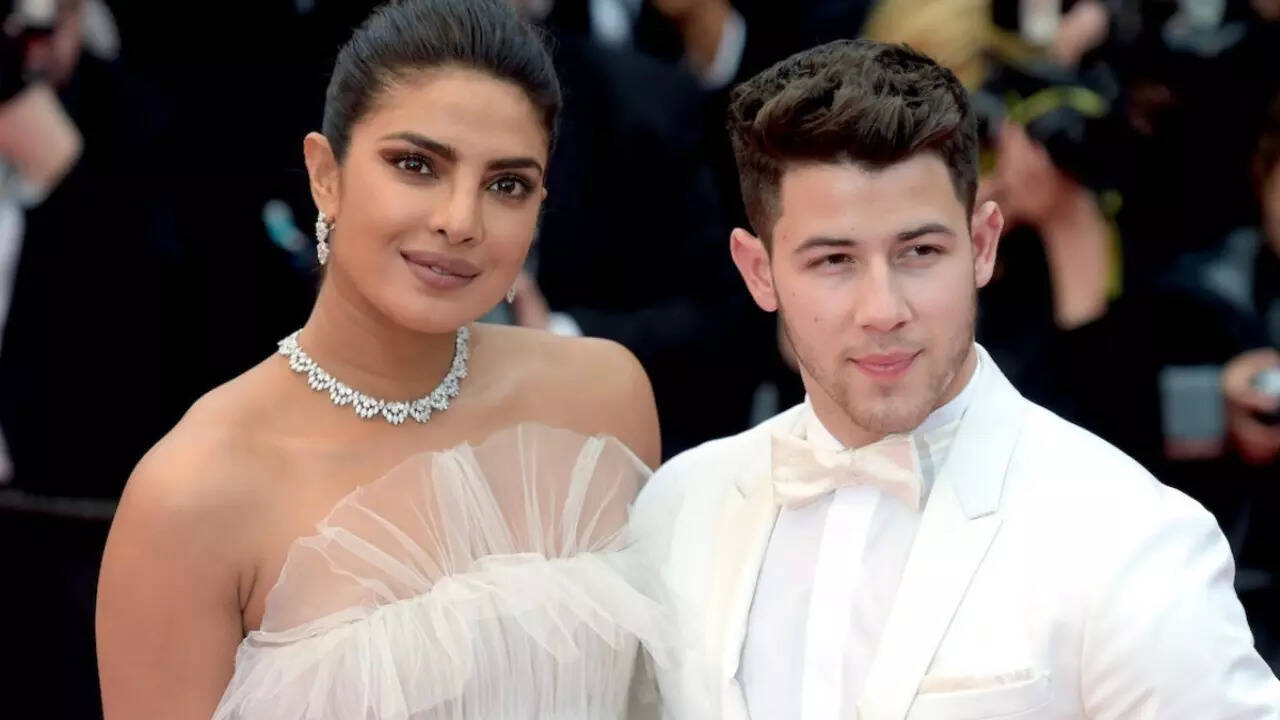
What you have to understand is that age gaps can be normalized or problematized by context — variables like status symmetry, timing, and agency all shape how a relationship reads in public.
Because ultimately, the difference isn’t just years — it’s the balance of leverage.What’s more interesting is how, in Nick and Priyanka’s case, their age difference stirred controversy for the woman’s sake, not the man’s. Priyanka had even admitted in interviews that the media initially gave her “a lot of shit” for dating a younger man — a backlash she insists is absurd. “I think people think about it a lot more than I do,” she said in an interview.
Indeed, Priyanka had pointed out the double standard without mincing her words: “I find it really amazing, when you flip it, and the guy is older, no one cares, and actually people like it,” she said in an interview over half a decade back.There’s a psychological angle to it as well.Psychologists note that these reverse-age-gap couples often work because the women are financially and emotionally secure, and the younger men bring energy and emotional awareness. One Psychology Today article explains that today’s younger men often have a higher “emotional quotient” than older generations.
They tend to approach relationships with empathy and share equally in domestic and emotional tasks, creating genuine “emotional equity” in the partnership.In other words, the Jonas–Chopra match highlights that age is really just a number when two mature, independent people decide to be together. Because it’s not the decade gap that automatically spells trouble — it’s who has more power in the relationship that counts.Meanwhile, in Leo’s case, the power usually lies heavily with him. He is a celebrated icon in one of the most acclaimed entertainment industries in the world — Hollywood — and a household name, whereas his younger girlfriends are typically still building their careers — one wouldn’t even know their names unless they were associated with Leo. And to think of it, even the beginning of their relationships isn’t absolutely devoid of “shady” — they often meet him at events or through modeling gigs, as if he’s the one scouting and selecting from the market of young talent.
In fact, this entire setup echoes a long-standing Hollywood trope: male stars dating ingénues to show off their “youthfulness.”
Gigi and Bradley: A similar, yet very different power math
If you thought DiCaprio was alone in this “dating young women” boat — think again. That boat is too Hollywood-coded for other male Hollywood celebrities not to hop on. Let me rope you in for yet another instance of a couple with a similar age gap: Gigi Hadid and Bradley Cooper.On paper, the numbers look similar: Cooper is 20 years older than Hadid.
And yet, the reaction to that pair has been noticeably quieter, less mocking, and far less alarmed. And although on the surface that might seem hypocritical, that contrast is actually instructive — because it proves the point we’ve been meaning to make all along: the problem isn’t the age gap; it’s the power imbalance.
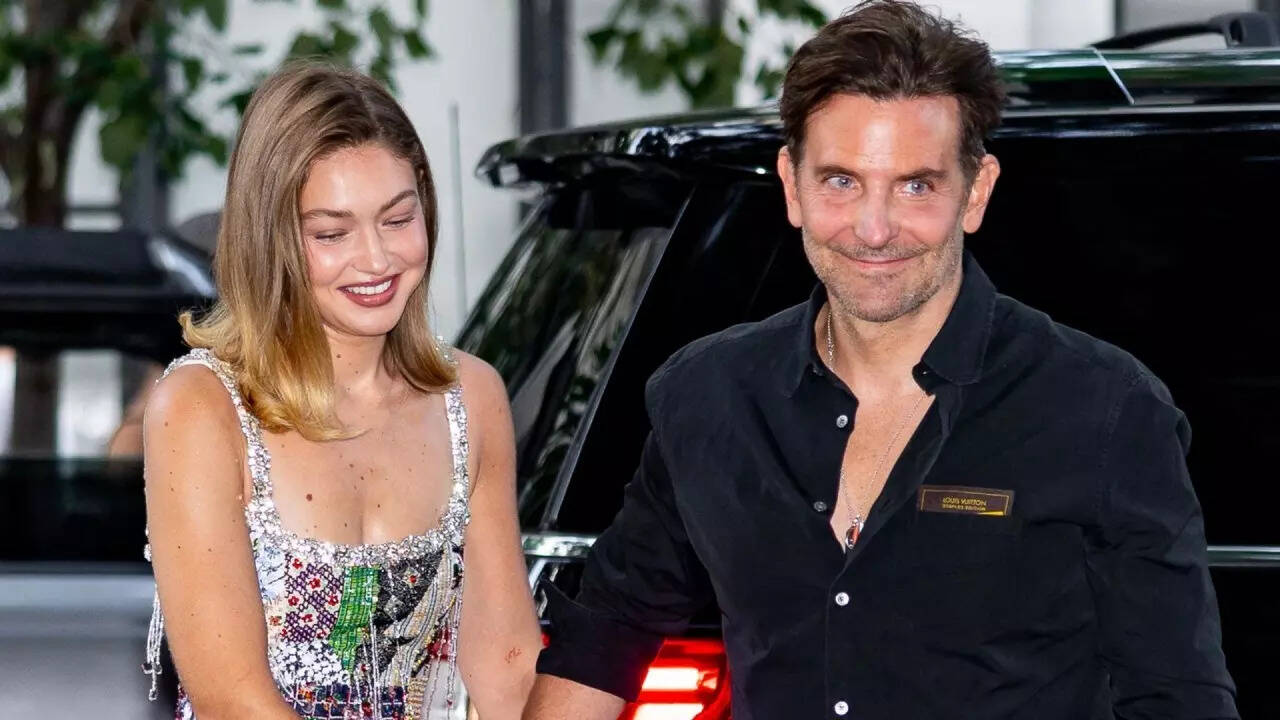
Bradley Cooper, now in his late 40s, is undoubtedly a powerful figure in Hollywood. He’s an Oscar nominee, director, producer — a man with immense industry clout.
But Gigi Hadid is no less an icon in her own right — she’s not a wide-eyed newcomer plucked from obscurity. She’s one of the most recognizable supermodels of her generation, a bona fide businesswoman with her own fashion brand, and a global celebrity who entered fame on her own terms.
She has handled high-profile relationships publicly, navigated motherhood, and reshaped her career post-pregnancy — all without losing her own personality, aura, relevance, or agency.And that distinction matters.Unlike DiCaprio’s repeated pattern of dating women in their early 20s who are still establishing themselves professionally and emotionally, Hadid is 33 — firmly past the formative, identity-building stage that developmental research often associates with ongoing brain and psychosocial maturation — the “emerging adulthood”. Scientific research consistently indicates that people in their early 30s demonstrate greater emotional regulation, clearer self-concept, and stronger boundary-setting skills than those in their early 20s.
According to developmental psychologist Jeffrey Arnett, the phase between 18 and 29 is marked by instability, exploration, and heightened vulnerability — especially for women navigating career pressures and social conditioning around desirability. By the early 30s, those traits stabilize significantly.In other words, Hadid is not still “becoming” — she already is.Cooper’s life experience does not overshadow Hadid’s — rather, it adds to it and exists alongside.
She has lived through public scrutiny, high-profile relationships as well as breakups, motherhood, and postpartum depression, even. She has spoken openly about therapy, mental health, and learning to protect her personal life. These are not the experiences of someone easily molded or controlled. Moreover, Hadid brings her own cultural capital, financial independence, and public authority into her relationship with Cooper.
She is not dating “up” in a way that requires deference or dependence.This is where DiCaprio’s dating history falters under feminist scrutiny. His relationships almost exclusively involve women who are still in that formative phase — models or actresses in their early 20s, often new to fame, often still finding their footing. Many of his partners encounter fame, wealth, and intense public attention through him.
That imbalance can quietly shape the emotional terms of the relationship.Recalling what one of the most profound and relevant feminist theorists of our times, Bell Hooks, warned: love cannot exist where domination and coercion do — and they do not always look like overt abuse. Sometimes, it looks like one partner holding all the cultural authority while the other adapts around it.With Hadid and Cooper, the authority is shared, if not evenly split.
She does not disappear into his world; she maintains her own. She doesn’t become a silent accessory or some prized possession at red carpets. She shines bright in her own merit and accolades.There’s another layer of Hadid that rarely gets acknowledged: she is a mother. Parenthood is often a milestone that accelerates emotional maturity, boundary-setting, and self-prioritization. It changes what someone is willing to tolerate.
The idea that a woman who has navigated childbirth, co-parenting, and a global career could be “groomed” in the way younger partners might be simply doesn’t hold.And this is where it contrasts with DiCaprio’s pattern of dating women before them, marking such life-altering milestones. As several feminist literatures point out, grooming culture mainly thrives where there is asymmetry in life experience — when one partner has already crossed milestones the other hasn’t yet imagined.
That gap shrinks significantly when both parties have lived full, complex adult lives.
The flaws and the fallacy: Through the feminist lens
In The Second Sex, Simone de Beauvoir wrote that women are often positioned as “the Other” — valued for what they reflect to men rather than who they are in themselves. In the 21st century, DiCaprio’s dating pattern fits well into that framework — and quite uncomfortably so. His partners often seem interchangeable in age, profession, and public narrative.
They’re often replaceable by another 20-something-year-old model without any consequence.And that realization speaks to the fault line in DiCaprio’s romantic endeavors.What’s more worrying is the fact that DiCaprio’s pattern isn’t unique in Tinseltown — older men dating much younger models is a thing — but it stands out because of how big his name remains and how he rarely deviates. On one hand, he’s this incredibly talented creative force to be reckoned with — commanding every room he walks into.
If that kind of fame and recognition weren’t enough, throw some cultural and social capital in the mix.
There probably is no who’s who who doesn’t know his name or wouldn’t want to clink glasses with him. In short, he’s a name that reverberates through every room — no matter what the industry is. And that’s why it gets murky.This relentless formula of plucking women who are — if I may say so — “beneath” his social and cultural status makes it wincing because it looks fairly manipulative.
From the feminist point of view, it underlines a familiar patriarchal script: older men get to be the conventional pursuers, while younger women are the traditional trophy partners.As mentioned in The Guardian piece, the legal scholar Catherine MacKinnon famously put it, patriarchy often operates through the “eroticization of female subordination.” In practice, that means attractive young women are fetishized in roles that emphasize obedience and adoration of men.
And make no mistake: DiCaprio’s girlfriends have frequently been described as his “muses” or “one in a million,” language that reeks of entitlement.
When one partner is still in the midst of personal development, and the other is world-famous, the relationship can easily drift into an unequal dynamic where one person holds far more leverage.

And for the nth time, this isn’t about numbers — a single five-year age gap could involve two equals in their 30s and be totally healthy.
Age alone doesn’t hurt anyone. But when it’s always a powerful and influential A-list male star and a woman two decades younger, and way less recognized, the issues become more prominent.On top of that, the entertainment industry, especially Hollywood, gives some of its members what we call “social capital”: access, networks, and influence in abundance. That capital can buy comfort, silence, and goodwill — and those things can delay scrutiny.
If you’re a giant box-office draw, people in power have incentives to keep you on set and on posters; publicists and PR teams help manage narratives; and late-night hosts and festival panels often treat you like royalty.
That ecosystem can make it easier to normalize troubling patterns rather than interrogate them.The concern is that the older party — here, Leo — is, consciously or not, wielding immense social capital.
Whether he likes the taste of that power or not, he checks every box — and he sure has money and connections that the younger woman lacks. Naturally, the younger partner is likely to seek approval, appease and/or please him, and live up to his expectations — because, let’s accept it, being Leo’s partner is a privilege not many can acquire or afford.
That dynamic alone can lay the groundwork for what critics describe as a “grooming-adjacent culture” in romance.Sure, “grooming” generally refers to when a powerful person builds a relationship with someone younger or vulnerable in order to exploit them later. It’s a term usually reserved for extreme cases, like predators and minors, but the underlying idea is about extreme power imbalances. And somehow, Hollywood has a knack for normalizing these patterns of older, famous, and powerful men with younger and less recognized women.
Why? Because fame often protects these male celebrities from repercussions for questionable choices.In plain terms, the bigger the star, the easier they get a pass.And it’s hard to escape the sense that such relationships can slip toward exploitative territory. Even if everyone is legally an adult, a significant power differential can enable controlling behavior. An older partner with resources might limit the younger’s independence (subtle jealousy over friendships or career goals) or pressure them into situations they’re not ready for.
Over time, the younger person might feel they owe something to the powerful partner.
In the extreme, this legitimately is “grooming”: one builds trust and dependency and then gradually exploits it.Besides, if someone’s pattern is always seeking adoration from a much younger partner (as Leo’s pattern indicates), there might even be a possibility that the person in question isn’t actually looking for an equal partner, but a sole admirer.
And that admirer dynamic can undermine equality. In a healthy romance, both people bring something to the table — trust, respect, and agency. But when one partner is decades older and far more influential, it can undermine the younger person’s sense of equal footing.
Hollywood’s double standard and accountability — standing poles apart
So, here’s the big, fat question: If the issue is really about power, why does DiCaprio keep getting away with it?Because a lot of it boils down to movie-star privilege and societal double standards.
Hollywood has long been criticized for how it treats aging and for its tolerance of older men dating younger women, often without serious critique.In fact, as mentioned in the Palatinate (Durham University's official student newspaper), a 2016 Polygraph study found that women aged 42 to 65 only got 20% of female dialogue across 2,000 screenplays. Men in that same age group spoke nearly twice as much, landing 39% of the male dialogue. In Caitlin Ball’s words in her college paper, “the older a woman gets, the more Hollywood tries to quieten her.”
Meanwhile, star actors like DiCaprio continue to headline blockbusters well into middle age.
What’s more infuriating is that even the media coverage of his latest girlfriends is often breathless rather than critical: Leo’s young girlfriends are either called “models”, “bikini-clad,” or “ballerinas turned girlfriends”. Frankly, rarely does anyone seriously probe what such pairings say about gender norms.
Because the same Hollywood gives side-eyes to Cher (79) for her relationship with her 39-year-old boyfriend, Alexander "A.E.
" Edwards, before finally giving up on it — because Cher really is a “rich man.”Ball raised an important pointer when she wrote that DiCaprio’s preference “should not just be dismissed as personal preference, but [recognized] as influenced by the industry he works in,” noting that he dates Victoria’s Secret models as if runway shows were “speed-dating events” for him.
She added that his “exceptional status” has let him “realize [this preference] to its fullest extent.” Does one need more proof of the system enabling his behavior to indulge this pattern unchecked? Seems unlikely.Because this lack of accountability is a glaring problem. And what’s more concerning is that Hollywood culture tends to protect men like this — just the way it protected predators like Harvey Weinstein, Bill Cosby, and more for way too long.
And if those instances weren’t alarming enough to ring the bell on why people in positions of power should be held accountable for their actions, I don’t know what else could be. The fact that DiCaprio’s relationships are largely seen as a punchline rather than a pattern of serious concern speaks to how lenient the culture is with big-name men.
The industry isn’t even ready to slap some sort of restraining order on them, let alone critique or cancel them as a consequence of keeping up with such a prolonged, blasphemous pattern.
If anything, they’re only nudged gently with a roast or two — that too, nothing scathing, only some soft-launchers. And even then, they can brush those punchlines aside with silent smiles.
So, what does that really say about us — those who actually made him the icon that he is today?
Because this isn’t about cancelling Leo, or painting a vilifying image of him and his intent as a romantic partner. If anything, for someone who has been an admirer of his craft, I only ever want him to do better. This is about recognizing the problematic pattern he keeps repeating, and the same being cushioned by powerful cultural capital.In fact, the real discomfort here lies not only with DiCaprio’s dating history and pattern, but with what our collective response to it reveals. At some point, we have to ask ourselves where admiration ends and accountability begins. Whether it’s possible to appreciate someone’s craft while still holding them accountable for the power they wield in their private lives, calling them out for their problematic behavioral patterns.Because cultural icons don’t exist in a vacuum. We make them. We sustain them. And because after a point, roasts aren’t enough as a reprimanding action. Laughter doesn’t compensate for complicity and lack of accountability. Jokes are a fine tool when they’re functioning as a critique. But if we, as a society — especially the community of artists with high intellect — only keep resorting to what tickles the funnybones in order to avoid serious discussion and responsibility, then we’re doomed.After all, how long does it take for a punchline to become a painful irony?





 English (US) ·