

 6 days ago
6
6 days ago
6
ARTICLE AD BOX
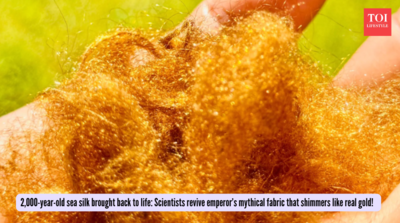
Sea silk, a legendary fabric shimmering like gold without dyes, is making a comeback thanks to modern science. Researchers have successfully recreated this ancient material using byssus threads from farmed pen shell clams, offering a sustainable, naturally luminous alternative to conventional textiles.
It sounds like something out of a legend - a fabric so rare and luminous that only emperors and popes were allowed to wear it. No dye, no paint. Just pure, natural gold-like shimmer woven straight from the sea.For more than 2,000 years, this mythical material, known as sea silk, slowly slipped into history books. The reason? The Mediterranean shellfish that produced its precious fibres became endangered, and with that, the ancient craft all but disappeared.But now, thanks to modern science, sea silk is making a stunning comeback.
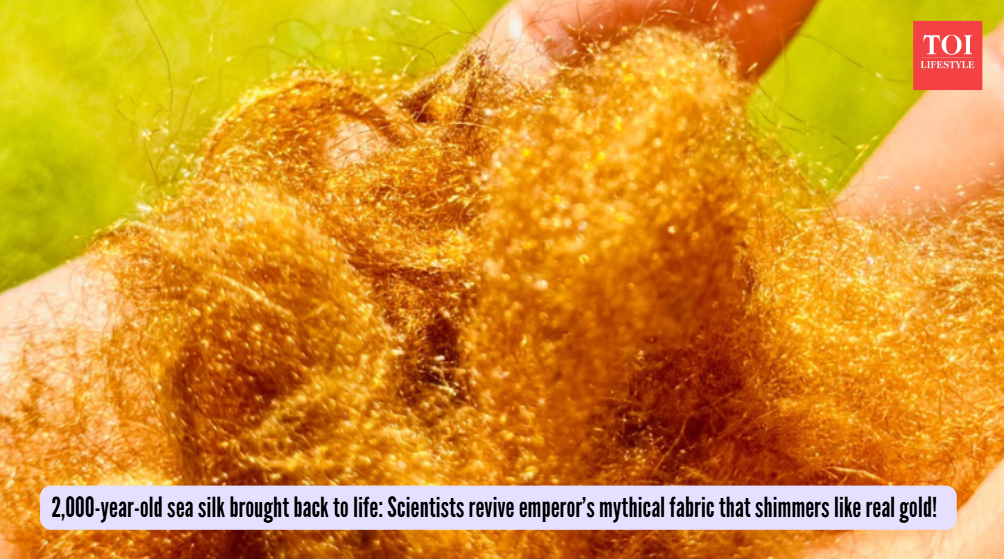
2,000-year-old sea silk brought back to life: Scientists revive emperor’s mythical fabric that shimmers like real gold! (Photo : POSTECH vis Science Direct)
What exactly is sea silk?
Often called the “golden fibre of the sea”, sea silk is made from byssus threads - fine, strong filaments secreted by certain shellfish to anchor themselves to rocks underwater.
Ancient communities around the Mediterranean once collected these fibres and spun them into ultra-luxurious garments that naturally shimmered like gold.No dyes were used. No chemicals added. The glow came straight from the structure of the fibres themselves. Because the shellfish were rare and the process painfully slow, sea silk became a symbol of power, privilege and wealth.Over time, however, the main species used for this craft - Pinna nobilis - suffered massive population losses due to pollution, climate stress and overharvesting.
As a result, the European Union banned its collection, effectively bringing the tradition to a halt.
How scientists recreated it
A team of researchers in South Korea decided to see if sea silk could be revived - without harming endangered species. Instead of Pinna nobilis, they turned to a local pen shell clam species, Atrina pectinata, which is already farmed for food along Korea’s coast.The byssus threads produced by this clam are surprisingly similar to the ancient fibres.
Scientists at POSTECH, led by Professor Dong Soo Hwang along with Professor Jimin Choi from the Environmental Research Institute, carefully collected the threads, cleaned them, twisted them by hand and spun them into fabric. When tested, the material closely matched historical samples of sea silk.Their findings were published in the journal Advanced Materials under the title “Structurally Coloured Sustainable Sea Silk from Atrina pectinata.”
Why does sea silk shine like gold?
The magic behind sea silk’s golden glow isn’t dye - it’s physics.The colour comes from something called “structural colour”, the same natural trick seen in butterfly wings, peacock feathers and soap bubbles. Instead of pigments, tiny layered structures inside the fibre bend and reflect light in a way that creates a permanent golden shimmer.Scientists found that a special protein structure called “photonin” forms microscopic spheres inside the threads.
These layers interact with light, creating a glow that doesn’t fade with time. That’s why ancient sea silk garments, when preserved, can still look radiant centuries later.
Why this matters today
Researchers say this breakthrough could be huge for sustainable fashion and material science. The byssus threads used in the experiment are normally discarded as waste by the seafood industry. Turning them into high-value textiles could reduce waste while creating eco-friendly alternatives to dyed fabrics.“Structurally coloured textiles are naturally resistant to fading,” Professor Dong Soo Hwang said. “Our technology allows colour to last without using dyes or heavy metals, opening the door to more sustainable fashion and advanced materials.”In a world struggling with textile pollution and fast fashion waste, reviving an ancient, natural fabric might just be the future - wrapped in a little bit of history and a whole lot of science.









 English (US) ·