

 1 day ago
6
1 day ago
6
ARTICLE AD BOX
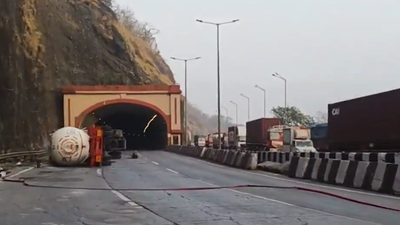
PUNE: Nearly three tonnes of highly flammable propylene gas leaked into the atmosphere during a prolonged 32-hour decanting operation after a gas tanker overturned near the Adoshi tunnel on the Pune–Mumbai Expressway, petroleum experts and disaster management officials involved in the operation said.Officials said the incident had the potential to turn catastrophic, given the volatile nature of propylene gas and the expressway’s strategic importance as one of Maharashtra’s busiest corridors.“This could have turned into a major disaster had there been even a small spark or a minor error while executing the operation,” Z N Gawade, technical director of Mec Elec Industrial Services (MEIS), the private agency that led the on-site containment and decanting efforts, speaking to TOI. The tanker, carrying compressed propylene gas, overturned in a ghat section near the tunnel, damaging its valves and causing continuous leakage. According to experts, the biggest challenge was that the gas is highly flammable, leaving responders with virtually no margin for error throughout the operation.Gawade said favourable natural conditions helped avert a worst-case scenario.“Fortunately, the incident occurred in a ghat section with strong winds and no human settlements nearby.
This helped disperse the leaked gas,” he said. “We strictly followed standard operating procedures and continuously sprayed water in the surrounding area, for passivating the vapours.That was critical in reducing gas concentration and preventing ignition.”Officials involved in the response said executing each step with precision over such a long duration was both physically and mentally exhausting. Continuous monitoring of gas levels, careful placement of equipment and personnel, and constant coordination among agencies were required to prevent even a momentary lapse.“Every exercise had to be executed in a calculated and controlled manner. There was no room for error,” Gawade said, adding that even routine actions had to be reassessed repeatedly due to the evolving situation.MEIS director Madhav Divekar said maintaining team composure was one of the toughest aspects of the operation. “This was a highly tense situation where panic could have had serious consequences,” he said.“We had to maintain the highest level of calm and ensure the morale of every team member. Despite the pressure, our personnel held their nerves and worked through extremely difficult conditions.”Following the on-site operation, the damaged tanker was shifted to Khalapur, where the process of removing the remaining gas and further decanting is still underway under controlled conditions, officials said.MEIS, is recognised as Competent Inspection and Certification Agency under the Static and Mobile Pressure Vessels Rules 2016 covered under Petroleum and Explosives Safety Organisation (PESO) and is authorised to inspect and certify tankers carrying hazardous gases. The said Propylene tanker has been kept ready for PESO for inspection of the vehicle as on Friday. “We did not find any inherent flaws in the tanker’s design or construction,” Gawade said. “The damage to the body and valves occurred due to the tanker overturning.”He said, adding that any changes in tanker design or the safety fittings would require PESO approval. PESO teams, he said, would conduct their own assessment and decide whether modifications were necessary.Experts said the incident underscores the risks involved in transporting hazardous materials through ghat sections and busy highways, and highlights the need for sustained preparedness, specialised response capabilities and stricter safety protocols to handle such emergencies.










 English (US) ·