

 1 week ago
6
1 week ago
6
ARTICLE AD BOX
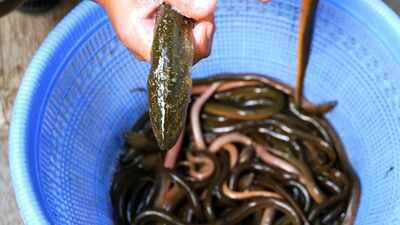
Are you someone who loves eel fish? Then you must read on, as for the first time ever, Japanese shops are going to sell eel fish that were entirely bred and raised in captivity. It is a major breakthrough that experts hope will finally take some pressure off wild populations, which are shrinking fast around the world due to pollution, dams, and overfishing.What is Eel?Eel—known locally as Unagi—is a massively popular delicacy in Japan, usually served grilled and coated in a sweet, savory sauce. However, getting these fish to reproduce in a lab setting without human help has been incredibly difficult because of their complex life cycle.What studies say?Japanese researchers actually figured out how to hatch Japanese eels from eggs back in 2010. The problem was the cost. Back then, it cost over a million yen to produce just one baby eel.
Since then, the government, universities, and private companies have teamed up to make the process affordable for the real world. Thanks to hundreds of tiny technical fixes, that massive cost has crashed. How expensive are these eels?In 2016, a single baby eel cost about 40,000 yen. Today, that cost is down to roughly 1,800 yen (about $11). While that is still three to four times more expensive than catching a wild baby eel, officials believe it is time to see how everyday customers react.
The goal is to keep refining the technology until the price drops even further. The historic sale kicks off on May 29. A Tokyo department store, alongside a few other outlets and online shops, will sell packages of two grilled Kabayaki eels raised by the aquaculture company Yamada Suisan.The price for the two-pack will be around 9,000 yen (roughly $57). While that matches the pricing of current high-end eel dishes, the company calls it a massive step toward making sustainable eel a mainstream reality.
Finding a sustainable alternative is becoming urgent. The International Union for Conservation of Nature currently lists both Japanese and American eels as endangered, while European eels are considered critically endangered.Despite the species being at risk, a global wildlife forum recently rejected an EU proposal to add tighter trade protections for eels. That proposal faced heavy pushback from top consuming nations, specifically led by Japan, where the love for the fish runs incredibly deep.









 English (US) ·