

 1 hour ago
4
1 hour ago
4
ARTICLE AD BOX
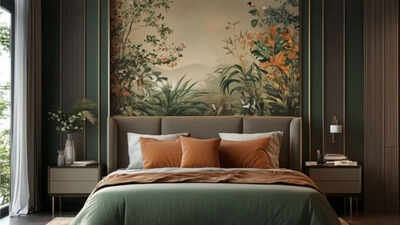
Can Bold Colours Actually Make Your Home Feel Calmer? The Expert Guide to Vibrant Design
Bold colours bring energy, personality and warmth to spaces that might otherwise feel flat or forgettable. The trouble is, without a little thought behind the choices, a bright palette can tip from vibrant to visually overwhelming.
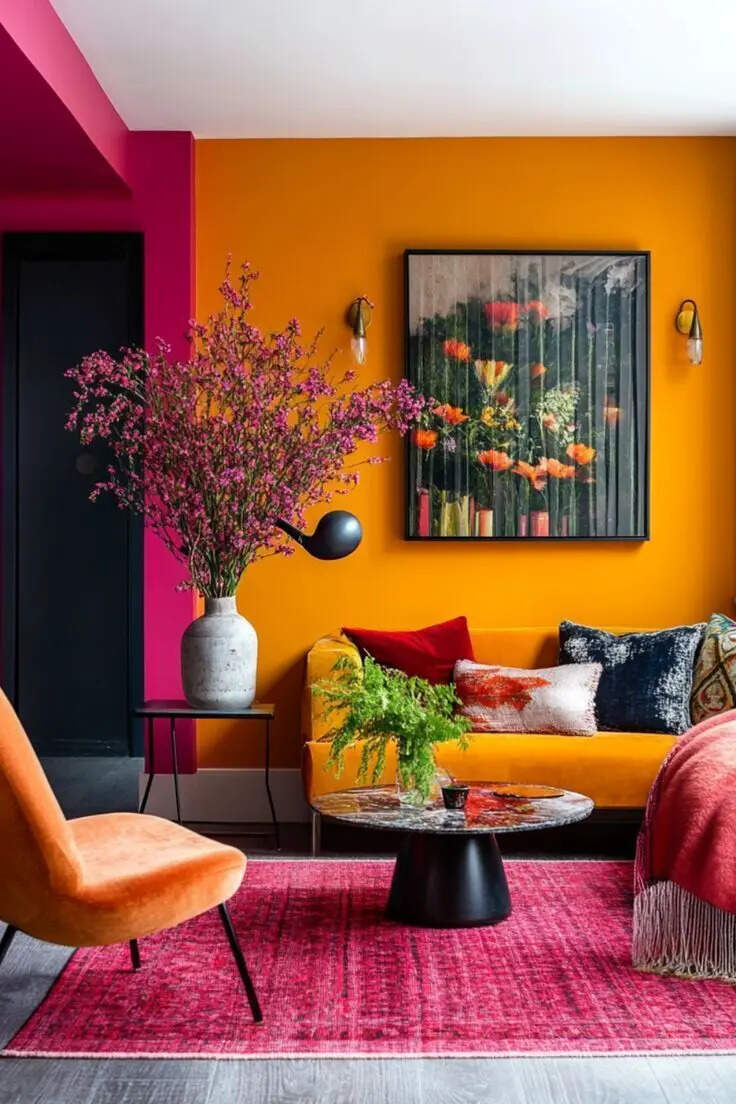
How to successfully combine bold colours in a room, using balance, contrast and placement to keep spaces feeling harmonious
Successful colour mixing has very little to do with avoiding bright shades altogether. It comes down to balance, contrast and knowing where to place each colour so the room feels considered rather than chaotic.
How to mix bold colours without overwhelming a room
Below, we walk you through six practical approaches that any homeowner can apply, whether they are starting from scratch or looking to add more colour to an existing space.
- Stick to a Colour Palette: The first step to decorating with bold colour is knowing when to stop adding more of it. Dr Eleni Nicolaou, Art Therapist and Creative Wellness Expert at Davincified, a US-based premium platform offering custom paint-by-numbers kits that blend personalised art-making with a therapeutic creative experience, recommended choosing two or three bold colours alongside one neutral to anchor the room. “When people feel their room looks chaotic, it's usually because too many competing shades are fighting for attention,” she said. “Limiting yourself to a tight palette gives each colour space to breathe and makes the overall look feel intentional rather than accidental.” Introducing too many shades at once fragments the eye's movement around the room, making spaces feel smaller and busier than they actually are.
- Use the 60-30-10 Rule: The 60-30-10 rule divides a room's palette into three proportions. The dominant colour takes up 60% of the space, typically through walls and large furniture. The secondary colour covers 30%, applied through sofas, rugs or curtains. The remaining 10% is reserved for accent shades, showing up in accessories, cushions and artwork. “This rule works because it mirrors the way the eye naturally seeks balance,” Dr Nicolaou explained. “You get variety and visual interest without any single colour taking over the whole room.” According to a recent 2026 study published in the journal Color Research & Application, “Balanced colour compositions using limited palettes and proportional distribution significantly enhance visual comfort, while excessive variation increases perceived visual clutter.” It validates limiting colour palettes (2–3 colours with neutral), supports the 60-30-10 balance principle and confirms that too many bold colours can feel overwhelming.
- Mix with Neutrals: Bold colours perform best when they have something calm to sit alongside. Soft neutrals like white, cream, beige and grey give the eye somewhere to rest, preventing overstimulation while allowing bright tones to stand out more effectively. “Neutrals are what make bold colours look intentional,” said Dr Nicolaou. “Without them, even beautiful shades can start to feel relentless.”
- Play with Texture and Finish: Different textures, such as velvet, linen, ceramic or wood, break up bold shades and add depth to a room without introducing additional colours. The finish of a surface matters too. A glossy finish will make a colour feel more vivid and reflective, while a matte finish gives it a softer, more grounded quality. “Two walls painted in the same colour can feel completely different depending on the finish,” Dr Nicolaou noted. “Texture and finish give you a lot of control over how a colour behaves in a space.”
- Start Small with Accessories: For anyone hesitant about committing to bold colour on walls or large furniture, accessories offer a lower-stakes starting point. Cushions, vases, artwork, and lamps can introduce colour gradually, allowing you to test how shades interact with each other and with the room's natural and artificial light before making bigger decisions. “People underestimate how much a room can change with just a few well-chosen accessories,” said Dr Nicolaou. “A cobalt blue vase or a terracotta cushion can tell you a great deal about whether a colour works in your space before you've spent a penny on paint.”
- Consider Mood and Function: Colour has a measurable effect on how a room feels to spend time in. Warmer shades like red and orange tend to feel energising and sociable, making them well-suited to living rooms and dining spaces. Cooler tones like blue and green create a sense of calm, working well in bedrooms or home offices. “Matching your palette to the purpose of the room is something a lot of people overlook,” said Dr Nicolaou. “Colour shapes how you feel in a space, so it’s important to consider it before you commit to anything.” A 2026 study in the Journal of Environmental Psychology found, “Warm colours tend to increase arousal and sociability, while cool tones are associated with calmness and relaxation, influencing how individuals experience and use interior spaces.” The report directly backs the idea that colour influences mood and room function, supports using reds/oranges for energy, blues/greens for calm and reinforces intentional colour selection based on purpose.
Bold colours don't have to overwhelm a room
Bold colours just need thoughtful pairing, the right proportions and careful placement.
Dr Eleni Nicolaou pointed out, “A common mistake people make is assuming that more colour means more personality, when actually, restraint is often what makes a bold palette feel striking rather than stressful. Think about the mood you want the room to create, choose your shades accordingly and let your neutrals do some of the heavy lifting.
Texture, finish and lighting all play their part, too.”
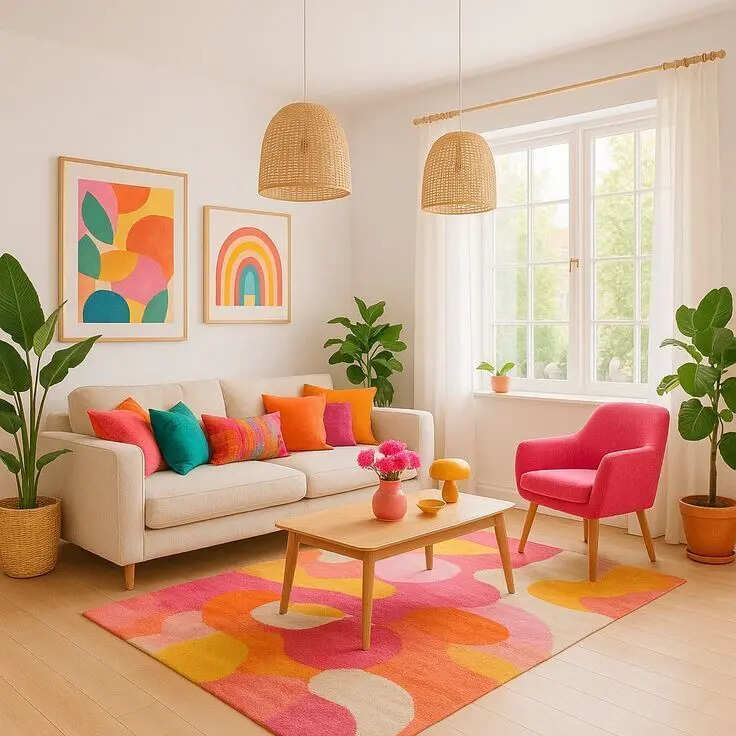
From the 60-30-10 rule to playing with texture and finish, try these 6 practical strategies for decorating with confidence
A 2026 Building and Environment study established, “Variation in material texture and surface finish alters both visual perception and sensory comfort, allowing designers to moderate intensity without changing colour composition.”
It validates using texture and finish to balance bold colours, supports idea that materials can soften intensity without adding new colours and reinforces importance of velvet, wood, matte vs gloss finishes.Dr Nicolaou concluded with the advice, “Experiment but always keep balance, contrast and the purpose of the room in mind. When those elements work together, bold colour becomes one of the most powerful tools you have for making a space feel truly alive.”








 English (US) ·