

 1 hour ago
3
1 hour ago
3
ARTICLE AD BOX
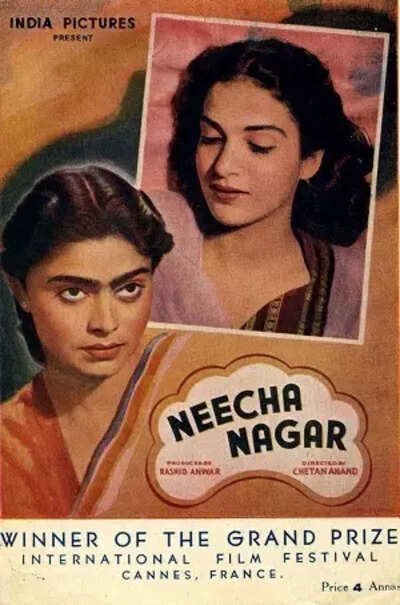
80 Years ago in the first ever Cannes Film Festival, Neechanagar was the debut of Indian cinema’s winning a prestigious award. It won the Grand Prix and director Chetan Anand jointly shared it with David Lean and Billy Wilder. Scripted by K.
A. Abbas, Neechanagar was India’s first anti-imperialist film which was inspired by Maxim Gorky’s , Lower Depths.
The realistic format of the film with its brilliant technology and cinematography by Vidyapathi Ghosh were highlights of Neechanagar.An unknown anecdote about Neechanagar is that Vittorio D’ Sica viewed the film and was very impressed by its social content. He wanted to speak to Chetan Anand and finally received a chance to do so in 1953 at the Venice Film Festival where Chetan Anand was present for the screening of his Aandhiyan.
D’ Sica asked Chetan Anand whether he would permit him to use a sequence of Neechanagar in one of his Italian creations. Chetan Anand was pleasantly astonished and asked which sequence was D’ Sica referring to.D’ Sica informed Chetan Anand about the scene where a young child does not find drinking water in his native village and is compelled to drink contaminated water. The nurse performed by Kamini Kaushal runs around in desperation seeking fresh water.
The child shouts, “Paani Nahin”.The sequence is superbly highlighted through three dialectical montages and music director Ravi Shankar’s sitar accompanied with the bamboo flute gives a musical effect to the tragedy and creates a musical collage which has the voice of the crying child seeking water.D’ Sica was overwhelmed when he knew Chetan Anand shot the sequence in just two takes. Chetan Anand permitted D’ Sica to use the sequence in his own way without blatantly imitating it.
The Italian maestro obliged Chetan Anand using a similar sequence in one of his later unforgettable creations. His cinematic mastery was with fire and not water as in Neechanagar.In 1967, at a dinner at Chetan Anand’s Juhu shack renowned director Andrei Wajda was present with his Polish actress. Discussing cinema at length he asked Chetan Anand about the climax of Neechanagar and the use of light and shade in it. Chetan Anand replied he along with writer K.
A. Abbas and cinematographer Vidyapati Ghosh worked on the climax for 7 days before shooting.He used mashal lights as well as natural lighting combining them in a protest poetry form. Andrei Wajda complemented Chetan Anand’s directional skill as matchless of that era. 80 years later after its release, Neechanagar is still considered a landmark film.-Ranjan Das Gupta



 English (US) ·