

 1 hour ago
3
1 hour ago
3
ARTICLE AD BOX
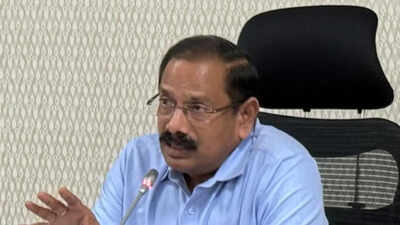
Special CS to Chief Minister K Vijayanand (File Photo)
VIJAYAWADA: With AI-driven decision-making at its core, Andhra Pradesh’s energy sector is undergoing a paradigm shift. From smarter power purchases to seamless renewable integration, the state is setting up new benchmarks in efficiency and sustainability.
In an exclusive interview with TOI, Special Chief Secretary (Energy) & Special CS to Chief Minister K Vijayanand explains as how Artificial Intelligence (AI) reshaping Andhra Pradesh’s energy sector. Q: Andhra Pradesh is aggressively adopting AI in the energy sector. What is the core vision behind this transformation? A: Our vision is simple but ambitious—deliver reliable, affordable, and sustainable 24×7 power to every consumer.
By integrating intelligent forecasting, automated scheduling, and real-time analytics into our systems, we are moving from reactive power management to predictive and optimized operations. This will fundamentally change how power is procured, distributed, and consumed across the state. Q: How exactly is AI being used in power purchase decisions? A: The AP State Load Dispatch Centre (SLDC) is deploying advanced AI-based models to forecast electricity demand and renewable energy generation—particularly wind and solar—with high accuracy.
These forecasts are generated on a day-ahead and intra-day basis, even at 15-minute intervals. This allows us to make smarter decisions in power procurement, avoiding costly last-minute purchases. Q: What kind of cost savings do you expect through AI-based power management? A: Cost optimization is one of the biggest advantages. Our target is to reduce the average power purchase cost to ₹4.20 per unit by 2030 and further to ₹3.90 per unit by 2035.
AI enables us to buy power at the right time, from the right source, and at the right price. It minimizes inefficiencies, reduces reliance on expensive short-term markets, and improves overall financial stability of DISCOMs. Q: How does AI help in managing renewable energy, which is often unpredictable? A: Renewable energy integration is one of the biggest challenges in modern grids. Solar and wind are variable by nature.
AI helps us predict their generation patterns with high precision. This ensures better grid balancing and reduces the need for backup thermal power. As we scale up green energy, AI will be critical in maintaining grid stability while maximizing renewable utilization. Q: Beyond cost reduction, what are the broader benefits of this digital transformation? A: The benefits are multi-dimensional. First, it enhances operational efficiency across generation, transmission, and distribution.
Second, it reduces technical and commercial losses. Third, it improves service reliability for consumers. And importantly, it strengthens the financial health of utilities. AI also enables automation in forecasting, bidding, and scheduling, reducing human intervention and errors.
Q: How is Andhra Pradesh preparing for rising power demand, especially during peak summer? A: Demand is growing steadily due to agricultural and industrial expansion.
We are seeing daily demand touching 250–260 million units, with peak loads nearing 14,000 MW. To handle this, we are combining AI-based demand forecasting with meticulous planning. We are ensuring adequate power availability through a mix of state generation, renewable energy, and optimized market purchases. Grid readiness and network reliability are also being strengthened.
Q: Looking ahead, how do you see Andhra Pradesh positioning itself in India’s energy landscape? A: Andhra Pradesh aims to be a leader in smart and sustainable energy management. By leveraging AI, expanding renewable capacity, and strengthening infrastructure, we are building a future-ready power sector. Our goal is not just to meet demand but to do so efficiently, economically, and sustainably. This transformation will ensure long-term energy security and position the state as a model for others to follow.





 English (US) ·