

 4 days ago
6
4 days ago
6
ARTICLE AD BOX
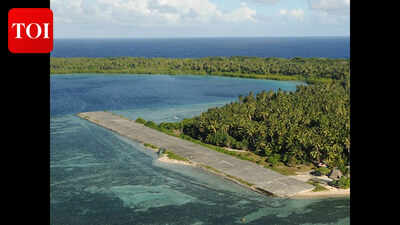
Two packages land on the runway at Pingelap Island, part of Pohnpei State of the Federated States of Micronesia. Image Credit: Wikimedia Commons
Around 1775, nearly 250 years ago, a devastating storm reduced the population of a tiny Pacific island to just a handful of survivors. A genetic mutation carried by one survivor gradually changed how later generations experienced colour.
Colour blindness is usually associated with difficulty distinguishing red and green, but Pingelap, a small atoll in the Federated States of Micronesia, has an unusual history with the condition.On this atoll, a remarkably high percentage of residents have achromatopsia, an inherited eye condition that leaves those affected unable to perceive colour, seeing the world largely in shades of black, white and grey instead.
They are extremely sensitive to bright light, which causes them pain, and they also have poor vision and eye muscle disorders.Researchers have long known that Pingelap has one of the highest rates of this rare disorder in the world. There is a very good explanation for it.A catastrophe that shaped the genetics of the islandAccording to historical documents, it was about the year 1775 when Typhoon Lengkieki struck Pingelap, destroying much of its population. As a result of the typhoon, famine, and other factors, only 20 people were left, who later repopulated the isolated coral atoll.
According to a landmark study published in Nature Genetics by Olof H. Sundin and colleagues in 2000, researchers traced the island's unusually high prevalence of achromatopsia to what geneticists call a founder effect. In this particular case, scientists found a causative mutation in the CNGB3 gene, which is quite common due to the fact that one of the survivors had it.The mutation was not introduced after the catastrophe; it existed already among the survivors.
With each new generation in an isolated community, it became much more frequent than anywhere else in the world.What is the Founder Effect?The founder effect is a scenario in which a new community originates from just a few individuals. With a reduced number of genetic elements from the original community, the rare genetic traits may end up becoming more frequent.One of the most famous real-world examples of the founder effect is the Pacific island of Pingelap.According to GeneReviews, available through the National Library of Medicine, an authoritative source published through the NCBI, achromatopsia affects less than one person out of 30,000 globally. However, on Pingelap Island, the statistics reveal that 4 to 10 percent of the inhabitants have this disorder.Seeing without coloursAchromatopsia is much more than simple colour blindness.Individuals with this disorder rely mainly on rod photoreceptors in the retina because the cone photoreceptors responsible for colour vision are nonfunctional.
Thus, bright sunlight becomes extremely unpleasant, and vision gets better in low light. According to NCBI GeneReviews, symptoms such as inability to see colours, light sensitivity, poor acuity of vision, and nystagmus are characteristic of achromatopsia.Researchers emphasise that this disorder is inherited in an autosomal recessive pattern. This means that a person needs to have both copies of the affected genes, one from each parent, to have the disease.
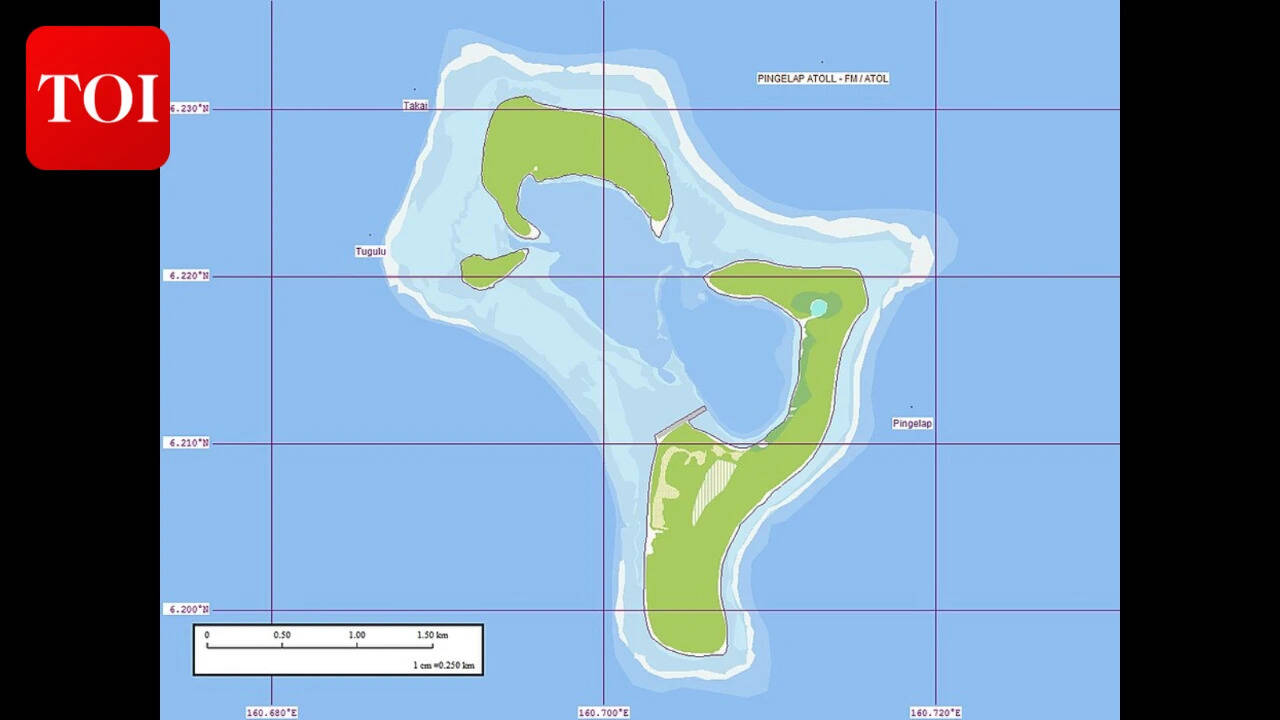
A map of the Pingelap Atoll. Image Credit: Wikimedia Commons
The gene behind the mystery that lasted for decadesFor quite some time, scientists knew about the increased occurrence of achromatopsia among the residents of Pingelap, but the cause was not known.The mystery was resolved in 2000, when the Nature Genetics study reported a mutation in CNGB3, a gene that helps cone cells in the retina respond to light.. In the absence of properly functioning channels, the cone cells are unable to send correct colour messages. The scientists believed that the cases of achromatopsia in Pingelap were associated with one particular mutation, which spread throughout the generations since the typhoon in 1775.Their research made Pingelap a notable natural case study in the genetics of vision disorders.An unusual illness that keeps shaping contemporary medicineThe story of Pingelap has attracted researchers, doctors, and writers due to its ability to showcase how history, geography, and genetics could collide in a strange way. According to a review that appeared in the British Journal of Ophthalmology, the high rate of achromatopsia in this island is highly correlated with the massive loss of population after the typhoon of the 18th century and several centuries of being cut off from the outside world.Currently, the study of CNGB3 and other genes is allowing scientists to develop gene therapy techniques for congenital retinal diseases. Although there is no treatment for full achromatopsia yet, genetic medicine makes use of discoveries like Pingelap.A lesson on how history influences biologyThe inhabitants of Pingelap did not deliberately decide to be involved in one of the greatest episodes in the history of genetics. But a natural disaster and the survival of a few people carrying rare mutations created a textbook example of the founder effect.Nearly 250 years later, the case still helps researchers study inherited eye disease and how isolated populations develop.









 English (US) ·