

 50 minutes ago
8
50 minutes ago
8
ARTICLE AD BOX
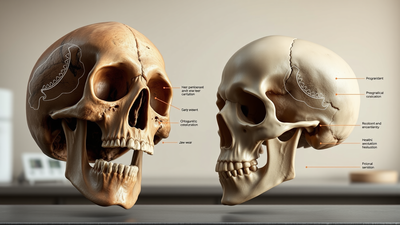
This structural weakening, driven by gum disease, reduced chewing demands, easing constraints on cranial growth and fundamentally reshaping our ancestors' faces over millennia. This challenges traditional views of human evolution.
When we think about human evolution, we often picture a series of major intellectual milestones. We picture early cave dwellers huddling around a crackling bonfire after discovering how to harness fire, knapping razor-sharp flint stones to forge the world's first hunting tools, or standing taller to walk smoothly across wide grasslands.
For generations, traditional anthropological stories have taught us to view our unique physical shape as a direct, clean byproduct of these high-level cultural leaps. The common view is that our large skulls and flat faces developed largely because our growing intellect demanded more room.But a closer look into the fossilised jaws of our ancient ancestors introduces a completely different narrative of structural adaptation, chronic physical strain, and deep biological trade-offs.
Fossilised mouthparts from caves in southern Africa may preserve evidence of a surprising evolutionary mechanism. Instead of being only a destructive nuisance, long-term oral inflammation may have influenced human evolution.
What looks like a decayed fossil jawbone may offer useful evidence about the relationship between health, skull space, and human intelligence.This striking evolutionary connection was recently uncovered in a study titled Craniofacial Evolution and Alveolar Bone Loss: A Lesson from Hominins. Led by Professor Ugo Ripamonti, scientist Laura Roden and imaging expert Jakobus Hoffman, the project examined 71 ancient jaw specimens spanning millions of years of primate development.
Using microfocus X-ray tomography and scanning electron microscopy, the authors found evidence that gum disease may have contributed to jawbone loss in early humans.Dismantling the heavy cage of the early skullTo understand how a common mouth infection could influence the size of the human brain, it helps to examine the heavy, restrictive skull design of our earliest relatives. Before the emergence of our genus, early human ancestors such as Australopithecines had forward-protruding faces with large teeth, thick jaws and strong facial muscles adapted for tough vegetation.
While this bone structure helped them survive on a coarse, fibrous diet, it also created a rigid cage around the cranial base that limited brain growth over time.The paper says this rigid layout began to change when early members of our genus, such as Homo habilis and Homo erectus, developed a more vertical pattern of bone degradation. Unlike their older Australopithecine relatives, the early human fossils appear to have shown deeper bone lesions and structural defects in the tooth sockets.
This chronic tissue loss weakened the structural foundation of their mouths, making it harder for these individuals to use the powerful biting forces of their ancestors.According to the study, large dental crowns may have been a disadvantage in these fossils. As the supporting bone dissolved, individuals with smaller, simpler tooth crowns may have had an advantage because those teeth required less bone support.
Over many generations, natural selection may have favoured smaller dental profiles, which could have reduced the size of the masticatory muscles.
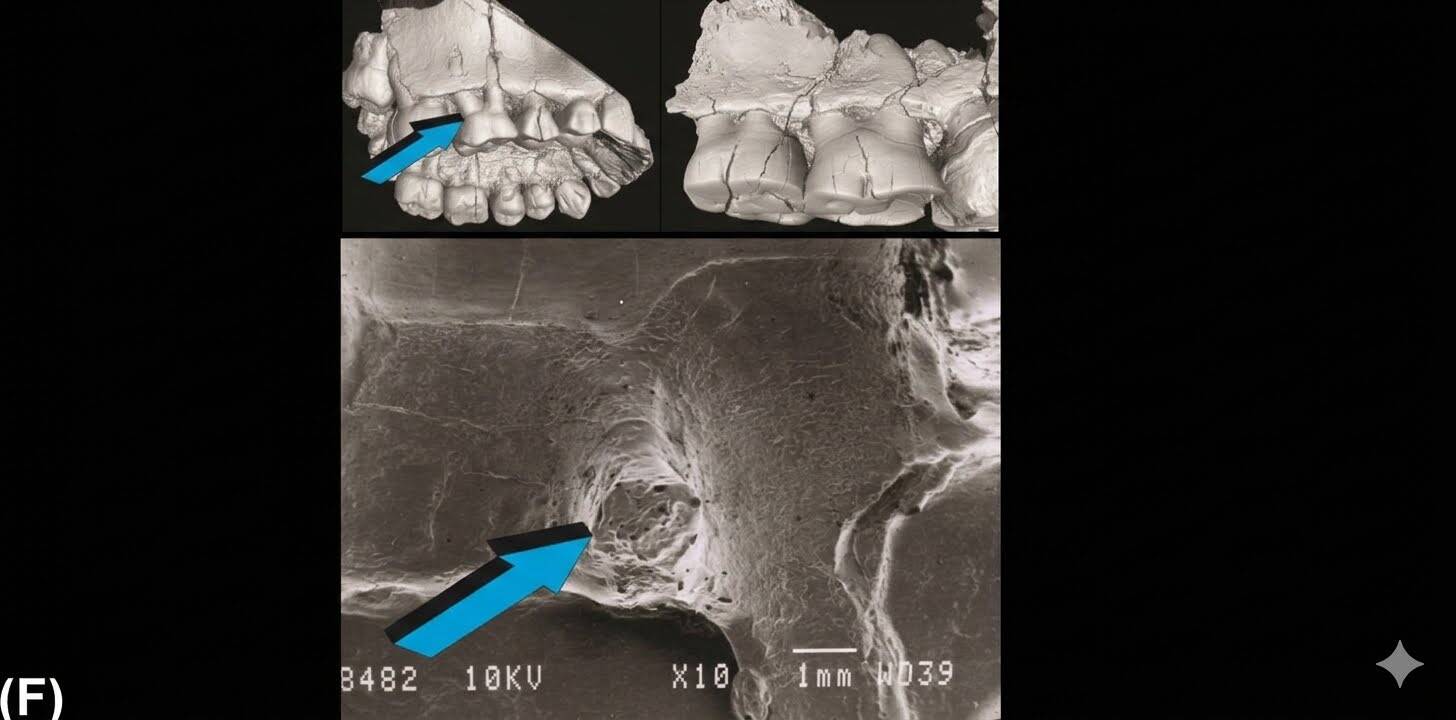
Ancient jaw fossils reveal a surprising evolutionary path for humans. Instead of solely intellectual leaps, chronic oral inflammation and subsequent jawbone loss may have paved the way for larger skulls and brains. Image Credit: Wits University
How weaker jaws cleared a path for the human mindThe practical insights gained from tracking this ancient oral timeline highlight a fascinating lesson for modern evolutionary biology and dental medicine alike. By showing that jawbone loss preceded changes in facial shape, the research suggests that physical conditions may have influenced species-wide anatomical change.
As our ancestors' faces became less protruding and shifted beneath the base of the skull, reduced chewing demands may have lessened the muscular tension around the head.According to the researchers, this reduction in muscle mass may have helped relax constraints on skull growth. With chewing muscles reduced and the jawbone shortened, the physical constraints on the upper cranial vault may have lessened over hundreds of thousands of years.
This structural change may have created more space for brain growth during human evolution.This research adds to the broader study of how anatomy changes over time. By suggesting that ancient gum disease helped drive a massive physical reorganisation of the human face while interacting with dental genetics, the study challenges the old idea that evolution is driven only by pristine, healthy traits. Recognising that oral disease may have influenced facial evolution offers a more nuanced view of human medical history.








 English (US) ·