

 1 hour ago
6
1 hour ago
6
ARTICLE AD BOX
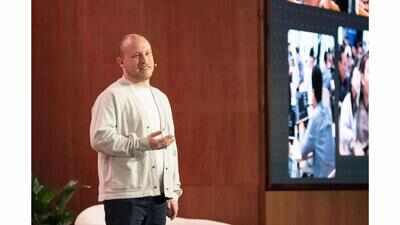
Boris Cherny, co-founder of Anthropic and creator of Claude Code, has shifted his stance on the future of AI work. After previously declaring that “software engineering is dead,” Cherny now says the era of manually writing AI prompts is ending.
As reported by Business Insider, he now argues that the future lies in loop engineering, a system in which AI agents generate and refine prompts themselves. For those unaware, loops are the recurring systems that guide AI agents without constant human input. For instance, a command like /goal can instruct an AI model to keep working until a task is complete, rather than requiring step-by-step prompts. Cherny explained: “It’s an agent that prompts Claude.
I don’t write the prompt anymore. Claude writes the prompt, and now I’m talking to that new Claude that is coordinating.”
Other AI leaders echo this shift:
* Peter Steinberger, creator of OpenClaw at OpenAI, told users: “You shouldn’t be prompting coding agents anymore. You should be designing loops that prompt your agents.”* Addy Osmani, director at Google Cloud, described loops as requiring five components: automations, worktrees, skills, plugins and connectors, and sub-agents.
Why loops matter
Loops enable the AI agents to operate more like employees than tools. Claire Vo, founder of ChatPRD, explained: “This is the time for the manager. You are designing a job. Just imagine you’re onboarding an employee — that employee could be an assistant, a customer service agent, or a software engineer.”Examples include:* One agent writes code while another checks it.* Codex maintaining repositories by waking up every five minutes to direct work into threads.
Costs and challenges of loop engineering
While loops reduce human effort, they raise concerns about token budgets. Running multiple agents and sub-agents can quickly become expensive. Steinberger advised using longer intervals — hourly or daily — to reduce costs, while Osmani cautioned that sub-agents should only be used when a second opinion is worth the expense.
Anthropic co-founder Boris Cherny on vibe-coding
Anthropic’s Boris Cherny has spent the past several months telling anyone who’ll listen that software engineering is a dying profession, that IDEs are next to go, and that at Anthropic—the company he helps run—no one has touched a line of code manually since at least November.
Now the Claude Code creator has a new grievance: the word everyone uses to describe what he actually does all day.Cherny recently told Business Insider that “vibe coding”—the term that has become shorthand for AI-assisted programming—is starting to grate on him. He’s already begun asking Claude for alternatives. “Vibe coding” was coined by OpenAI co-founder Andrej Karpathy in early 2025. It caught on fast. Collins Online Dictionary named it the word of the year in November.
The problem, as Cherny sees it, is that “vibe” undersells what’s actually happening.
Claude Code and OpenAI’s Codex are now pulling in billions in revenue and producing millions of lines of production-grade code. Calling that vibe coding is, at this point, a bit like calling surgery “gut feeling medicine.”Claude suggested “agentic engineering”—another Karpathy coinage—but Cherny doesn’t think it has the same ring either. He hasn’t settled on anything yet and is actively crowdsourcing ideas, telling BI readers to route suggestions through the reporters covering the event, or just tweet them directly at him (@bcherny). He says if something’s good, he’ll use it.









 English (US) ·