

 59 minutes ago
5
59 minutes ago
5
ARTICLE AD BOX
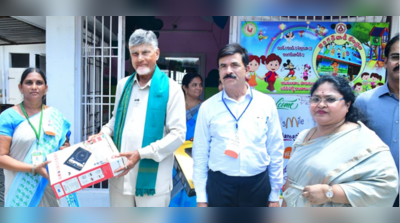
One of the programme’s landmark achievements was the distribution of induction stoves and cooking utensils to over 55,000 Anganwadi centres in collaboration with the Women and Child Welfare Department. The initiative received national recognition at a conference on best practices held in Udaipur.
Visakhapatnam: Andhra Pradesh has emerged as one of the top-performing states under Energy Efficiency Services Limited’s (EESL) UJALA programme, setting a benchmark in energy efficiency through the large-scale adoption of sustainable technologies.Launched by Prime Minister Narendra Modi nearly a decade ago, the UJALA programme has become one of the world’s largest energy-efficiency initiatives, delivering significant energy savings and environmental benefits. According to EESL, the programme has generated annual monetary savings of over ₹19,153 crore and helped avoid peak power demand of 9,586 MW across the country.Among the leading contributors, Andhra Pradesh has achieved annual energy savings of 2,863 million units (MU), translating into savings of around ₹1,145 crore.
The state has also played a key role in reducing carbon emissions.Highlighting Andhra Pradesh’s achievements, EESL said its partnership with the state has emerged as a model for energy-efficient governance. The organisation is now keen to replicate the model in Kerala by implementing proven energy-efficiency technologies aimed at accelerating sustainable development, cutting emissions and improving public services.
A high-level EESL delegation led by CEO Akhilesh Kumar Dixit will present the Andhra Pradesh model before senior Kerala government officials during a meeting chaired by additional chief secretary (finance) KR Jyothi Lal in Thiruvananthapuram on July 15.The Andhra Pradesh programme has delivered substantial energy and financial savings across departments, including municipal administration, panchayat raj, rural development and power distribution companies under UJALA.
Proposed initiatives in the housing sector under PMAY and tourism are also expected to improve service delivery through technology-driven interventions.One of the programme’s landmark achievements was the distribution of induction stoves and cooking utensils to over 55,000
Anganwadi centres
in collaboration with the Women and Child Welfare Department. The initiative received national recognition at a conference on best practices held in Udaipur.Officials said the programme improved cooking efficiency, reduced energy consumption and enhanced working conditions in Anganwadi centres.Kerala officials said the objective of any partnership with EESL is to minimise wastage of energy and water, deploy advanced technologies, improve operational efficiency, reduce expenditure on public utilities and lower greenhouse gas emissions. The resulting savings can be channelled into welfare and development programmes, creating a sustainable model that benefits both the economy and the environment.Infographics:UJALA was launched to improve household energy efficiency and reduce electricity costs.A 7W LED bulb provides the same light as a 60W incandescent bulb and a 14W CFL.LED bulbs save about 90% energy compared with incandescent bulbs.LEDs consume around 50% less energy than CFLs.In 2014, an LED bulb cost Rs 450–500, limiting its adoption.LEDs accounted for less than 1% of India’s lighting market in 2013–14.Under UJALA, LED bulbs are available for Rs 70, LED tube lights for Rs 220, and energy-efficient fans for Rs 1,110.An LED bulb consumes 1 unit of electricity in 140 hours, compared with 2 units for a CFL and 9 units for an incandescent bulb.Operating an LED bulb for 140 hours costs Rs 4, compared with Rs 8 for a CFL and Rs 36 for an incandescent bulb.The annual cost of owning an LED bulb is Rs 12, compared with Rs 40 for a CFL and Rs 108 for an incandescent bulb







 English (US) ·