

 2 hours ago
5
2 hours ago
5
ARTICLE AD BOX
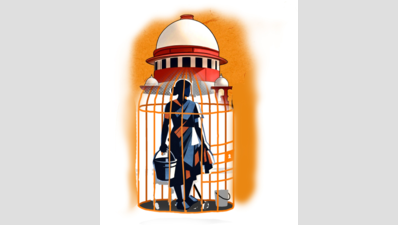
New labour laws, but domestic workers remain at a loss
K ChandruIn 2007, Tamil Nadu became one of the first states to constitute a welfare board for domestic workers under a 1982 enactment aimed at regulating the employment and working conditions of manual workers in the state.
Maharashtra followed suit with a similar law in 2008. Recognizing this effort, the Supreme Court observed in 2025 that “despite the absence of comprehensive protections for domestic workers through a central law, several states have taken initiatives to safeguard their rights and welfare”. The Court observed: “Tamil Nadu domestic workers welfare board administers social security benefits including education assistance, marriage assistance, delivery assistance, accidental death compensation and pensions.
These benefits are provided through monetary compensation at fixed rates.”TN has 18 lakh domestic workers today, yet only a fraction is registered with the welfare board, due to lack of awareness and motivation. Lawmakers dealing with labour issues never considered domestic workers to be part of any labour legislation, focusing only on industrial workers.Section 27 of the Minimum Wages Act included agricultural employment in its schedule and empowered state govts to set minimum wages, but this provision was never extended to domestic workers.
While the Minimum Wages Act, 1948, enables govts to fix minimum wages for scheduled employments, it was never extended to domestic workers, leaving their wages to the whims of their employers.Article 1 of the International Labour Organization (ILO) Convention No 189 defined domestic work as that performed in or for household or households. ‘Domestic worker’ is defined as any person engaged in domestic work within an employment relationship.
Thus, domestic work involves an exchange of services for remuneration and qualifies as productive employment.In 1978, a seven-judge bench headed by Justice V R Krishna Iyer broadened the definition of the term ‘industry’ mentioned in the Industrial Disputes Act of 1947 to include any systematic activity carried on by co-operation between employer and workmen for production, supply or distribution of goods or services with a view to satisfy human wants.
There was hope that domestic workers might fall under this expanded umbrella. In addition to that, the new Code on Social Security 2020 empowered the Union govt to constitute a National Social Security Board for the unorganized workers.But Parliament amended the Industrial Disputes Act in 1982 to explicitly exclude ‘domestic service’ from its purview, though this amendment was never enforced. The matter was referred to a larger nine-judge bench, where it remains pending.In the interim, Parliament hurriedly enacted the Industrial Relations Code, 2020, which subsumed the Industrial Disputes Act. Under Section 2(p) of the new Code, domestic service is specifically excluded from the definition of industry. After a five-year delay, and following the Bihar elections, the Union govt brought the Code into force on Nov 21, 2025. At the same time, while defining the term ‘worker’ under the IR Code, it also included the Unorganized Workers Social Security Act, 2008, stating that provisions relating to trade unions will apply to unorganized workers, a category that includes domestic workers.
The Code on Social Security, 2020, empowers the Centre to form a National Social Security Board for unorganized workers.There have been attempts to enact specific legal protections for domestic workers. Private initiatives and bodies such as the National Commission for Women pushed for legislation through bills proposed in 1959, 1989, 2004, 2008, 2015, 2016, and 2017, none of which passed. While the Juvenile Justice Acts of 1986, 2000 and 2015 prohibited employment of children and the Vishaka judgment of 1997 focused on sexual harassment at workplaces, neither had a remote reference to the plight of domestic workers.In 2019, the National Human Rights Commission held a regional conference and recommended that the Union govt adopt national legislation for domestic workers in line with International Labour Organization Convention No. 189 on domestic work.The Shramjeevi Mahila Samiti (an NGO working for underprivileged women and children) petitioned the Supreme Court, which directed the Ministry of Labour and Employment to finalize a registration module for unorganized workers.
The Court noted that, following a security audit, the module would be rolled out to states and Union Territories for registration and issuance of identity cards by the end of 2018. It instructed chief secretaries of all states and administrators of Union Territories to register at least 10% of the estimated number of workers each month starting from Jan 2019 and to submit reports.Domestic workers also got a shot in the arm when the Supreme Court, in a criminal case involving allegations of wrongful confinement and trafficking of a female domestic worker, addressed their broader welfare.A bench headed by Justice Surya Kant observed that in the absence of specific protections covering domestic workers, it becomes the SC’s duty to intervene and exercise the doctrine of “parens patriae to forge the path to their proper welfare”. He said that the Court has, in several cases, laid down interim guidelines to protect vulnerable groups left unprotected due to legal gaps. “We do not presently deem it appropriate to lay down an interim legal code which would govern the working conditions of domestic workers.
We say so, being cognizant of the factum that ordinarily, the judiciary should not stray too far out of bounds, and expressly interfere in the legislative domain.”He likened India’s democratic setup to a tripartite machine, “fueled by the doctrine of separation of powers, without which it’s functioning shall surely come to a grinding halt”.Seeing no progress, and with the Industrial Relations Code’s notification excluding domestic services except for trade union rights, a group of women workers from Tamil Nadu (Penn Thozhilalargal Sangam) approached the Supreme Court again with a petition to declare that domestic workers be entitled to minimum wages and protection under Articles 21 and 23 of the Constitution. They also sought minimum wages to be fixed. Their hope was that Justice Surya Kant, who had authored the earlier order, was now Chief Justice of India. But to everyone’s shock, Chief Justice Surya Kant took a side against the entire trade union movement and said many industries were closed because of it. He also observed that fixing a minimum wage under law for domestic workers would lead to friction and litigation. When he was saying all these in the open court, he was reminded of his 2025 order.Taking note of all these, he whitewashed the role of the Union govt and noting the efforts taken by several state govts, he expressed hope that a “suitable mechanism will be developed by the competent authority in each state to improve conditions of domestic workers and prevent the exploitation of unorganized workers, especially for the purpose of paying minimum wages”. The writ petition was disposed in Jan with directions to states to address grievances raised by workers’ associations.Thus, domestic workers are back to their domestic forums and left to stay content with state govt initiatives shorn of any protection under a central law. Though the code on social security covers unorganized workers, gig workers and platform workers excluded from the IR Code, creating new welfare boards for them by making appropriate regulations, the fate of the existing welfare boards constituted by various state govts is uncertain.On the day the four new labour codes were notified, media reports quoted Prime Minister
Narendra Modi
expressing pride in the nation’s workforce and invoking the slogan “Shramev Jayate”. The reforms were touted as a step towards Atmanirbhar Bharat, leaving only domestic workers to bear the brunt of no legal safeguards.(The writer is a retired judge of Madras high court)







 English (US) ·