

 4 days ago
9
4 days ago
9
ARTICLE AD BOX
The fans of Mexican football club CF Pachuca mark every game by unfurling a giant “tifo”, a large choreographed banner, from the stands. It depicts a miner holding a pickaxe in one hand and a crimped pastry in the other, with black flags bearing a white cross in the background.
The banner is a tribute to the hardy men from Cornwall, an English county historically known for its globe-trotting mining experts, who landed in Pachuca in 1825 in search of silver — and ended up introducing football to the country.
By 1902, the game had spread enough for Mexico to have a national league. In 1970 and 1986, the country hosted the FIFA World Cup. And on Thursday, just 90 km from Pachuca, they play their opening game of the tournament’s latest edition against South Africa in Mexico City, this time as co-hosts along with the USA.
Before the much-anticipated kick-off, London-based writer and researcher Dr Sharron Schwartz, who specialises in Cornish mining migration, speaks about Mexico’s footballing growth and reveals a lesser-known Cornwall connection — one that leads all the way to the Kolar Gold Fields in Karnataka.
 Dr Sharron Schwartz specialises in Cornish mining migration (Image via special arrangement)
Around the time the Mexican football league was being launched, Cornish miners were moving to India in search of precious metal deposits. By then, pioneer English mining engineer James Taylor, who had taken eight steam engines to Mexico in the early 19th century to dig deep, had died. His sons identified Kolar as their next destination.
“Kolar Gold Fields, along with South Africa, were really important migration destinations for Cornish miners. The Kolar Gold Fields were a melting pot. The majority of the arrivals happened to be Cornish and by the time they landed in Kolar, they established cricket and football teams, but it didn’t take off,” Schwartz says.
To underline the Kolar-Cornwall connection, Schwartz points to the Redruth area in Cornwall, where Indian imprints can still be found. Houses there carry names like Kolar Villa, Mysore Villa and Balagat House.
Story continues below this ad
“At Kolar, they had set up a football club by 1895 named the Kolar Gold Fields Football Club. And they used to play against the Dorsetshire Regiment stationed at Bangalore, and various teams that would come and play at their ground, which was at Oregon. But it didn’t really take off by the turn of the 20th century and kind of petered out. The links between Pachuca and Kolar is because of the Taylor dynasty that took football to the Kolar Gold Fields and Mexico,” she says.
As they did in Kolar, the Cornish miners had also brought cricket bats, balls and stumps to Mexico, and the game had its moment there too. “There were cricket matches as far back as the late 1820s,” says Schwartz.
By the late 1850s or 1860s, the Cornish population had grown substantially, with cricket teams spread across Mexico. “Clubs were set up and playing in Velasco, which is an area where the mineral was processed. It’s some distance from Pachuca up in the mountains. That went on really successfully for years,” she says.
With time, Pachuca’s cricket clubs turned to football.
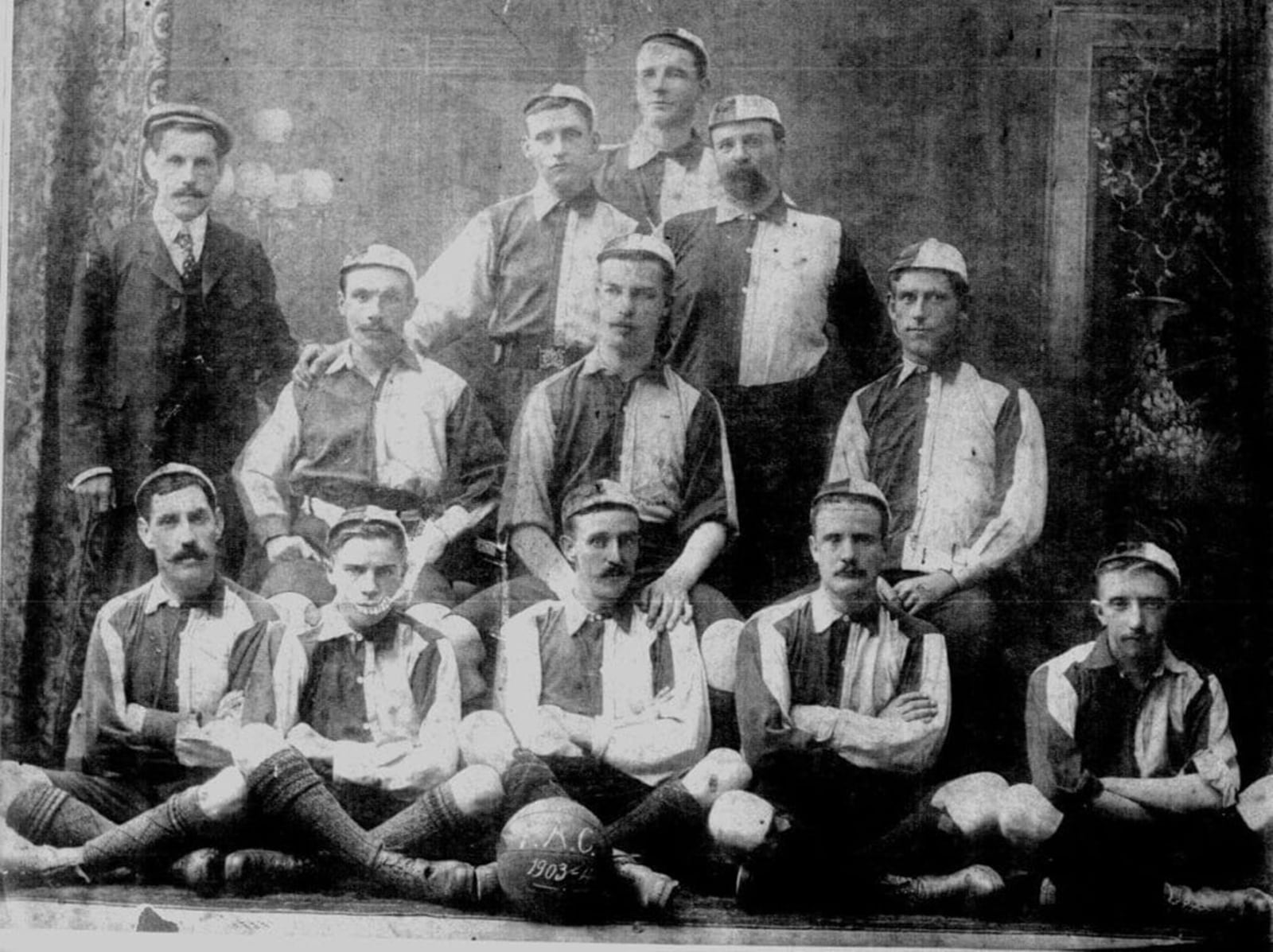 The Pachuca team in the 1900s. (Image via special arrangement)
“In the mid-1890s, one of the main Mexican sports newspapers sort of decided that they would play association football. And it seemed to have taken off as an organised sport because of the preference within the British community in Mexico,” says Schwartz.
Story continues below this ad
Though nobody knows where the first football game in Mexico was played, Schwartz believes it may have sprung up wherever the British settled, with newspapers mentioning the game as early as the late 1880s.
“By the early 1890s, we have definite proof of teams being set up, and Pachuca definitely had a football team before 1892. By 1895, Pachuca Cricket Club began to be known as Pachuca Athletic Club. And by 1902, we got the National Association and since trains were on, teams travelled to different parts to play cricket and football. And the first football league started in 1902,” she says.
That history is why fans still unfurl the tifo at Pachuca’s home ground. “It has become a culture for them to thank the miners. The Pachuca football club is called Los Tuzos. And in their club logo there is the gopher (an earth-digging rodent), which is brilliant,” Schwartz says.
And so, when Mexico’s footballers walk out at the iconic Estadio Azteca, one corner of England will be rooting for them. As for India, it remains far from football’s elite. Same company, same miners, same game — two entirely different stories.





 English (US) ·